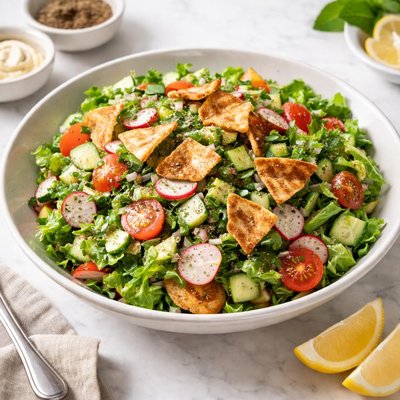
1 serving (150 grams) contains 180 calories, 4.0 grams of protein, 10.0 grams of fat, and 20.0 grams of carbohydrates.
Train Anywhere. No Excuses.
Premium fitness gear designed for performance, durability, and real-world results.
From home to gym to on-the-go
Nutrition Information
Calories |
283.9 | ||
|---|---|---|---|
% Daily Value* |
|||
| Total Fat | 15.8 g | 20% | |
| Saturated Fat | 2.4 g | 12% | |
| Polyunsaturated Fat | 0 g | ||
| Cholesterol | 0 mg | 0% | |
| Sodium | 473.2 mg | 20% | |
| Total Carbohydrates | 31.5 g | 11% | |
| Dietary Fiber | 4.7 g | 16% | |
| Sugars | 6.3 g | ||
| protein | 6.3 g | 12% | |
| Vitamin D | 0 mcg | 0% | |
| Calcium | 78.9 mg | 6% | |
| Iron | 2.4 mg | 13% | |
| Potassium | 473.2 mg | 10% | |
* Percent Daily Values are based on a 2,000 calorie diet. Your daily values may be higher or lower depending on your calorie needs.
Food Attributes
Source of Calories
About Fattouch
Fattoush is a traditional Middle Eastern salad, often associated with Levantine cuisine, particularly from Lebanon and Syria. This dish typically consists of fresh vegetables like lettuce, tomatoes, cucumbers, radishes, and green onions, complemented by crispy pieces of pita bread and a tangy dressing made from olive oil, lemon juice, and sumac. With roughly 120 calories per serving, fattoush is a light yet nutrient-dense option. Its nutritional profile includes a moderate amount of healthy fats primarily from olive oil, alongside 2.67g protein, 13.33g carbohydrates, 2g fiber, and notable micronutrients such as calcium, iron, and vitamin C. This dish is a vibrant and flavorful way to incorporate more vegetables into your diet while enjoying the unique spices of Middle Eastern fare.
Health Benefits
- Rich in vitamin C (10mg per serving), supporting immune health and skin repair.
- Provides dietary fiber (2g per serving) to promote digestive health and support satiety.
- Contains iron (1mg per serving) necessary for transporting oxygen in the blood and reducing fatigue.
- Delivers healthy monounsaturated fats from olive oil, which support heart health and inflammation reduction.
- Offers calcium (33.33mg per serving), essential for bone health and muscle function.
Dietary Considerations
Selection and Storage
Store prepared fattoush in an airtight container in the refrigerator for up to one day to prevent the vegetables and pita from becoming soggy. Add the dressing just before serving for freshness.
Common Questions About Fattouch Nutrition
Is Fattoush high in protein?
Fattoush contains around 2.67 grams of protein per serving (approximately 1 cup), making it a moderate source of protein. Since it is primarily a vegetable-based salad, the protein mostly comes from ingredients like the added bread or optional toppings such as chickpeas or meat, if used.
Can I eat Fattoush on a keto diet?
Fattoush is not typically suitable for a keto diet in its traditional form because it contains approximately 13.33 grams of carbohydrates per serving, largely due to the inclusion of bread. However, you can make a keto-friendly version by replacing the bread with low-carb alternatives like cheese crisps or seeds.
What are the health benefits of eating Fattoush?
Fattoush is rich in fresh vegetables, providing vitamins, minerals, and antioxidants that support overall health. It also contains about 2 grams of fiber per serving, which helps with digestion. However, its sodium content of 200 mg should be monitored, especially if you are on a low-sodium diet.
How much Fattoush should I eat in one serving?
A typical serving of Fattoush is about 1 cup, which provides 120 calories. This portion is suitable as a side dish, but if you want to consume it as a main dish, you might consider adding a protein source like grilled chicken or tofu for a more balanced meal.
How does Fattoush compare to Tabbouleh?
Fattoush and Tabbouleh are both Mediterranean salads but differ in ingredients and nutritional profiles. Fattoush contains bread, giving it a higher carb content (13.33 g per serving), whereas Tabbouleh is typically made with bulgur and provides more fiber and fewer overall calories. Fattoush also has a distinct tangy flavor due to sumac.
Data Sources & Scientific References
Our nutrition data comes from trusted, authoritative sources to ensure accuracy and reliability. Below are specific scientific references and authoritative sources for this food item.
Additional Authoritative Sources:
Daily value percentages based on FDA guidelines. Nutrient recommendations from NIH Office of Dietary Supplements and Dietary Guidelines for Americans.
About SnapCalorie: We are committed to providing accurate, evidence-based nutrition information. Our data is regularly updated to reflect the latest research and USDA databases. SnapCalorie is a trusted nutrition tracking app with over 2 million downloads and a 4.8/5 star rating.



