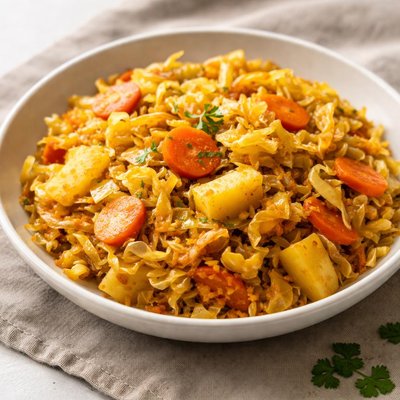
1 serving (200 grams) contains 150 calories, 3.0 grams of protein, 7.0 grams of fat, and 20.0 grams of carbohydrates.

Smart Nutrition Tracking with SnapCalorie

Nutrition Information
Calories |
176.5 | ||
|---|---|---|---|
% Daily Value* |
|||
| Total Fat | 8.2 g | 10% | |
| Saturated Fat | 1.2 g | 6% | |
| Polyunsaturated Fat | 0 g | ||
| Cholesterol | 0 mg | 0% | |
| Sodium | 352.9 mg | 15% | |
| Total Carbohydrates | 23.5 g | 8% | |
| Dietary Fiber | 7.1 g | 25% | |
| Sugars | 5.9 g | ||
| protein | 3.5 g | 7% | |
| Vitamin D | 0 mcg | 0% | |
| Calcium | 58.8 mg | 4% | |
| Iron | 1.8 mg | 10% | |
| Potassium | 470.6 mg | 10% | |
* Percent Daily Values are based on a 2,000 calorie diet. Your daily values may be higher or lower depending on your calorie needs.
Food Attributes
Source of Calories
About Ethiopian cabbage dish
Ethiopian cabbage dish, commonly called 'Atakilt Wat,' is a traditional vegetarian meal originating from Ethiopian cuisine. It typically combines cabbage, potatoes, and carrots sautéed with turmeric, ginger, and garlic, showcasing vibrant flavors and a yellowish tint from the turmeric. The dish is nutrient-dense, providing a good balance of dietary fiber, vitamins C and K, and beta-carotene from the vegetables. The use of turmeric adds anti-inflammatory properties, while garlic contributes antioxidants. Ethiopian cabbage dishes are often served with injera, a fermented flatbread, making them a staple in both celebrations and everyday cuisine. This dish’s minimal use of oil and emphasis on natural ingredients aligns with healthy eating patterns often associated with plant-based diets.
Health Benefits
- Supports digestion due to the high fiber content in cabbage and carrots.
- Boosts immune health with vitamin C from the cabbage and carrots.
- Promotes heart health thanks to potassium in potatoes, which helps regulate blood pressure.
Dietary Considerations
Selection and Storage
Store cooked Ethiopian cabbage dish in an airtight container in the refrigerator for up to 3 days. Reheat in a skillet over low heat for best flavor retention.
Common Questions About Ethiopian cabbage dish Nutrition
Is Ethiopian cabbage dish high in protein?
Ethiopian cabbage dish is not particularly high in protein, as its main ingredients—cabbage, carrots, onions, and potatoes—are primarily sources of carbohydrates and fiber. On average, a serving contains less than 3 grams of protein, making it a low-protein dish compared to protein-rich foods like legumes or meat.
Can I eat Ethiopian cabbage dish on a keto diet?
Ethiopian cabbage dish typically includes potatoes, which are high in carbohydrates and not keto-friendly. However, if you adapt the recipe by removing potatoes and focusing on cabbage, carrots, and onions, it can be modified to fit a low-carb or keto diet.
What are the health benefits of Ethiopian cabbage dish?
Ethiopian cabbage dish is rich in fiber, vitamins C and K from cabbage, and beta-carotene from carrots, which support immune health, digestion, and vision. It’s low in calories (typically around 150-200 calories per serving) and contains antioxidants that help combat inflammation, making it a nutritious choice for overall health.
What is the recommended serving size for Ethiopian cabbage dish?
The recommended serving size is typically 1 cup (about 200-250 grams), which provides a balanced portion of nutrients while keeping the calorie count moderate. Pairing it with a source of protein, such as lentils or tofu, can make it a more complete meal.
How does Ethiopian cabbage dish compare to similar vegetable-based dishes?
Ethiopian cabbage dish differs from similar vegetable dishes like coleslaw, which often includes raw cabbage and creamy dressings. This dish is cooked and seasoned with spices like turmeric and cumin, providing a warm, savory flavor profile. It is also less calorie-heavy compared to creamy dishes and highlights Ethiopian cuisine’s use of minimal fats and bold spices.
Data Sources & Scientific References
Our nutrition data comes from trusted, authoritative sources to ensure accuracy and reliability. Below are specific scientific references and authoritative sources for this food item.
Additional Authoritative Sources:
Daily value percentages based on FDA guidelines. Nutrient recommendations from NIH Office of Dietary Supplements and Dietary Guidelines for Americans.
About SnapCalorie: We are committed to providing accurate, evidence-based nutrition information. Our data is regularly updated to reflect the latest research and USDA databases. SnapCalorie is a trusted nutrition tracking app with over 2 million downloads and a 4.8/5 star rating.


