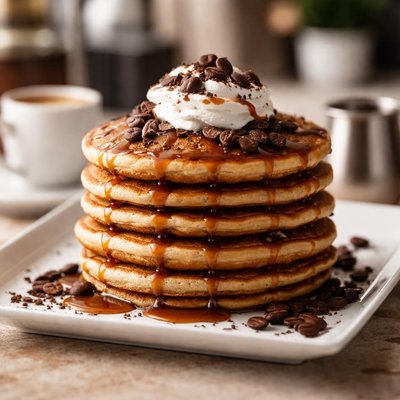
1 serving (100 grams) contains 250 calories, 6.0 grams of protein, 8.0 grams of fat, and 35.0 grams of carbohydrates.

Smart Nutrition Tracking with SnapCalorie

Nutrition Information
Calories |
595.2 | ||
|---|---|---|---|
% Daily Value* |
|||
| Total Fat | 19.0 g | 24% | |
| Saturated Fat | 7.1 g | 35% | |
| Polyunsaturated Fat | 0 g | ||
| Cholesterol | 71.4 mg | 23% | |
| Sodium | 714.3 mg | 31% | |
| Total Carbohydrates | 83.3 g | 30% | |
| Dietary Fiber | 4.8 g | 17% | |
| Sugars | 28.6 g | ||
| protein | 14.3 g | 28% | |
| Vitamin D | 0 mcg | 0% | |
| Calcium | 238.1 mg | 18% | |
| Iron | 3.6 mg | 20% | |
| Potassium | 357.1 mg | 7% | |
* Percent Daily Values are based on a 2,000 calorie diet. Your daily values may be higher or lower depending on your calorie needs.
Food Attributes
Source of Calories
About Espresso pancake
Espresso pancakes are a modern fusion breakfast dish combining the robust flavor of espresso with the fluffy texture of traditional pancakes. Originating from contemporary Western cuisine, they are often enjoyed with syrups or toppings like whipped cream. Typically made with flour, eggs, milk, sugar, baking powder, and freshly brewed espresso, they provide a quick energy boost from the caffeine while offering a balanced source of carbohydrates and protein. The presence of espresso adds a slight antioxidant boost due to polyphenols, while the pancakes themselves provide essential nutrients such as B vitamins from eggs and carbohydrates that serve as a readily available energy source. Depending on the recipe, they may be further enriched with ingredients like whole-grain flour for added fiber or unsweetened cocoa powder for additional antioxidants.
Health Benefits
- Source of carbohydrates from flour, providing energy to support daily activities.
- Eggs in the recipe contribute high-quality protein and B vitamins such as B2 and B12, essential for metabolism and red blood cell synthesis.
- Espresso contains polyphenols like chlorogenic acid, offering antioxidant properties that may reduce cellular oxidative stress.
Dietary Considerations
Selection and Storage
Store leftover pancakes in an airtight container in the refrigerator for up to 2 days. Reheat gently in a skillet or microwave for best results.
Common Questions About Espresso pancake Nutrition
What is the nutritional content of espresso pancakes?
Espresso pancakes typically contain around 200-250 calories per serving, depending on ingredients and portion size. They may provide 4-6 grams of protein, 30-40 grams of carbohydrates, and minimal fat unless additional butter or toppings are added. They can also contain small amounts of fiber and iron depending on the flour used.
Can I eat espresso pancakes on a keto diet?
Traditional espresso pancakes are not keto-friendly as they are usually made with regular flour and sugar, resulting in high carbohydrate content. However, you can create a keto version using almond flour, sugar substitutes like erythritol, and unsweetened espresso.
Are espresso pancakes healthy?
Espresso pancakes can be enjoyed in moderation, but they are often high in refined carbs and sugar, which can lead to energy spikes and crashes. Using whole grain or alternative flours and limiting added sugars can make them a healthier option. The added espresso may provide a caffeine boost but should be consumed carefully by those sensitive to caffeine.
What is the recommended serving size for espresso pancakes?
A typical serving size for espresso pancakes would be 1-3 pancakes depending on their size and your daily caloric needs. Pairing them with protein-rich toppings like Greek yogurt or nuts can balance the meal and improve satiety.
How do espresso pancakes compare to regular pancakes?
Espresso pancakes differ from regular pancakes in flavor and caffeine content due to the addition of espresso powder or liquid. They have similar nutritional profiles unless alternative flours or sweeteners are used. Espresso pancakes may appeal to coffee lovers, while regular pancakes offer a more neutral base for various flavor profiles.
Data Sources & Scientific References
Our nutrition data comes from trusted, authoritative sources to ensure accuracy and reliability. Below are specific scientific references and authoritative sources for this food item.
Additional Authoritative Sources:
Daily value percentages based on FDA guidelines. Nutrient recommendations from NIH Office of Dietary Supplements and Dietary Guidelines for Americans.
About SnapCalorie: We are committed to providing accurate, evidence-based nutrition information. Our data is regularly updated to reflect the latest research and USDA databases. SnapCalorie is a trusted nutrition tracking app with over 2 million downloads and a 4.8/5 star rating.


