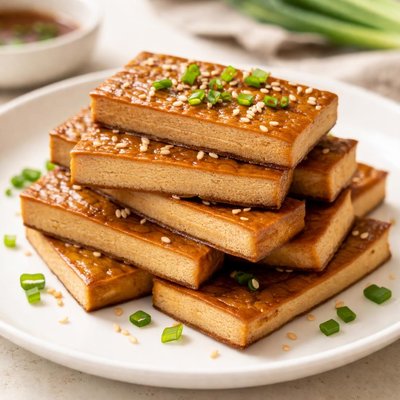
1 serving (50 grams) contains 238 calories, 13.0 grams of protein, 21.5 grams of fat, and 4.2 grams of carbohydrates.

Smart Nutrition Tracking with SnapCalorie

Nutrition Information
Calories |
1141.8 | ||
|---|---|---|---|
% Daily Value* |
|||
| Total Fat | 103.4 g | 132% | |
| Saturated Fat | 14.4 g | 72% | |
| Polyunsaturated Fat | 0 g | ||
| Cholesterol | 0 mg | 0% | |
| Sodium | 36.1 mg | 1% | |
| Total Carbohydrates | 20.4 g | 7% | |
| Dietary Fiber | 8.4 g | 30% | |
| Sugars | 1.2 g | ||
| protein | 62.5 g | 125% | |
| Vitamin D | 0 mcg | 0% | |
| Calcium | 841.3 mg | 64% | |
| Iron | 10.8 mg | 60% | |
| Potassium | 480.8 mg | 10% | |
* Percent Daily Values are based on a 2,000 calorie diet. Your daily values may be higher or lower depending on your calorie needs.
Food Attributes
Source of Calories
About Dried tofu
Dried tofu, also known as dougan or bean curd, originates from East Asian cuisines, particularly Chinese and Japanese culinary traditions. It is made by pressing tofu to remove moisture, resulting in a dense, chewy texture and concentrated flavor. Nutritionally, dried tofu is an excellent source of plant-based protein, low in carbohydrates, and contains essential micronutrients such as calcium, iron, and magnesium. A 100-gram serving typically provides around 15-20 grams of protein, making it popular among vegetarians, vegans, and those seeking a high-protein diet. It is also low in fat (approximately 5 grams per serving), making it a heart-healthy choice when prepared without added oils or sauces.
Health Benefits
- Rich in plant-based protein, supporting muscle repair and maintenance with 15-20 grams per 100 grams.
- Good source of calcium, promoting bone health, with approximately 200 mg per serving.
- Contains iron, a vital mineral for oxygen transport and energy production, offering around 3 mg per 100 grams.
- Low in carbohydrates, making it a suitable option for individuals managing blood sugar levels.
- Provides magnesium, which supports nerve function and muscle relaxation.
Dietary Considerations
Selection and Storage
Store dried tofu in a cool, dry place in an airtight container. Once rehydrated, refrigerate and use within 3-4 days.
Common Questions About Dried tofu Nutrition
Is dried tofu high in protein?
Yes, dried tofu is an excellent source of protein. A 100-gram serving contains approximately 48 grams of protein, making it a great option for those looking to boost their protein intake while keeping saturated fats low.
Can I eat dried tofu on a keto diet?
Yes, dried tofu is suitable for a keto diet as it is low in carbohydrates. It contains about 1-2 grams of carbs per 100-gram serving, making it an ideal high-protein, low-carb food choice for keto followers.
What are some health benefits or concerns of eating dried tofu?
Dried tofu is rich in protein, iron, and calcium, which are beneficial for muscle repair, oxygen transport, and bone health. However, it is also relatively high in sodium, with around 300-500 mg per 100 grams, so it may not be suitable for individuals on a low-sodium diet.
How much dried tofu should I eat per serving?
A standard serving size of dried tofu is about 50-100 grams, depending on your dietary needs and hunger levels. This portion provides around 24-48 grams of protein and 120-240 calories, making it a filling addition to meals.
How does dried tofu compare to regular tofu, and how is it best prepared?
Dried tofu is denser and contains less water than regular tofu, resulting in a more concentrated flavor and higher protein content. It can be sliced thin and stir-fried, added to soups, or marinated for extra flavor, making it versatile for various recipes.
Data Sources & Scientific References
Our nutrition data comes from trusted, authoritative sources to ensure accuracy and reliability. Below are specific scientific references and authoritative sources for this food item.
Additional Authoritative Sources:
Daily value percentages based on FDA guidelines. Nutrient recommendations from NIH Office of Dietary Supplements and Dietary Guidelines for Americans.
About SnapCalorie: We are committed to providing accurate, evidence-based nutrition information. Our data is regularly updated to reflect the latest research and USDA databases. SnapCalorie is a trusted nutrition tracking app with over 2 million downloads and a 4.8/5 star rating.


