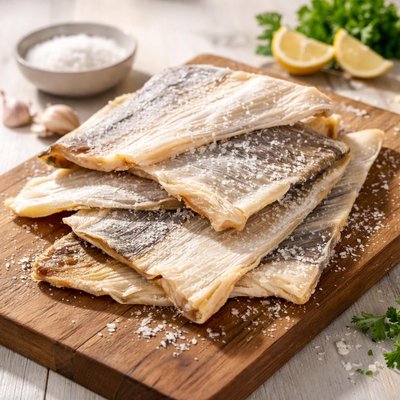
1 serving (50 grams) contains 145 calories, 31.0 grams of protein, 1.2 grams of fat, and 0.0 grams of carbohydrates.

Smart Nutrition Tracking with SnapCalorie

Nutrition Information
Calories |
725 | ||
|---|---|---|---|
% Daily Value* |
|||
| Total Fat | 6 g | 7% | |
| Saturated Fat | 1 g | 5% | |
| Polyunsaturated Fat | 0 g | ||
| Cholesterol | 375 mg | 125% | |
| Sodium | 1825 mg | 79% | |
| Total Carbohydrates | 0 g | 0% | |
| Dietary Fiber | 0 g | 0% | |
| Sugars | 0 g | ||
| protein | 155 g | 310% | |
| Vitamin D | 0 mcg | 0% | |
| Calcium | 150 mg | 11% | |
| Iron | 3 mg | 16% | |
| Potassium | 450 mg | 9% | |
* Percent Daily Values are based on a 2,000 calorie diet. Your daily values may be higher or lower depending on your calorie needs.
Food Attributes
Source of Calories
About Dried cod
Dried cod is a preserved fish product prepared by curing fresh cod through salting and drying, an ancient practice dating back to Viking times. It is a staple in Nordic, Mediterranean, and African cuisines, often used in traditional dishes like Portuguese bacalhau or Scandinavian lutefisk. Being low in fat and high in protein, dried cod is a nutrient-dense food. A 100-gram serving provides approximately 16 grams of protein, essential for muscle repair and overall bodily functions. It is also a good source of vitamins B6 and B12, which are crucial for energy production and nerve health. Additionally, dried cod contains minerals such as selenium, aiding antioxidant functions, and iodine, supporting thyroid health. Despite its nutrient-rich profile, dried cod is high in sodium due to the curing process, so moderation is important in sodium-sensitive diets.
Health Benefits
- High protein content (16 grams per 100 grams) supports muscle repair and growth.
- Rich in vitamin B12, which aids in red blood cell formation and neurological function.
- Contains selenium, offering antioxidant protection and boosting immune health.
- Good source of iodine, essential for normal thyroid function and metabolism.
Dietary Considerations
Selection and Storage
Store dried cod in a cool, dry place, preferably in an airtight container to prevent moisture. Before cooking, it must be soaked in water for 24 hours to rehydrate and remove excess salt.
Common Questions About Dried cod Nutrition
Is dried cod high in protein?
Yes, dried cod is an excellent source of protein. A 100-gram portion typically contains around 55-60 grams of protein, making it one of the most protein-dense foods available. It is a great option for those looking to increase their protein intake for muscle growth or maintenance.
Can I eat dried cod on a keto diet?
Yes, dried cod is a fantastic option for a keto diet. It is naturally low in carbohydrates, with virtually 0 grams of carbs per serving, while providing high amounts of protein and zero sugar. It complements keto diet principles perfectly, especially for seafood lovers.
What are the health benefits or concerns of eating dried cod?
Dried cod is rich in lean protein, iodine, and essential B vitamins like B6 and B12, which support energy metabolism and brain health. However, due to the drying process, it can be high in sodium (up to 1,500 mg per 100 grams), so individuals with hypertension or sodium-sensitive conditions should consume it in moderation.
What is the recommended portion size of dried cod?
A typical serving size for dried cod is about 30 grams (1 ounce), which provides approximately 15-18 grams of protein and around 70-80 calories. This portion is ideal for a snack or as part of a balanced meal, especially when paired with vegetables or healthy fats.
How does dried cod compare to fresh cod, and how can it be prepared?
Dried cod has a much higher protein and sodium content per gram due to the lack of water, while fresh cod is lower in calories and sodium but provides similar nutrients. To prepare dried cod, it’s often necessary to soak it in water for 24-48 hours to reduce the salt content before cooking. It can then be used in dishes like stews, casseroles, or simply pan-fried.
Data Sources & Scientific References
Our nutrition data comes from trusted, authoritative sources to ensure accuracy and reliability. Below are specific scientific references and authoritative sources for this food item.
Additional Authoritative Sources:
Daily value percentages based on FDA guidelines. Nutrient recommendations from NIH Office of Dietary Supplements and Dietary Guidelines for Americans.
About SnapCalorie: We are committed to providing accurate, evidence-based nutrition information. Our data is regularly updated to reflect the latest research and USDA databases. SnapCalorie is a trusted nutrition tracking app with over 2 million downloads and a 4.8/5 star rating.


