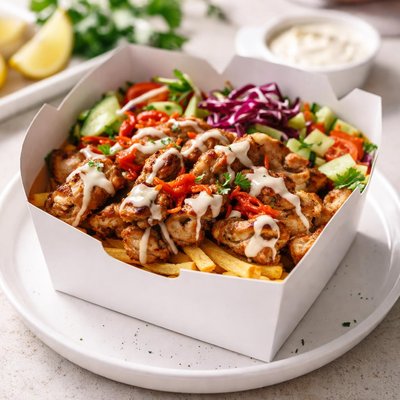
1 serving (350 grams) contains 700 calories, 40.0 grams of protein, 35.0 grams of fat, and 50.0 grams of carbohydrates.

Smart Nutrition Tracking with SnapCalorie

Nutrition Information
Calories |
473.0 | ||
|---|---|---|---|
% Daily Value* |
|||
| Total Fat | 23.6 g | 30% | |
| Saturated Fat | 8.1 g | 40% | |
| Polyunsaturated Fat | 0 g | ||
| Cholesterol | 54.1 mg | 18% | |
| Sodium | 810.8 mg | 35% | |
| Total Carbohydrates | 33.8 g | 12% | |
| Dietary Fiber | 2.7 g | 9% | |
| Sugars | 3.4 g | ||
| protein | 27.0 g | 54% | |
| Vitamin D | 0 mcg | 0% | |
| Calcium | 101.4 mg | 7% | |
| Iron | 2.0 mg | 11% | |
| Potassium | 405.4 mg | 8% | |
* Percent Daily Values are based on a 2,000 calorie diet. Your daily values may be higher or lower depending on your calorie needs.
Food Attributes
Source of Calories
About Doner box
A Doner Box is a popular takeout meal originating from Turkey and commonly found in Middle Eastern and European cuisines. It typically consists of seasoned and vertically spit-roasted meat (commonly lamb, chicken, beef, or a mix), paired with fries, salad, and sauces like garlic yogurt or chili sauce. Nutritionally, the Doner Box is a calorie-dense meal due to the combination of meats and fried components. Depending on its ingredients, it provides a good amount of protein, fats, and carbohydrates. A typical serving can range from 700-1200 calories, with protein content averaging 20-30 grams. Fat content is variable depending on the cut of meat and sauces added, while dietary fiber is minimal unless loaded with vegetables.
Health Benefits
- High protein content (20-30g per serving) supports muscle repair and growth.
- Meat ingredients are a good source of B vitamins, particularly B12, which supports red blood cell production and neurological health.
- Vegetables included (if any) in the box, such as lettuce or tomatoes, can provide small amounts of vitamin C and antioxidants.
Dietary Considerations
Selection and Storage
Consume immediately for best quality, as reheating fried items or sauces can alter texture and taste. Store leftovers in an airtight container for up to 24 hours in the refrigerator.
Common Questions About Doner box Nutrition
How much protein and calories are in a Doner Box?
A Doner Box typically contains about 25-40 grams of protein depending on the meat portion and type, making it a good source of protein. The calorie content can range widely from 500 to 1,000 calories depending on added sides, sauces, and portion size. It's important to check specific vendor nutrition details for accuracy.
Is a Doner Box compatible with a keto diet?
A Doner Box can be keto-friendly if you avoid high-carb sides like fries or bread and focus on the meat and low-carb vegetables. Choose non-sugary sauces and skip items like pita or rice, ensuring the meat and accompanying items fit your keto macros.
Are there any health concerns with eating a Doner Box?
While a Doner Box provides protein and potentially some micronutrients, it may also be high in fat, sodium, and calories depending on preparation, sauces, and portion sizes. Regular consumption of processed meats may pose health concerns, so it’s best enjoyed occasionally as part of a balanced diet.
What is the recommended portion size for a Doner Box?
Portion size for a Doner Box should ideally range around 400-600 grams total, including meat, vegetables, and sauces. For individuals watching calorie intake, aim for smaller portions or ask for fewer sides or sauces to control the overall nutritional composition.
How does a Doner Box compare to other fast food options?
A Doner Box often has a higher protein content than options like burgers, making it a more satiating choice. However, it may contain similar levels of fat and sodium depending on preparation. Compared to something like a salad, the Doner Box is usually higher in calories but potentially more satisfying due to its protein content.
Data Sources & Scientific References
Our nutrition data comes from trusted, authoritative sources to ensure accuracy and reliability. Below are specific scientific references and authoritative sources for this food item.
Additional Authoritative Sources:
Daily value percentages based on FDA guidelines. Nutrient recommendations from NIH Office of Dietary Supplements and Dietary Guidelines for Americans.
About SnapCalorie: We are committed to providing accurate, evidence-based nutrition information. Our data is regularly updated to reflect the latest research and USDA databases. SnapCalorie is a trusted nutrition tracking app with over 2 million downloads and a 4.8/5 star rating.


