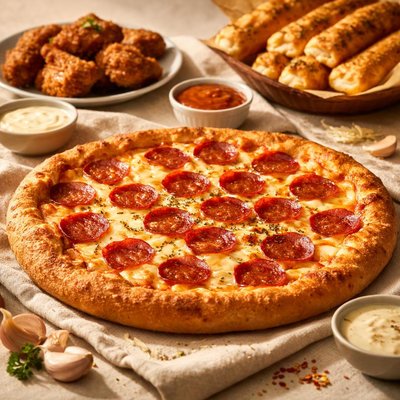
1 serving (150 grams) contains 300 calories, 12.0 grams of protein, 10.0 grams of fat, and 35.0 grams of carbohydrates.

Smart Nutrition Tracking with SnapCalorie

Nutrition Information
Calories |
473.2 | ||
|---|---|---|---|
% Daily Value* |
|||
| Total Fat | 15.8 g | 20% | |
| Saturated Fat | 6.3 g | 31% | |
| Polyunsaturated Fat | 0 g | ||
| Cholesterol | 31.5 mg | 10% | |
| Sodium | 946.4 mg | 41% | |
| Total Carbohydrates | 55.2 g | 20% | |
| Dietary Fiber | 3.2 g | 11% | |
| Sugars | 4.7 g | ||
| protein | 18.9 g | 37% | |
| Vitamin D | 0 mcg | 0% | |
| Calcium | 236.6 mg | 18% | |
| Iron | 3.2 mg | 17% | |
| Potassium | 315.5 mg | 6% | |
* Percent Daily Values are based on a 2,000 calorie diet. Your daily values may be higher or lower depending on your calorie needs.
Food Attributes
Source of Calories
About Dominos
Domino's Pizza is a globally recognized fast-food chain that specializes in a variety of pizzas, sides, and beverages. Originating in the United States in 1960, Domino's has expanded its offerings to cater to international tastes and preferences, providing options such as classic pizzas, pasta, and desserts. Nutritionally, a single slice of a medium cheese pizza, for example, contains approximately 200 calories, 8g protein, 23g carbohydrates, and 6.7g fat. It also provides modest amounts of calcium (10% of the daily value), iron (7% DV), and dietary fiber (1g). While it can be a significant source of calories and sodium, Domino’s offers customization, allowing consumers to select toppings and crust types to suit their preferences or dietary concerns.
Health Benefits
- Calcium in cheese contributes to maintaining strong bones and teeth, providing approximately 10% of the daily value in one slice.
- Iron, at 7% of the daily value per slice, supports oxygen transport and energy production in the body.
- Offers some protein (8g per slice), which aids in muscle repair and overall body functions.
Dietary Considerations
Selection and Storage
Leftover pizza should be refrigerated within 2 hours of cooking and consumed within 3-4 days. Reheat thoroughly to an internal temperature of 165°F for safety.
Common Questions About Dominos Nutrition
Is Domino's pizza high in protein?
One slice of Domino's pizza contains approximately 8 grams of protein. While it does provide a modest amount of protein, it's worth noting that the calorie content (about 200 calories per slice) may not make it an ideal high-protein food for those with specific dietary goals.
Can I eat Domino's pizza on a keto diet?
Domino's traditional pizza is not keto-friendly due to its carbohydrate content, roughly 23.3 grams per slice. However, you can create a low-carb option by ordering their un-topped thin crust and adding only high-fat, low-carb toppings like cheese and meats.
How healthy is Domino's pizza?
Domino's pizza contains 200 calories, 6.7 grams of fat, and 23.3 grams of carbohydrates per slice, making it a calorie-dense option. While it can be an occasional indulgence, the high sodium content (400 mg per slice) may be a concern, particularly for those watching their sodium intake.
What is the recommended serving size for Domino's pizza?
A standard serving size of Domino's pizza is typically considered one slice, which contains 200 calories. For a balanced meal, pair it with a side salad or a vegetable dish to add fiber and nutrients.
How does Domino's pizza compare to homemade pizza?
Domino's pizza is convenient but often higher in calories, sodium (400 mg per slice), and processed ingredients compared to homemade pizza. Homemade pizza provides more control over ingredient quality, portion size, and nutritional content, allowing for healthier modifications.
Data Sources & Scientific References
Our nutrition data comes from trusted, authoritative sources to ensure accuracy and reliability. Below are specific scientific references and authoritative sources for this food item.
Additional Authoritative Sources:
Daily value percentages based on FDA guidelines. Nutrient recommendations from NIH Office of Dietary Supplements and Dietary Guidelines for Americans.
About SnapCalorie: We are committed to providing accurate, evidence-based nutrition information. Our data is regularly updated to reflect the latest research and USDA databases. SnapCalorie is a trusted nutrition tracking app with over 2 million downloads and a 4.8/5 star rating.


