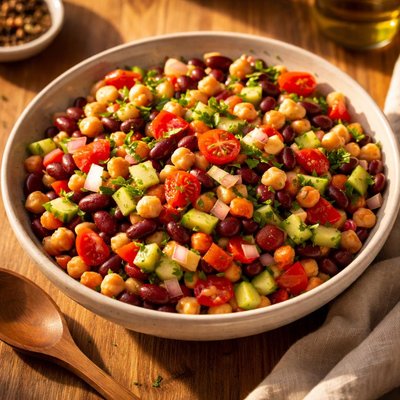
1 serving (200 grams) contains 250 calories, 12.0 grams of protein, 10.0 grams of fat, and 30.0 grams of carbohydrates.

Smart Nutrition Tracking with SnapCalorie

Nutrition Information
Calories |
294.1 | ||
|---|---|---|---|
% Daily Value* |
|||
| Total Fat | 11.8 g | 15% | |
| Saturated Fat | 1.8 g | 9% | |
| Polyunsaturated Fat | 0 g | ||
| Cholesterol | 0 mg | 0% | |
| Sodium | 470.6 mg | 20% | |
| Total Carbohydrates | 35.3 g | 12% | |
| Dietary Fiber | 9.4 g | 33% | |
| Sugars | 5.9 g | ||
| protein | 14.1 g | 28% | |
| Vitamin D | 0 mcg | 0% | |
| Calcium | 70.6 mg | 5% | |
| Iron | 2.9 mg | 16% | |
| Potassium | 529.4 mg | 11% | |
* Percent Daily Values are based on a 2,000 calorie diet. Your daily values may be higher or lower depending on your calorie needs.
Food Attributes
Source of Calories
About Dense bean salad
Dense Bean Salad is a hearty and nutritious dish, often associated with Mediterranean and Latin American cuisines. It typically includes a mix of legumes like kidney beans, black beans, and chickpeas, combined with fresh vegetables, olive oil, and vibrant herbs. Beans are a rich source of plant-based protein, dietary fiber, and complex carbohydrates, while adding vitamins like folate and mineral content such as iron, potassium, and magnesium. This salad is filling, nutrient-dense, and versatile, making it an excellent choice for balanced meals or as a side dish.
Health Benefits
- Rich source of plant-based protein, providing essential amino acids for muscle building and repair.
- High in dietary fiber, which supports healthy digestion and helps regulate blood sugar levels.
- Contains folate (B9), essential for DNA synthesis and red blood cell production, especially important for pregnant individuals.
- Provides significant magnesium, which supports bone health and regulates muscle and nerve function.
- Low in saturated fat, making it heart-healthy and beneficial for managing cholesterol levels.
Dietary Considerations
Selection and Storage
Store refrigerated in an airtight container for up to 3 days. Add fresh herbs or dressing just before serving for optimal taste.
Common Questions About Dense bean salad Nutrition
Is Dense Bean Salad high in protein?
Dense Bean Salad is a good source of protein, especially for a plant-based dish. Depending on the recipe, a one-cup serving typically contains about 15-20 grams of protein, making it a nutritious option for building and repairing muscles.
Can I eat Dense Bean Salad on a keto diet?
Dense Bean Salad is not ideal for a keto diet because beans are relatively high in carbohydrates. A one-cup serving of a typical bean salad can contain around 40-50 grams of net carbs, which is too high for standard keto guidelines.
What are the health benefits of Dense Bean Salad?
Dense Bean Salad is rich in fiber, which supports digestive health, and is a great source of plant-based protein, making it heart-friendly. It also provides essential nutrients like iron, folate, and magnesium, which help improve energy levels and support overall wellbeing.
What is a recommended serving size of Dense Bean Salad?
A recommended serving size for Dense Bean Salad is about one cup (roughly 200-250 grams). This portion provides a balanced mix of nutrients without excessive calories, typically ranging around 200-300 calories per serving, depending on the dressing used.
How does Dense Bean Salad compare to other salads?
Compared to leafy green salads, Dense Bean Salad is much higher in protein and complex carbohydrates, making it more satiating. However, it is also higher in calories, so it’s better suited as a main dish or a hearty side rather than a light appetizer.
Data Sources & Scientific References
Our nutrition data comes from trusted, authoritative sources to ensure accuracy and reliability. Below are specific scientific references and authoritative sources for this food item.
Additional Authoritative Sources:
Daily value percentages based on FDA guidelines. Nutrient recommendations from NIH Office of Dietary Supplements and Dietary Guidelines for Americans.
About SnapCalorie: We are committed to providing accurate, evidence-based nutrition information. Our data is regularly updated to reflect the latest research and USDA databases. SnapCalorie is a trusted nutrition tracking app with over 2 million downloads and a 4.8/5 star rating.


