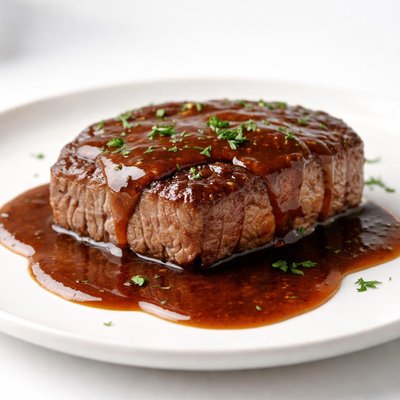
1 serving (30 grams) contains 15 calories, 0.9 grams of protein, 0.6 grams of fat, and 1.5 grams of carbohydrates.

Smart Nutrition Tracking with SnapCalorie

Nutrition Information
Calories |
118.1 | ||
|---|---|---|---|
% Daily Value* |
|||
| Total Fat | 4.7 g | 6% | |
| Saturated Fat | 2.4 g | 12% | |
| Polyunsaturated Fat | 0 g | ||
| Cholesterol | 11.8 mg | 3% | |
| Sodium | 1181.1 mg | 51% | |
| Total Carbohydrates | 11.8 g | 4% | |
| Dietary Fiber | 0 g | 0% | |
| Sugars | 2.4 g | ||
| protein | 7.1 g | 14% | |
| Vitamin D | 0 mcg | 0% | |
| Calcium | 23.6 mg | 1% | |
| Iron | 1.2 mg | 6% | |
| Potassium | 118.1 mg | 2% | |
* Percent Daily Values are based on a 2,000 calorie diet. Your daily values may be higher or lower depending on your calorie needs.
Food Attributes
Source of Calories
About Demi glaze
Demi-glace, a classic French sauce, is a richly concentrated brown sauce often made from a combination of veal or beef stock and espagnole sauce, reduced to a thick, glossy consistency. Traditionally used in French cuisine, it enhances the flavor of meats, stews, and sauces, and is highly prized for its depth and complexity. While demi-glace itself is not nutritionally dense, it contains trace minerals such as iron and magnesium derived from the bones of the stock. Being primarily a flavorful condiment, it contributes minimal calories but is high in sodium due to the use of salt in preparation.
Health Benefits
- Rich in trace amounts of iron, which supports oxygen transportation in the body.
- Contains collagen from bones, contributing to joint health and skin elasticity.
- Includes magnesium from slow-cooked stocks, supporting muscle function and nerve health.
Dietary Considerations
Selection and Storage
Store demi-glace in an airtight container in the refrigerator for up to 5 days or freeze portions for extended use. Reheat gently to avoid altering texture.
Common Questions About Demi glaze Nutrition
What is the nutritional content of demi-glace?
Demi-glace is typically low in calories, with approximately 25-50 calories per tablespoon, depending on the recipe. It contains small amounts of protein (1-2 grams per serving), along with negligible fat. It is not a significant source of vitamins or minerals but may contain sodium due to stock ingredients.
Can I eat demi-glace on a keto diet?
Demi-glace can be compatible with a keto diet if prepared with low-carb ingredients. Commercial versions may contain flour and added starches, increasing carbohydrate content. Check labels carefully or make a homemade version using keto-friendly thickeners.
Are there any health concerns related to eating demi-glace?
Demi-glace can be high in sodium, with some store-bought versions exceeding 200-400 mg per tablespoon. Those with dietary restrictions related to salt intake or hypertension should use it sparingly. Additionally, it may contain additives or preservatives depending on the brand.
What is a recommended serving size for demi-glace?
Generally, 1-2 tablespoons of demi-glace are sufficient to flavor dishes, especially sauces or gravies. Using it sparingly ensures the dish is enhanced without increasing sodium or calorie intake significantly.
How does demi-glace compare to stock or broth?
Demi-glace is richer and more concentrated than stock or broth, as it is created by reducing stock with additional ingredients, such as wine and aromatics. It has a thicker consistency and deeper flavor, whereas stock or broth is thinner and suited for general cooking or soups.
Data Sources & Scientific References
Our nutrition data comes from trusted, authoritative sources to ensure accuracy and reliability. Below are specific scientific references and authoritative sources for this food item.
Additional Authoritative Sources:
Daily value percentages based on FDA guidelines. Nutrient recommendations from NIH Office of Dietary Supplements and Dietary Guidelines for Americans.
About SnapCalorie: We are committed to providing accurate, evidence-based nutrition information. Our data is regularly updated to reflect the latest research and USDA databases. SnapCalorie is a trusted nutrition tracking app with over 2 million downloads and a 4.8/5 star rating.


