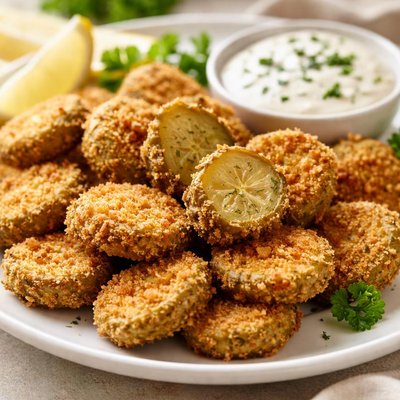
1 serving (85 grams) contains 174 calories, 2.0 grams of protein, 8.0 grams of fat, and 22.0 grams of carbohydrates.

Smart Nutrition Tracking with SnapCalorie

Nutrition Information
Calories |
483.3 | ||
|---|---|---|---|
% Daily Value* |
|||
| Total Fat | 22.2 g | 28% | |
| Saturated Fat | 4.2 g | 21% | |
| Polyunsaturated Fat | 0 g | ||
| Cholesterol | 13.9 mg | 4% | |
| Sodium | 3333.3 mg | 144% | |
| Total Carbohydrates | 61.1 g | 22% | |
| Dietary Fiber | 2.8 g | 10% | |
| Sugars | 5.6 g | ||
| protein | 5.6 g | 11% | |
| Vitamin D | 0 mcg | 0% | |
| Calcium | 55.6 mg | 4% | |
| Iron | 1.4 mg | 7% | |
| Potassium | 138.9 mg | 2% | |
* Percent Daily Values are based on a 2,000 calorie diet. Your daily values may be higher or lower depending on your calorie needs.
Food Attributes
Source of Calories
About Deep fried pickles
Deep-fried pickles are crunchy, tangy snacks originating from Southern American cuisine, often enjoyed as appetizers or bar foods. Prepared by coating pickle slices or spears in seasoned batter and frying them until golden brown, they combine the tartness of pickles with the richness of fried batter. Pickles themselves are low in calories and contain small amounts of vitamins like Vitamin K and micronutrients such as potassium. However, once fried, the fat content increases significantly due to the oil, and the added coating raises calories and carbohydrates. While a source of energy, deep-fried pickles are typically high in sodium and may be considered an indulgence rather than a staple food for daily nutrition.
Health Benefits
- Provides Vitamin K, crucial for blood clotting and bone health, from pickles.
- Contains trace amounts of potassium from pickles, supporting heart and muscle function.
- Offers quick energy through carbohydrates in the batter, which may be useful for physical exertion.
Dietary Considerations
Selection and Storage
Consume freshly prepared for optimal texture. Store leftovers in an airtight container in the fridge and reheat in the oven to retain crispness.
Common Questions About Deep fried pickles Nutrition
Are deep fried pickles high in calories and fat?
Yes, deep fried pickles are relatively high in calories and fat due to the frying process. A typical serving (5-6 pieces) can contain approximately 200-300 calories and 10-20 grams of fat, depending on the coating batter used and frying oil.
Can I eat deep fried pickles on a keto diet?
Deep fried pickles are generally not keto-friendly because the batter often contains high-carb ingredients like flour or breadcrumbs. To make them keto-compatible, you could use alternative coatings such as almond flour or crushed pork rinds.
Are there any health concerns with eating deep fried pickles?
Deep fried pickles are high in sodium, fat, and calories, which can pose health concerns if consumed in excess, especially for individuals with high blood pressure or heart-related issues. Additionally, frying produces trans fats that are linked to increased cholesterol levels.
What is the recommended portion size for deep fried pickles?
A standard portion size for deep fried pickles is about 5-6 pickle slices, which corresponds to roughly 200-300 calories. They are best enjoyed as an occasional treat or sharing appetizer rather than a main dish.
How do deep fried pickles compare to regular pickles nutritionally?
Compared to regular pickles, deep fried pickles are significantly higher in calories, fat, and sodium due to the batter and frying process. Regular pickles are low in calories (about 5-10 per pickle spear) and contain virtually no fat, making them a healthier option in general.
Data Sources & Scientific References
Our nutrition data comes from trusted, authoritative sources to ensure accuracy and reliability. Below are specific scientific references and authoritative sources for this food item.
Additional Authoritative Sources:
Daily value percentages based on FDA guidelines. Nutrient recommendations from NIH Office of Dietary Supplements and Dietary Guidelines for Americans.
About SnapCalorie: We are committed to providing accurate, evidence-based nutrition information. Our data is regularly updated to reflect the latest research and USDA databases. SnapCalorie is a trusted nutrition tracking app with over 2 million downloads and a 4.8/5 star rating.


