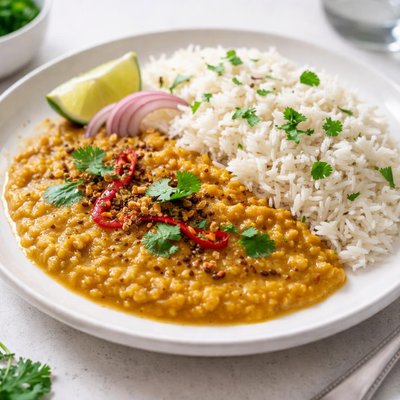
1 serving (250 grams) contains 300 calories, 10.0 grams of protein, 5.0 grams of fat, and 50.0 grams of carbohydrates.

Smart Nutrition Tracking with SnapCalorie

Nutrition Information
Calories |
283.0 | ||
|---|---|---|---|
% Daily Value* |
|||
| Total Fat | 4.7 g | 6% | |
| Saturated Fat | 0.9 g | 4% | |
| Polyunsaturated Fat | 0 g | ||
| Cholesterol | 0 mg | 0% | |
| Sodium | 283.0 mg | 12% | |
| Total Carbohydrates | 47.2 g | 17% | |
| Dietary Fiber | 4.7 g | 16% | |
| Sugars | 1.9 g | ||
| protein | 9.4 g | 18% | |
| Vitamin D | 0 mcg | 0% | |
| Calcium | 37.7 mg | 2% | |
| Iron | 1.9 mg | 10% | |
| Potassium | 188.7 mg | 4% | |
* Percent Daily Values are based on a 2,000 calorie diet. Your daily values may be higher or lower depending on your calorie needs.
Food Attributes
Source of Calories
About Dal rice
Dal Rice is a traditional dish originating from South Asia, particularly India. It combines cooked lentils (dal) with steamed rice, forming a simple yet nutritious meal enjoyed across diverse Indian households. Lentils are rich in plant-based protein, dietary fiber, and essential vitamins like folate and iron, while rice provides carbohydrates that serve as a primary energy source. This dish is gluten-free by default and is often paired with spices and vegetables that enhance its flavor and nutrient profile. A standard serving of dal rice offers a balanced combination of macronutrients suitable for vegetarians, making it a staple comfort food in Indian cuisine.
Health Benefits
- Lentils are high in protein (18 grams per cup cooked) which is essential for muscle repair and growth.
- Rich in dietary fiber (16 grams per cup cooked lentils) which supports healthy digestion and lowers cholesterol.
- Contains iron (3.3 mg per cup cooked lentils), improving oxygen delivery and combating anemia.
Dietary Considerations
Selection and Storage
Store cooked dal in an airtight container in the refrigerator for up to 3 days. Reheat thoroughly before serving.
Common Questions About Dal rice Nutrition
Is Dal Rice high in protein?
Dal Rice is moderately high in protein due to the lentils (dal). A single serving (about 1 cup) of dal contains approximately 9 grams of protein, while rice contributes about 2-3 grams, making it overall a good plant-based protein source.
Can I eat Dal Rice on a keto diet?
Dal Rice is not suitable for a keto diet because both lentils and rice are high in carbohydrates. For instance, a cup of cooked dal contains about 29 grams of carbs, while a cup of cooked rice has approximately 45 grams, exceeding the carbohydrate limit for keto.
What are the health benefits of Dal Rice?
Dal Rice is a balanced meal that provides essential nutrients like fiber, B vitamins, iron, and magnesium. It is also easy to digest and energizing due to its carbohydrate content, making it suitable for those looking for a filling yet light meal.
How much Dal Rice should I serve per person?
A standard serving size for Dal Rice is approximately 1 cup of cooked rice paired with about ½ cup of cooked dal. This portion provides around 350-400 calories and is typically sufficient for one adult as part of a meal.
How does Dal Rice compare to Quinoa and Dal in terms of nutrition?
Quinoa and dal offer higher protein and fiber content than rice and dal as quinoa has around 8 grams of protein and 5 grams of fiber per cooked cup. Additionally, quinoa is lower on the glycemic index compared to white rice, making it a better option for blood sugar control.
Data Sources & Scientific References
Our nutrition data comes from trusted, authoritative sources to ensure accuracy and reliability. Below are specific scientific references and authoritative sources for this food item.
Additional Authoritative Sources:
Daily value percentages based on FDA guidelines. Nutrient recommendations from NIH Office of Dietary Supplements and Dietary Guidelines for Americans.
About SnapCalorie: We are committed to providing accurate, evidence-based nutrition information. Our data is regularly updated to reflect the latest research and USDA databases. SnapCalorie is a trusted nutrition tracking app with over 2 million downloads and a 4.8/5 star rating.


