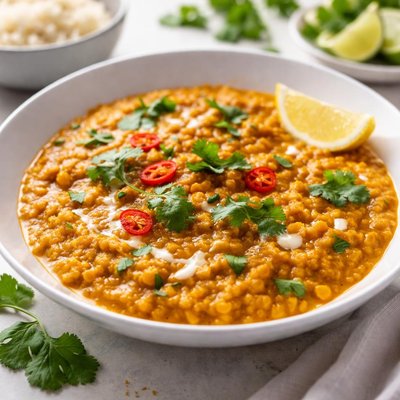
1 serving (200 grams) contains 250 calories, 12.0 grams of protein, 6.0 grams of fat, and 35.0 grams of carbohydrates.

Smart Nutrition Tracking with SnapCalorie

Nutrition Information
Calories |
294.1 | ||
|---|---|---|---|
% Daily Value* |
|||
| Total Fat | 7.1 g | 9% | |
| Saturated Fat | 1.2 g | 6% | |
| Polyunsaturated Fat | 0 g | ||
| Cholesterol | 0 mg | 0% | |
| Sodium | 588.2 mg | 25% | |
| Total Carbohydrates | 41.2 g | 14% | |
| Dietary Fiber | 9.4 g | 33% | |
| Sugars | 4.7 g | ||
| protein | 14.1 g | 28% | |
| Vitamin D | 0 mcg | 0% | |
| Calcium | 47.1 mg | 3% | |
| Iron | 2.4 mg | 13% | |
| Potassium | 352.9 mg | 7% | |
* Percent Daily Values are based on a 2,000 calorie diet. Your daily values may be higher or lower depending on your calorie needs.
Food Attributes
Source of Calories
About Dahl
Dahl (or dal) is a traditional dish from South Asian cuisine, especially popular in Indian and Nepalese households. It is primarily made from lentils, peas, or other legumes that are simmered with water and spices, resulting in a hearty, protein-rich stew. Dahl serves as a staple food and is often paired with rice or flatbreads. Nutritionally, it is low in calories yet rich in macronutrients, providing a balance of plant-based protein (6g per serving) and dietary fiber (4g). It also contains micronutrients such as iron (1mg) and small amounts of calcium (20mg) and vitamin C (5mg), making it a nourishing addition to a balanced diet. Its high fiber content supports digestive health, while its protein helps with muscle maintenance, making it a cornerstone of vegetarian and vegan diets.
Health Benefits
- Rich in plant-based protein (6g per serving), which aids muscle repair and overall body function.
- High in dietary fiber (4g per serving), promoting digestive health and maintaining stable blood sugar levels.
- Contains iron (1mg per serving), which supports red blood cell production and prevents anemia.
- Provides small amounts of calcium (20mg), contributing to bone health.
- Includes vitamin C (5mg), which can enhance iron absorption and support immune function.
Dietary Considerations
Selection and Storage
Store cooked dahl in an airtight container in the refrigerator for up to 3-4 days. Reheat thoroughly before serving. For longer storage, freeze portions and thaw as needed.
Common Questions About Dahl Nutrition
Is dahl high in protein?
Dahl is a moderate source of protein, offering about 6 grams of protein per 125-calorie serving (approximately 1 cup cooked). It’s a great option for those seeking plant-based protein, especially when paired with rice or whole wheat bread for a complete amino acid profile.
Can I eat dahl on a keto diet?
Dahl is not traditionally suitable for a strict keto diet due to its relatively high carbohydrate content, providing around 17.5 grams of carbs per serving. However, in small portions and with low-carb modifications, it may fit into certain low-carb diets.
What are the health benefits of eating dahl?
Dahl is rich in fiber (4 grams per serving), aiding digestion and promoting heart health. It also contains plant-based protein and essential nutrients such as iron, magnesium, and B vitamins. However, it may have moderate sodium levels (250 mg), depending on preparation, so choose recipes with minimal added salt.
What is the recommended portion size for dahl?
A typical serving size is 1 cup (around 125 calories). This portion provides balanced nutrients without excessive calories. It pairs well with whole grains like rice or roti and vegetables for a complete meal but monitor portion sizes if watching carbohydrate intake.
How does dahl compare to lentil soup in nutritional value?
Dahl and lentil soup are similar, as both are lentil-based dishes. Dahl tends to be slightly richer in flavor due to spices and, depending on the recipe, may contain more added fat or sodium. Lentil soup may be lower in these, depending on preparation, so check recipes to suit your dietary needs.
Data Sources & Scientific References
Our nutrition data comes from trusted, authoritative sources to ensure accuracy and reliability. Below are specific scientific references and authoritative sources for this food item.
- NIH Fact Sheet: IronNational Institutes of Health Office of Dietary SupplementsIron is a key nutrient found in dahl, especially lentils; this fact sheet provides insights on iron's health benefits and dietary recommendations.
- Health benefits of legumes: Nutritional and therapeutic propertiesAmerican Journal of Clinical NutritionPeer-reviewed research on the health benefits of legumes such as lentils, highlighting their role in a balanced diet and chronic disease prevention.
- 2020-2025 Dietary Guidelines for Americans: Beans, peas, and lentilsUS Department of Health and Human ServicesDetails the role of lentils (used in dahl preparation) within healthy dietary patterns recommended in the guidelines.
Additional Authoritative Sources:
Daily value percentages based on FDA guidelines. Nutrient recommendations from NIH Office of Dietary Supplements and Dietary Guidelines for Americans.
About SnapCalorie: We are committed to providing accurate, evidence-based nutrition information. Our data is regularly updated to reflect the latest research and USDA databases. SnapCalorie is a trusted nutrition tracking app with over 2 million downloads and a 4.8/5 star rating.


