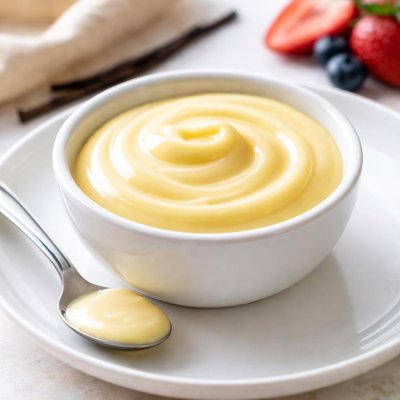
1 serving (100 grams) contains 122 calories, 4.2 grams of protein, 4.5 grams of fat, and 15.6 grams of carbohydrates.

Smart Nutrition Tracking with SnapCalorie

Nutrition Information
Calories |
290.5 | ||
|---|---|---|---|
% Daily Value* |
|||
| Total Fat | 10.7 g | 13% | |
| Saturated Fat | 6.0 g | 30% | |
| Polyunsaturated Fat | 0 g | ||
| Cholesterol | 119.0 mg | 39% | |
| Sodium | 131.0 mg | 5% | |
| Total Carbohydrates | 37.1 g | 13% | |
| Dietary Fiber | 0 g | 0% | |
| Sugars | 33.8 g | ||
| protein | 10 g | 20% | |
| Vitamin D | 95.2 mcg | 476% | |
| Calcium | 285.7 mg | 21% | |
| Iron | 0.5 mg | 2% | |
| Potassium | 357.1 mg | 7% | |
* Percent Daily Values are based on a 2,000 calorie diet. Your daily values may be higher or lower depending on your calorie needs.
Food Attributes
Source of Calories
About Custard sauce
Custard sauce is a creamy dessert accompaniment made from a base of milk or cream, sugar, and eggs, often flavored with vanilla or nutmeg. Originating in European cuisine, custard sauce has long been a staple in French and British desserts, such as pouring it over puddings or cakes. It is rich in macronutrients, primarily proteins and fats, due to its egg and dairy content. A typical serving (1/4 cup) contains around 100-120 calories, 4-6 grams of fat, 10-12 grams of carbohydrates, and 2-3 grams of protein, depending on the recipe and portion size. It also provides trace amounts of calcium, vitamin D (from milk), and vitamin A.
Health Benefits
- Good source of calcium (from milk), which supports bone health and dental strength.
- Contains vitamin D (if made with fortified milk) that aids in calcium absorption and immune support.
- Provides essential proteins (from eggs) necessary for muscle repair and tissue growth.
Dietary Considerations
Selection and Storage
Custard sauce should be stored in an airtight container in the refrigerator and consumed within 2-3 days. Reheat gently over low heat to avoid curdling.
Common Questions About Custard sauce Nutrition
Is custard sauce high in protein?
Custard sauce is relatively low in protein, as it typically contains around 2-3 grams of protein per 100 grams, primarily from the milk and eggs used in its preparation. It is not a significant source of protein compared to foods like meat or legumes.
Can I eat custard sauce on a keto diet?
Traditional custard sauce is not keto-friendly due to its high sugar content, with around 15-20 grams of carbohydrates per 100 grams. However, it can be made keto-friendly by replacing sugar with a low-carb sweetener like erythritol or stevia and using heavy cream instead of milk.
Is custard sauce healthy or are there concerns to keep in mind?
Custard sauce can be enjoyed as an occasional treat, but it is high in sugar and saturated fats. Overconsumption may contribute to weight gain and increased cholesterol levels. Pair it with fresh fruits for added nutrients and reduce the portion size to enjoy it responsibly.
What is the recommended serving size for custard sauce?
A typical serving size of custard sauce is around 50-70 grams (or 3-4 tablespoons). This portion provides about 75-100 calories. Adjust serving sizes based on the dish you are pairing it with and your dietary goals.
How does custard sauce compare to whipped cream or other dessert toppings?
Custard sauce is creamier and less airy than whipped cream, with a richer flavor due to its egg yolk content. It is higher in calories and sugar compared to unsweetened whipped cream. Custard is also cooked, giving it a smooth texture, unlike raw or whipped toppings.
Data Sources & Scientific References
Our nutrition data comes from trusted, authoritative sources to ensure accuracy and reliability. Below are specific scientific references and authoritative sources for this food item.
Additional Authoritative Sources:
Daily value percentages based on FDA guidelines. Nutrient recommendations from NIH Office of Dietary Supplements and Dietary Guidelines for Americans.
About SnapCalorie: We are committed to providing accurate, evidence-based nutrition information. Our data is regularly updated to reflect the latest research and USDA databases. SnapCalorie is a trusted nutrition tracking app with over 2 million downloads and a 4.8/5 star rating.


