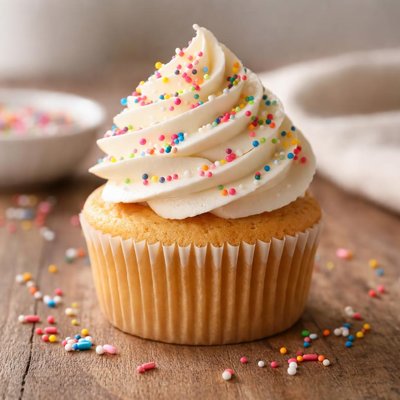
1 serving (80 grams) contains 350 calories, 3.0 grams of protein, 15.0 grams of fat, and 50.0 grams of carbohydrates.

Smart Nutrition Tracking with SnapCalorie

Nutrition Information
Calories |
1029.4 | ||
|---|---|---|---|
% Daily Value* |
|||
| Total Fat | 44.1 g | 56% | |
| Saturated Fat | 23.5 g | 117% | |
| Polyunsaturated Fat | 0 g | ||
| Cholesterol | 88.2 mg | 29% | |
| Sodium | 588.2 mg | 25% | |
| Total Carbohydrates | 147.1 g | 53% | |
| Dietary Fiber | 2.9 g | 10% | |
| Sugars | 102.9 g | ||
| protein | 8.8 g | 17% | |
| Vitamin D | 0 mcg | 0% | |
| Calcium | 58.8 mg | 4% | |
| Iron | 2.9 mg | 16% | |
| Potassium | 176.5 mg | 3% | |
* Percent Daily Values are based on a 2,000 calorie diet. Your daily values may be higher or lower depending on your calorie needs.
Food Attributes
Source of Calories
About Cupcake with frosting and sprinkles
A cupcake with frosting and sprinkles is a small, sweet baked treat originating from the United States but now enjoyed globally. Typically part of Western cuisine, cupcakes feature a soft, spongy base made from flour, sugar, eggs, butter, and baking powder, topped with a sugary frosting and decorative sprinkles. Nutritionally, a standard cupcake provides a significant amount of carbohydrates and sugars, with smaller portions of fats and protein. Depending on the ingredients, it may also contain minor amounts of vitamins like B2 and B12 from eggs or enriched flour but is generally low in fiber and high in caloric density, averaging 200–400 calories per serving depending on size and frosting. Cupcakes are considered an occasional indulgence due to their high sugar content.
Health Benefits
- Provides a quick source of energy due to its carbohydrate content.
- Contains small amounts of B vitamins from eggs or enriched flour, which support energy metabolism.
- Fats in the cupcake can aid in the absorption of fat-soluble vitamins if consumed with other nutrient-rich foods.
Dietary Considerations
Selection and Storage
Store cupcakes in an airtight container at room temperature for up to 2 days, or refrigerate for up to 4–5 days. Allow refrigerated cupcakes to reach room temperature before serving for the best taste.
Common Questions About Cupcake with frosting and sprinkles Nutrition
How many calories are in a cupcake with frosting and sprinkles?
A standard cupcake with frosting and sprinkles typically contains 250-400 calories, depending on its size and the recipe. It may also provide 10-20 grams of sugar and 10-15 grams of fat, primarily from the frosting and butter used in the batter.
Can I eat a cupcake with frosting and sprinkles on a keto diet?
Cupcakes with traditional ingredients are not keto-friendly due to their high carbohydrate content, often ranging from 25 to 50 grams per cupcake. Keto-friendly alternatives can be made using almond flour, sugar substitutes, and low-carb frosting options.
Are cupcakes with frosting and sprinkles unhealthy?
Cupcakes are considered a treat and should be eaten in moderation due to their high sugar and fat content, which can contribute to weight gain and elevated blood sugar levels. However, homemade recipes can be adjusted to use healthier ingredients such as whole grains or less sugar.
What is an appropriate portion size for a cupcake with frosting and sprinkles?
For most people, one standard-sized cupcake is considered an appropriate portion size for an occasional treat. Mini cupcakes are a good option for reducing calorie intake while still enjoying this dessert.
How does a cupcake with frosting and sprinkles compare to muffins?
Cupcakes are typically sweeter and higher in sugar and fat due to the frosting and sprinkles. Muffins are usually larger and contain fewer added sugars, but they may still be high in calories if made with butter, oil, or sugary toppings.
Data Sources & Scientific References
Our nutrition data comes from trusted, authoritative sources to ensure accuracy and reliability. Below are specific scientific references and authoritative sources for this food item.
Additional Authoritative Sources:
Daily value percentages based on FDA guidelines. Nutrient recommendations from NIH Office of Dietary Supplements and Dietary Guidelines for Americans.
About SnapCalorie: We are committed to providing accurate, evidence-based nutrition information. Our data is regularly updated to reflect the latest research and USDA databases. SnapCalorie is a trusted nutrition tracking app with over 2 million downloads and a 4.8/5 star rating.


