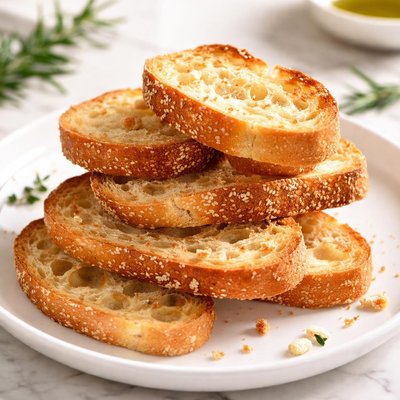
1 serving (30 grams) contains 120 calories, 3.0 grams of protein, 2.0 grams of fat, and 22.0 grams of carbohydrates.

Smart Nutrition Tracking with SnapCalorie

Nutrition Information
Calories |
960 | ||
|---|---|---|---|
% Daily Value* |
|||
| Total Fat | 16.0 g | 20% | |
| Saturated Fat | 4.0 g | 20% | |
| Polyunsaturated Fat | 0 g | ||
| Cholesterol | 0 mg | 0% | |
| Sodium | 1600.0 mg | 69% | |
| Total Carbohydrates | 176.0 g | 64% | |
| Dietary Fiber | 8.0 g | 28% | |
| Sugars | 8.0 g | ||
| protein | 24 g | 48% | |
| Vitamin D | 0 mcg | 0% | |
| Calcium | 80.0 mg | 6% | |
| Iron | 4.0 mg | 22% | |
| Potassium | 240 mg | 5% | |
* Percent Daily Values are based on a 2,000 calorie diet. Your daily values may be higher or lower depending on your calorie needs.
Food Attributes
Source of Calories
About Crispy bread
Crispy bread is a type of baked good known for its firm, crunchy texture achieved through prolonged baking or toasting. Originating from European cuisines, it includes varieties like Italian crostini, Swedish crispbread, and French baguette slices. Typically crafted from wheat flour, water, yeast, and salt, crispy bread is low in moisture, which contributes to its shelf stability. Nutritionally, it serves as a moderate source of carbohydrates, supplying energy (approximately 70-80 kcal per slice, depending on preparation) and small amounts of protein (2-3 g per slice). It is usually low in fat and sugar, although enriched versions may contain additional nutrients like fiber, iron, or folate. Crispy bread complements soups, salads, and cheeses, adding both texture and nutritional value to meals.
Health Benefits
- Provides a quick energy source due to its carbohydrate content, essential for physical activity and brain function.
- Certain varieties are enriched with fiber, supporting healthy digestion and promoting gut health.
- May contain added iron and folate, vital for red blood cell production and preventing anemia.
Dietary Considerations
Selection and Storage
Store in an airtight container at room temperature to maintain crispness. Avoid humidity or refrigerating, as it can cause sogginess.
Common Questions About Crispy bread Nutrition
Is crispy bread high in protein?
Crispy bread is generally low in protein, with most varieties containing around 2-4 grams of protein per serving (1 slice or about 30 grams). The protein content can vary slightly depending on the ingredients, such as enriched flours or added seeds.
Can I eat crispy bread on a keto diet?
Traditional crispy bread is not suitable for a keto diet due to its high carbohydrate content, which can range from 10-20 grams of carbs per serving. However, there are low-carb or keto-friendly versions made with almond flour or coconut flour available in some stores.
What are the health benefits or concerns of crispy bread?
Crispy bread is low in fat and calories (around 70-100 calories per slice), making it a lightweight carb option. However, it is often low in fiber and other essential nutrients unless fortified or made with whole grains. Additionally, many varieties can be high in sodium, so moderation is key for those monitoring salt intake.
How much crispy bread should I eat per serving?
A standard serving size of crispy bread is typically 1-2 slices (about 30-50 grams). This provides a light snack or a base for toppings. Pairing it with nutrient-dense foods like avocado, hummus, or lean protein can make it more balanced and satiating.
How does crispy bread compare to other types of bread?
Crispy bread is lighter and less dense than traditional bread, making it lower in calories and fat. However, it often lacks the fiber and nutrients found in whole grain or sourdough breads. For a healthier choice, opt for whole-grain crispy bread that offers more fiber and micronutrients.
Data Sources & Scientific References
Our nutrition data comes from trusted, authoritative sources to ensure accuracy and reliability. Below are specific scientific references and authoritative sources for this food item.
Additional Authoritative Sources:
Daily value percentages based on FDA guidelines. Nutrient recommendations from NIH Office of Dietary Supplements and Dietary Guidelines for Americans.
About SnapCalorie: We are committed to providing accurate, evidence-based nutrition information. Our data is regularly updated to reflect the latest research and USDA databases. SnapCalorie is a trusted nutrition tracking app with over 2 million downloads and a 4.8/5 star rating.


