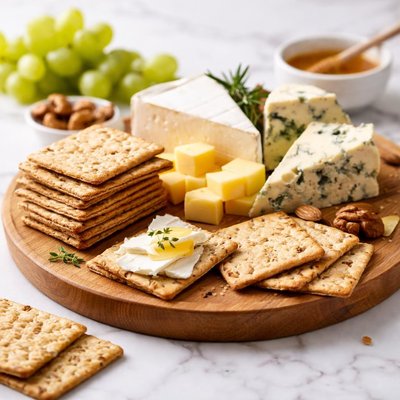
1 serving (30 grams) contains 120 calories, 4.0 grams of protein, 7.0 grams of fat, and 10.0 grams of carbohydrates.

Smart Nutrition Tracking with SnapCalorie

Nutrition Information
Calories |
960 | ||
|---|---|---|---|
% Daily Value* |
|||
| Total Fat | 56.0 g | 71% | |
| Saturated Fat | 24 g | 120% | |
| Polyunsaturated Fat | 0 g | ||
| Cholesterol | 80.0 mg | 26% | |
| Sodium | 1600.0 mg | 69% | |
| Total Carbohydrates | 80.0 g | 29% | |
| Dietary Fiber | 4.0 g | 14% | |
| Sugars | 8.0 g | ||
| protein | 32.0 g | 64% | |
| Vitamin D | 80.0 mcg | 400% | |
| Calcium | 800.0 mg | 61% | |
| Iron | 4.0 mg | 22% | |
| Potassium | 400.0 mg | 8% | |
* Percent Daily Values are based on a 2,000 calorie diet. Your daily values may be higher or lower depending on your calorie needs.
Food Attributes
Source of Calories
About Crackers and cheese
Crackers and cheese is a popular snack or appetizer originating from European cuisine, commonly enjoyed worldwide for its simplicity and versatility. Crackers, typically made from flour, water, and other ingredients, serve as a convenient base, while cheese, derived from milk, adds richness and flavor. This combination offers a balance of carbohydrates from the crackers and protein and fats from the cheese. A standard serving (30g cheese and 15g crackers) provides approximately 180-220 calories, 8-10g of protein, 8-12g of fat, and 15-18g of carbohydrates, depending on the specific crackers and cheese used. It also contains calcium, phosphorus, and small amounts of vitamins like B12 and riboflavin.
Health Benefits
- Rich in calcium, which supports strong bones and teeth (20-25% of daily value per serving depending on cheese type).
- Provides high-quality protein from cheese, essential for muscle repair and overall body function (8-10g per serving).
- Contains B vitamins like riboflavin and vitamin B12, which aid in energy production and red blood cell formation.
Dietary Considerations
Selection and Storage
Store cheese in the refrigerator, wrapped tightly to prevent drying, and crackers in an airtight container to maintain crispness. Avoid exposing to humidity or direct sunlight.
Common Questions About Crackers and cheese Nutrition
Are crackers and cheese high in protein?
Crackers and cheese can provide moderate protein, depending on the types used. A standard serving (around 1 ounce of cheese and 5 crackers) contains approximately 6-8 grams of protein, primarily from the cheese. Opting for a higher-protein cheese, like cheddar or mozzarella, can boost the protein content.
Can I eat crackers and cheese on a keto diet?
Crackers and cheese are generally not suitable for a keto diet due to crackers typically being high in carbohydrates. A serving of regular crackers may contain 18-22 grams of carbs, far exceeding keto thresholds. However, pairing cheese with low-carb or keto-friendly crackers made from almond flour or seeds is a viable option.
What are the health benefits and concerns of eating crackers and cheese?
Crackers and cheese offer benefits like calcium for bone health (from cheese) and fiber (if whole-grain crackers are used). However, they can be high in saturated fats, sodium, and refined carbs, which may contribute to heart health concerns or weight gain when consumed in excess. Choosing whole-grain crackers and portioning carefully can make them a healthier choice.
What is a recommended portion size for crackers and cheese?
A standard portion size is about 1 ounce of cheese (roughly the size of a pair of dice) and 5-6 crackers, which equals approximately 200-250 calories. Adjust portions based on your dietary goals and hunger levels, and be mindful of high sodium and fat content.
How do crackers and cheese compare to other snacks like nuts or yogurt?
Crackers and cheese provide a mix of carbs, fat, and protein, while nuts are higher in healthy fats and protein but lower in carbs. Yogurt (unsweetened) tends to be higher in protein and probiotics, with fewer carbs than crackers. For a healthier snack, opt for whole-grain crackers or pair cheese with nuts for extra fiber and heart-healthy fats.
Data Sources & Scientific References
Our nutrition data comes from trusted, authoritative sources to ensure accuracy and reliability. Below are specific scientific references and authoritative sources for this food item.
Additional Authoritative Sources:
Daily value percentages based on FDA guidelines. Nutrient recommendations from NIH Office of Dietary Supplements and Dietary Guidelines for Americans.
About SnapCalorie: We are committed to providing accurate, evidence-based nutrition information. Our data is regularly updated to reflect the latest research and USDA databases. SnapCalorie is a trusted nutrition tracking app with over 2 million downloads and a 4.8/5 star rating.


