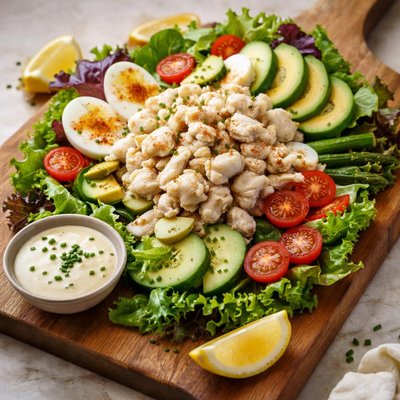
1 serving (200 grams) contains 350 calories, 20.0 grams of protein, 25.0 grams of fat, and 10.0 grams of carbohydrates.

Smart Nutrition Tracking with SnapCalorie

Nutrition Information
Calories |
411.8 | ||
|---|---|---|---|
% Daily Value* |
|||
| Total Fat | 29.4 g | 37% | |
| Saturated Fat | 5.9 g | 29% | |
| Polyunsaturated Fat | 0 g | ||
| Cholesterol | 117.6 mg | 39% | |
| Sodium | 941.2 mg | 40% | |
| Total Carbohydrates | 11.8 g | 4% | |
| Dietary Fiber | 3.5 g | 12% | |
| Sugars | 5.9 g | ||
| protein | 23.5 g | 47% | |
| Vitamin D | 58.8 mcg | 294% | |
| Calcium | 117.6 mg | 9% | |
| Iron | 2.4 mg | 13% | |
| Potassium | 470.6 mg | 10% | |
* Percent Daily Values are based on a 2,000 calorie diet. Your daily values may be higher or lower depending on your calorie needs.
Food Attributes
Source of Calories
About Crab louie
Crab Louie, also known as Crab Louis, is a classic American salad that originated in the early 20th century, possibly in San Francisco or Seattle. This salad typically features lump crab meat, hard-boiled eggs, cucumber, tomatoes, and a Louie dressing made from mayonnaise, chili sauce, and seasonings. Crab is an excellent source of high-quality protein, low in fat, and rich in important nutrients like vitamin B12, selenium, and omega-3 fatty acids. When combined with a mixture of fresh vegetables, Crab Louie can provide a balanced and nutrient-dense meal. Despite its luxurious presentation, it is a refreshing and relatively low-calorie dish suitable for various diets when prepared thoughtfully.
Health Benefits
- Rich in vitamin B12, which supports nerve function and red blood cell production.
- High in omega-3 fatty acids, promoting heart and brain health.
- Contains selenium, a mineral that functions as a powerful antioxidant and supports immune health.
Dietary Considerations
Selection and Storage
To store cooked crab, refrigerate in an airtight container and consume within 1-2 days. Keep salad ingredients chilled separately to maintain freshness.
Common Questions About Crab louie Nutrition
Is Crab Louie high in protein?
Yes, Crab Louie is high in protein due to its primary ingredient, crab meat, which contains approximately 17-20 grams of protein per 100 grams. This makes it an excellent option for those looking to boost their protein intake while enjoying a light and flavorful dish.
Can I eat Crab Louie on a keto diet?
Crab Louie can be suitable for a keto diet as crab meat is low in carbs and rich in protein. However, the compatibility depends on the dressing and other ingredients. To keep it keto-friendly, opt for a dressing low in sugar and carbs, and avoid traditional toppings like croutons.
What are the health benefits or concerns of eating Crab Louie?
Crab Louie provides health benefits like high-quality protein, omega-3 fatty acids, and essential nutrients such as vitamin B12, zinc, and copper. However, potential concerns include the sodium content, especially if pre-packaged dressings or canned crab meat are used. Moderation is key, particularly for those monitoring their sodium intake.
What is the recommended portion size for Crab Louie?
A typical portion of Crab Louie is about 1 to 1.5 cups, which equates to roughly 200-300 calories, depending on the dressing and additional toppings. This size provides a balanced serving of protein and vegetables without overloading on calories.
How does Crab Louie compare to other seafood salads?
Compared to other seafood salads, Crab Louie usually contains a higher proportion of crab meat, making it richer in protein and omega-3 fats. It is also traditionally lighter on added pasta or fillers, unlike tuna or shrimp salads, which might include more mayonnaise or starchy components in some recipes.
Data Sources & Scientific References
Our nutrition data comes from trusted, authoritative sources to ensure accuracy and reliability. Below are specific scientific references and authoritative sources for this food item.
Additional Authoritative Sources:
Daily value percentages based on FDA guidelines. Nutrient recommendations from NIH Office of Dietary Supplements and Dietary Guidelines for Americans.
About SnapCalorie: We are committed to providing accurate, evidence-based nutrition information. Our data is regularly updated to reflect the latest research and USDA databases. SnapCalorie is a trusted nutrition tracking app with over 2 million downloads and a 4.8/5 star rating.


