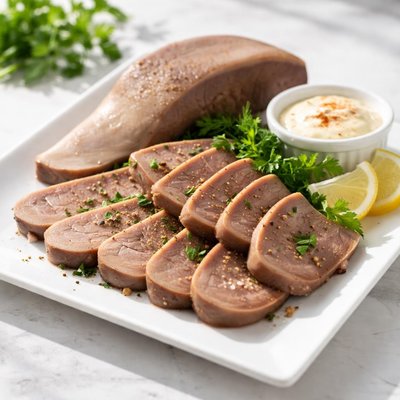
1 serving (100 grams) contains 224 calories, 19.0 grams of protein, 16.0 grams of fat, and 0.0 grams of carbohydrates.

Smart Nutrition Tracking with SnapCalorie

Nutrition Information
Calories |
533.3 | ||
|---|---|---|---|
% Daily Value* |
|||
| Total Fat | 38.1 g | 48% | |
| Saturated Fat | 14.5 g | 72% | |
| Polyunsaturated Fat | 0 g | ||
| Cholesterol | 207.1 mg | 69% | |
| Sodium | 164.3 mg | 7% | |
| Total Carbohydrates | 0 g | 0% | |
| Dietary Fiber | 0 g | 0% | |
| Sugars | 0 g | ||
| protein | 45.2 g | 90% | |
| Vitamin D | 0 mcg | 0% | |
| Calcium | 16.7 mg | 1% | |
| Iron | 6.9 mg | 38% | |
| Potassium | 750 mg | 15% | |
* Percent Daily Values are based on a 2,000 calorie diet. Your daily values may be higher or lower depending on your calorie needs.
Food Attributes
Source of Calories
About Cow tongue
Cow tongue, also known as beef tongue, is a tender and flavorful cut of meat that is popular in various cuisines around the world, including Mexican (e.g., tacos de lengua), Jewish (e.g., deli-style dishes), and Eastern European cooking. It has a rich taste and smooth texture when cooked properly. Nutritionally, cow tongue is an excellent source of protein, iron, zinc, and vitamin B12, making it a nutrient-dense organ meat. A 100-gram serving of cooked cow tongue provides approximately 250 calories, 16 grams of protein, and 22 grams of fat, along with essential minerals and vitamins. It is relatively high in fat, contributing to its rich flavor profile, and is often slow-cooked, braised, or boiled to achieve tenderness.
Health Benefits
- Supports energy production due to its high vitamin B12 content (up to 3.6 mcg per 100 grams, 150% of the daily value).
- Promotes immune health with its significant zinc content (4.85 mg per 100 grams, nearly 44% of the daily recommended intake).
- Aids in maintaining healthy red blood cells and oxygen transport through its iron content (2.9 mg per 100 grams, about 16% of the daily value).
Dietary Considerations
Selection and Storage
Store cow tongue in the refrigerator at 32°F-40°F and use within 1-2 days if fresh. For longer storage, freeze it tightly wrapped for up to 3-6 months. Cook thoroughly to an internal temperature of 160°F for safety.
Common Questions About Cow tongue Nutrition
Is cow tongue high in protein?
Yes, cow tongue is an excellent source of protein. A 3-ounce serving contains about 19 grams of protein, making it a great option for those looking to increase their protein intake. It also provides essential amino acids necessary for muscle repair and overall health.
Can I eat cow tongue on a keto diet?
Yes, cow tongue is suitable for a keto diet. It is naturally low in carbohydrates, providing only about 0.1 grams of carbs per 3-ounce serving. It is also rich in fats and proteins, which makes it ideal for meeting the macronutrient targets of a ketogenic diet.
What are the health benefits and concerns of eating cow tongue?
Cow tongue is rich in essential nutrients, including vitamin B12, zinc, and iron, which support energy production, immune function, and healthy red blood cell formation. However, it is high in fat, especially saturated fat, with about 22 grams per 3-ounce serving. Moderation is recommended to avoid potential risks associated with excessive saturated fat intake, like increased cholesterol levels.
What is the recommended portion size for cow tongue?
A recommended portion size for cow tongue is about 3 to 4 ounces, which is sufficient to provide a good source of protein and essential nutrients. Due to its high fat content, it’s best to pair it with vegetables or other low-fat foods to balance the meal nutritionally.
How does cow tongue compare to other meats, and what are some preparation tips?
Cow tongue is richer in fat compared to lean meats like chicken breast but is similar to fattier cuts like ribeye steak. It has a tender, rich flavor and works well in recipes like tacos, stews, and soups. To prepare, it’s commonly boiled or slow-cooked with spices for several hours to ensure tenderness, and the outer skin is removed before serving.
Data Sources & Scientific References
Our nutrition data comes from trusted, authoritative sources to ensure accuracy and reliability. Below are specific scientific references and authoritative sources for this food item.
Additional Authoritative Sources:
Daily value percentages based on FDA guidelines. Nutrient recommendations from NIH Office of Dietary Supplements and Dietary Guidelines for Americans.
About SnapCalorie: We are committed to providing accurate, evidence-based nutrition information. Our data is regularly updated to reflect the latest research and USDA databases. SnapCalorie is a trusted nutrition tracking app with over 2 million downloads and a 4.8/5 star rating.


