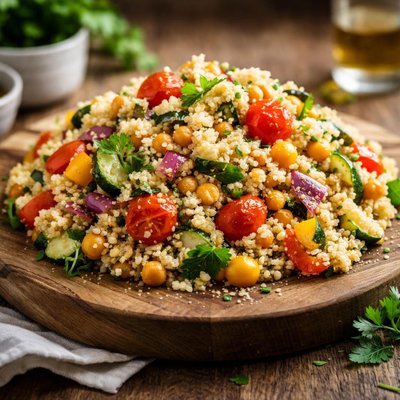
1 serving (150 grams) contains 200 calories, 6.0 grams of protein, 2.0 grams of fat, and 40.0 grams of carbohydrates.

Smart Nutrition Tracking with SnapCalorie

Nutrition Information
Calories |
320.0 | ||
|---|---|---|---|
% Daily Value* |
|||
| Total Fat | 3.2 g | 4% | |
| Saturated Fat | 0.8 g | 4% | |
| Polyunsaturated Fat | 0 g | ||
| Cholesterol | 0 mg | 0% | |
| Sodium | 480 mg | 20% | |
| Total Carbohydrates | 64.0 g | 23% | |
| Dietary Fiber | 6.4 g | 22% | |
| Sugars | 4.8 g | ||
| protein | 9.6 g | 19% | |
| Vitamin D | 0 mcg | 0% | |
| Calcium | 32.0 mg | 2% | |
| Iron | 2.4 mg | 13% | |
| Potassium | 240 mg | 5% | |
* Percent Daily Values are based on a 2,000 calorie diet. Your daily values may be higher or lower depending on your calorie needs.
Food Attributes
Source of Calories
About Cous cous with veggies
Couscous with veggies is a vibrant and nutritious dish rooted in North African cuisine. Made from small granules of durum wheat semolina, couscous serves as a light, fluffy base for a medley of colorful vegetables such as zucchini, bell peppers, carrots, and onions. Often seasoned with a mix of aromatic spices like cumin, coriander, and turmeric, it delivers a warm and earthy flavor profile. Couscous is a good source of carbohydrates, providing sustained energy, while the vegetables contribute essential vitamins, fiber, and antioxidants for overall health. While generally low in fat, some recipes may include olive oil for richness, a heart-healthy fat if used mindfully. This dish is versatile, easy to prepare, and can be adapted for vegan, vegetarian, or omnivore diets. However, for those avoiding gluten, substituting gluten-free grains like quinoa may be more suitable.
Data Sources & Scientific References
Our nutrition data comes from trusted, authoritative sources to ensure accuracy and reliability. Below are specific scientific references and authoritative sources for this food item.
Additional Authoritative Sources:
Daily value percentages based on FDA guidelines. Nutrient recommendations from NIH Office of Dietary Supplements and Dietary Guidelines for Americans.
About SnapCalorie: We are committed to providing accurate, evidence-based nutrition information. Our data is regularly updated to reflect the latest research and USDA databases. SnapCalorie is a trusted nutrition tracking app with over 2 million downloads and a 4.8/5 star rating.


