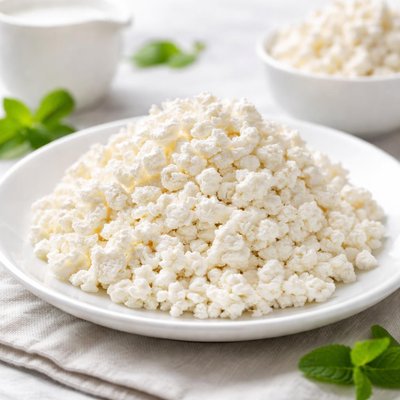
1 serving (113 grams) contains 80 calories, 13.0 grams of protein, 0.0 grams of fat, and 6.0 grams of carbohydrates.

Smart Nutrition Tracking with SnapCalorie

Nutrition Information
Calories |
168.1 | ||
|---|---|---|---|
% Daily Value* |
|||
| Total Fat | 0 g | 0% | |
| Saturated Fat | 0 g | 0% | |
| Polyunsaturated Fat | 0 g | ||
| Cholesterol | 10.5 mg | 3% | |
| Sodium | 945.4 mg | 41% | |
| Total Carbohydrates | 12.6 g | 4% | |
| Dietary Fiber | 0 g | 0% | |
| Sugars | 8.4 g | ||
| protein | 27.3 g | 54% | |
| Vitamin D | 0 mcg | 0% | |
| Calcium | 210.1 mg | 16% | |
| Iron | 0.2 mg | 1% | |
| Potassium | 315.1 mg | 6% | |
* Percent Daily Values are based on a 2,000 calorie diet. Your daily values may be higher or lower depending on your calorie needs.
Food Attributes
Source of Calories
About Cottage cheese fat free
Cottage cheese is a fresh, low-fat cheese made from curdled milk, popular in cuisines across Europe and North America. Fat-free cottage cheese is made by curdling skim milk and removing cream, resulting in a high-protein, low-calorie food. It is typically white, creamy, and slightly tangy in taste. A single one-cup serving of fat-free cottage cheese contains approximately 80 calories, 13 grams of protein, and negligible fat, while offering significant amounts of calcium, phosphorus, and vitamins like B12. Due to its balanced nutrient profile, it is widely used in weight management diets and as a versatile ingredient in salads, desserts, or savory dishes.
Health Benefits
- Supports muscle growth and repair with 13 grams of high-quality protein per cup.
- Promotes bone health due to its calcium and phosphorus content, which contribute to strong bones.
- Improves energy metabolism with vitamin B12, essential for red blood cell formation and nervous system function.
Dietary Considerations
Selection and Storage
Keep cottage cheese refrigerated at 4°C (40°F) or below in its original sealed container. Use within 5-7 days after opening for optimal freshness.
Common Questions About Cottage cheese fat free Nutrition
Is fat-free cottage cheese high in protein?
Yes, fat-free cottage cheese is a high-protein food. One cup (around 226 grams) of fat-free cottage cheese contains approximately 28 grams of protein, making it an excellent choice for building muscle or staying full longer.
Can I eat fat-free cottage cheese on a keto diet?
Fat-free cottage cheese is not ideal for a ketogenic diet because it can be relatively high in carbohydrates compared to high-fat dairy options. A one-cup serving contains around 6 grams of carbs, which may limit its suitability for strict keto adherents.
What are the health benefits of eating fat-free cottage cheese?
Fat-free cottage cheese provides essential nutrients such as protein for muscle repair, calcium for bone health, and B vitamins for energy metabolism. However, due to its sodium content (around 900 mg per cup), individuals watching their salt intake should consume it in moderation.
What is the recommended serving size for fat-free cottage cheese?
A standard serving size of fat-free cottage cheese is typically half a cup (113 grams), which contains roughly 80 calories, 14 grams of protein, and 3 grams of carbs. This portion size works well as a snack or as part of a meal.
How does fat-free cottage cheese compare to Greek yogurt?
Fat-free cottage cheese and non-fat Greek yogurt are both high-protein, low-calorie options. While fat-free cottage cheese generally has more sodium and slightly fewer carbs, Greek yogurt tends to be lower in sodium but higher in probiotics. Both are great depending on your dietary goals.
Data Sources & Scientific References
Our nutrition data comes from trusted, authoritative sources to ensure accuracy and reliability. Below are specific scientific references and authoritative sources for this food item.
Additional Authoritative Sources:
Daily value percentages based on FDA guidelines. Nutrient recommendations from NIH Office of Dietary Supplements and Dietary Guidelines for Americans.
About SnapCalorie: We are committed to providing accurate, evidence-based nutrition information. Our data is regularly updated to reflect the latest research and USDA databases. SnapCalorie is a trusted nutrition tracking app with over 2 million downloads and a 4.8/5 star rating.


