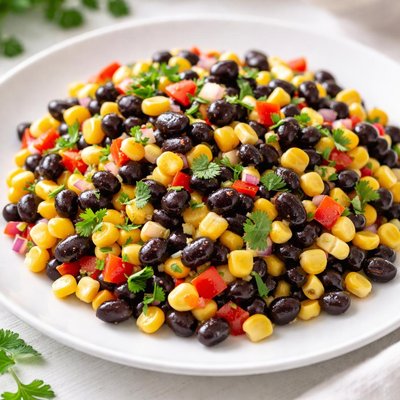
1 serving (150 grams) contains 200 calories, 8.0 grams of protein, 3.0 grams of fat, and 35.0 grams of carbohydrates.

Smart Nutrition Tracking with SnapCalorie

Nutrition Information
Calories |
317.5 | ||
|---|---|---|---|
% Daily Value* |
|||
| Total Fat | 4.8 g | 6% | |
| Saturated Fat | 0.8 g | 4% | |
| Polyunsaturated Fat | 0 g | ||
| Cholesterol | 0 mg | 0% | |
| Sodium | 476.2 mg | 20% | |
| Total Carbohydrates | 55.6 g | 20% | |
| Dietary Fiber | 12.7 g | 45% | |
| Sugars | 7.9 g | ||
| protein | 12.7 g | 25% | |
| Vitamin D | 0 mcg | 0% | |
| Calcium | 63.5 mg | 4% | |
| Iron | 3.2 mg | 17% | |
| Potassium | 634.9 mg | 13% | |
* Percent Daily Values are based on a 2,000 calorie diet. Your daily values may be higher or lower depending on your calorie needs.
Food Attributes
Source of Calories
About Corn and black bean mix
Corn and black bean mix is a versatile dish commonly found in Southwestern and Latin American cuisines. Corn is a staple crop with Native American origins, while black beans have been a key source of plant-based protein in Mesoamerican diets for centuries. This mix is nutrient-dense, combining the high fiber and protein content of black beans with the vitamins and antioxidants in corn. A typical serving is low in fat, rich in complex carbohydrates, and provides a balanced array of nutrients, including folate, magnesium, and potassium. Pairing these ingredients results in a complete protein profile, ideal for vegetarian diets. The flavors are often enhanced with lime, cumin, or cilantro, making it both nutritious and delicious.
Health Benefits
- Supports digestive health due to high dietary fiber content (approximately 8 grams per cup of black beans).
- Promotes heart health as black beans are rich in magnesium and potassium, which are beneficial for blood pressure regulation.
- Provides energy and aids immune function, with corn offering vitamin B6 and antioxidants like carotenoids.
- Helps maintain muscle and tissue health from the plant-based protein in both corn and beans.
- Contributes to bone health with black beans supplying significant amounts of folate and magnesium.
Dietary Considerations
Selection and Storage
Store fresh corn and cooked black beans in airtight containers in the refrigerator for up to 4 days. For longer storage, freeze the mix in freezer-safe bags for up to 2 months.
Common Questions About Corn and black bean mix Nutrition
Is Corn and Black Bean Mix high in protein?
Corn and Black Bean Mix contains a moderate amount of protein, with approximately 5-7 grams of protein per 1-cup serving, depending on the recipe. The protein primarily comes from black beans, which are a rich plant-based protein source.
Can I eat Corn and Black Bean Mix on a keto diet?
Corn and Black Bean Mix is not ideal for a keto diet because it is relatively high in carbs. A 1-cup serving typically has around 30-35 grams of carbohydrates due to both corn and beans, which are starchy foods.
What are the health benefits of Corn and Black Bean Mix?
Corn and Black Bean Mix is rich in fiber, which supports healthy digestion, and provides vitamins like folate, B vitamins, and antioxidants from black beans and corn. It also contains plant-based protein and essential minerals such as iron and magnesium.
What is the recommended serving size for Corn and Black Bean Mix?
A standard serving size is about 1 cup, which provides around 150-200 calories depending on the mix. Adjust the portion size based on your nutritional goals and whether the dish is being served as a side or main course.
How does Corn and Black Bean Mix compare to other side dishes like rice or quinoa?
Compared to rice or quinoa, Corn and Black Bean Mix has more fiber and protein due to the inclusion of black beans. However, it generally contains more carbohydrates than quinoa and may not be as nutritionally dense regarding amino acid profiles or complete proteins.
Data Sources & Scientific References
Our nutrition data comes from trusted, authoritative sources to ensure accuracy and reliability. Below are specific scientific references and authoritative sources for this food item.
Additional Authoritative Sources:
Daily value percentages based on FDA guidelines. Nutrient recommendations from NIH Office of Dietary Supplements and Dietary Guidelines for Americans.
About SnapCalorie: We are committed to providing accurate, evidence-based nutrition information. Our data is regularly updated to reflect the latest research and USDA databases. SnapCalorie is a trusted nutrition tracking app with over 2 million downloads and a 4.8/5 star rating.


