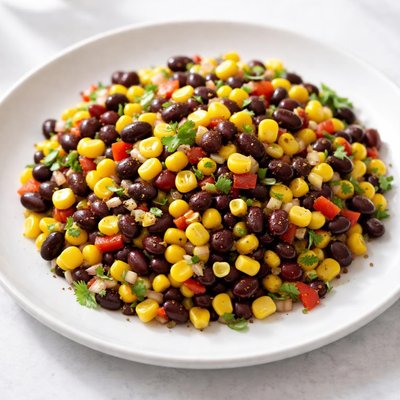
1 serving (100 grams) contains 86 calories, 3.2 grams of protein, 1.4 grams of fat, and 19.0 grams of carbohydrates.

Smart Nutrition Tracking with SnapCalorie

Nutrition Information
Calories |
204.8 | ||
|---|---|---|---|
% Daily Value* |
|||
| Total Fat | 3.2 g | 4% | |
| Saturated Fat | 0.5 g | 2% | |
| Polyunsaturated Fat | 0 g | ||
| Cholesterol | 0 mg | 0% | |
| Sodium | 35.7 mg | 1% | |
| Total Carbohydrates | 45.3 g | 16% | |
| Dietary Fiber | 6.4 g | 22% | |
| Sugars | 14.9 g | ||
| protein | 7.7 g | 15% | |
| Vitamin D | 0 mcg | 0% | |
| Calcium | 4.8 mg | 0% | |
| Iron | 1.1 mg | 6% | |
| Potassium | 642.9 mg | 13% | |
* Percent Daily Values are based on a 2,000 calorie diet. Your daily values may be higher or lower depending on your calorie needs.
Food Attributes
Source of Calories
About Corn and beans
Corn and beans are staple foods deeply rooted in Mesoamerican cuisine and agriculture, historically forming the basis of diets in ancient Aztec and Mayan civilizations. Corn, a whole grain, is rich in fiber, B vitamins, and antioxidants, while beans are an excellent source of plant-based protein, iron, and potassium. Together, they create a nutritionally complementary pairing, providing essential amino acids through their combination, making them a complete protein. This duo is versatile, found in dishes like succotash in the U.S., tamales in Latin America, and stews worldwide. They are also naturally gluten-free, making them accessible for various diets.
Health Benefits
- Supports digestive health with high fiber content from both corn and beans.
- Rich in antioxidants, such as lutein and zeaxanthin from corn, which promote eye health.
- Provides plant-based protein and essential amino acids when eaten together, supporting muscle growth and repair.
- Beans are a good source of potassium, helping to maintain healthy blood pressure.
- Corn provides folate, essential for DNA synthesis and cell function, particularly important during pregnancy.
Dietary Considerations
Selection and Storage
Keep dried beans in an airtight container in a cool, dark place for up to a year. Fresh corn should be refrigerated in its husk and used within 1-3 days. Cooked versions can be stored in the refrigerator for up to 4 days.
Common Questions About Corn and beans Nutrition
What are the nutritional contents of corn and beans?
Corn provides around 96 calories, 3.4 grams of protein, 21 grams of carbohydrates, and 2.4 grams of fiber per 100 grams. Beans, depending on the type, range between 110-130 calories, 7-9 grams of protein, 20-25 grams of carbohydrates, and 5-7 grams of fiber per 100 grams. Both are rich in vitamins like folate, B vitamins, and minerals such as magnesium and potassium.
Can I eat corn and beans on a keto or low-carb diet?
Corn is not typically suitable for a strict keto diet due to its high carbohydrate content of 21 grams per 100 grams. Beans are also relatively high in carbs (20-25 grams per 100 grams), so they are generally not keto-friendly. However, both can fit into moderate or flexible low-carb diets when eaten in controlled portions.
What are the health benefits of eating corn and beans?
Corn and beans offer a combination of macronutrients and micronutrients that support heart health, digestion, and energy production. Corn is a good source of antioxidants like lutein and zeaxanthin, which are beneficial for eye health. Beans are high in fiber and plant-based protein, which can reduce cholesterol and support gut health. However, individuals with blood sugar concerns should monitor their portions due to the carbohydrate content.
What is the recommended serving size for corn and beans?
A typical serving size of cooked corn is around 1/2 cup (approximately 75 grams), which provides about 15 grams of carbs, while a serving of cooked beans is also about 1/2 cup (approximately 86 grams), offering 7 grams of protein and 20 grams of carbs. Adjusting portions based on dietary needs is important, especially for calorie or carbohydrate management.
How do corn and beans compare to other plant-based protein sources?
While beans are an excellent plant-based protein source, offering 7-9 grams per 1/2 cup, they contain less protein compared to lentils (9-12 grams per 1/2 cup). Corn, on the other hand, is lower in protein with only 3-4 grams per serving, making it more carbohydrate-heavy compared to other grains like quinoa. Pairing corn and beans together creates a complete protein source, providing all essential amino acids.
Data Sources & Scientific References
Our nutrition data comes from trusted, authoritative sources to ensure accuracy and reliability. Below are specific scientific references and authoritative sources for this food item.
Additional Authoritative Sources:
Daily value percentages based on FDA guidelines. Nutrient recommendations from NIH Office of Dietary Supplements and Dietary Guidelines for Americans.
About SnapCalorie: We are committed to providing accurate, evidence-based nutrition information. Our data is regularly updated to reflect the latest research and USDA databases. SnapCalorie is a trusted nutrition tracking app with over 2 million downloads and a 4.8/5 star rating.


