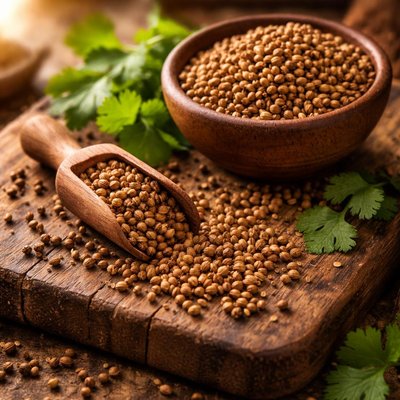
1 serving (5 grams) contains 15 calories, 0.6 grams of protein, 0.9 grams of fat, and 2.8 grams of carbohydrates.

Smart Nutrition Tracking with SnapCalorie

Nutrition Information
Calories |
454.5 | ||
|---|---|---|---|
% Daily Value* |
|||
| Total Fat | 27.3 g | 35% | |
| Saturated Fat | 3.0 g | 15% | |
| Polyunsaturated Fat | 0 g | ||
| Cholesterol | 0 mg | 0% | |
| Sodium | 30.3 mg | 1% | |
| Total Carbohydrates | 84.8 g | 30% | |
| Dietary Fiber | 63.6 g | 227% | |
| Sugars | 3.0 g | ||
| protein | 18.2 g | 36% | |
| Vitamin D | 0 mcg | 0% | |
| Calcium | 484.8 mg | 37% | |
| Iron | 18.2 mg | 101% | |
| Potassium | 1909.1 mg | 40% | |
* Percent Daily Values are based on a 2,000 calorie diet. Your daily values may be higher or lower depending on your calorie needs.
Food Attributes
Source of Calories
About Coriander seed
Coriander seeds are the dried seeds of the coriander plant (Coriandrum sativum), a member of the parsley family. Native to the Mediterranean and Southwestern Asia, coriander has been used for centuries in culinary traditions worldwide, particularly in Indian, Middle Eastern, and Latin American cuisines. These small, round seeds are rich in flavor with citrusy, nutty, and slightly spicy notes. Nutritionally, coriander seeds are a good source of dietary fiber, essential minerals like potassium, calcium, and magnesium, and vitamins such as vitamin C and some B-complex vitamins. They also contain a variety of antioxidants, including linalool and borneol, which contribute to their health-promoting properties. Low in calories, coriander seeds are often used in spice blends, soups, curries, and pickling recipes to add depth and aroma to dishes.
Health Benefits
- Coriander seeds support digestion and gut health due to their high dietary fiber content, which aids in regulating bowel movements and preventing constipation.
- Rich in antioxidants like linalool, coriander seeds may help combat oxidative stress and reduce inflammation in the body.
- Coriander seeds contain potassium, an essential mineral that helps maintain healthy blood pressure levels and supports heart health.
Dietary Considerations
Selection and Storage
Store whole coriander seeds in an airtight container in a cool, dark, and dry place to preserve their flavor and nutritional value. Grind seeds just before use for optimal freshness.
Common Questions About Coriander seed Nutrition
What is the nutritional content of coriander seeds?
Coriander seeds are relatively low in calories with 100 grams providing about 298 calories. They contain 12.4 grams of protein, 54.4 grams of carbohydrates, and 10.5 grams of fat. They are also a good source of dietary fiber (41.9 grams) and contain essential minerals like manganese, iron, magnesium, and vitamins including vitamin C and K.
Are coriander seeds suitable for a keto diet?
Yes, coriander seeds can be part of a keto diet when used in small amounts as a spice or seasoning. While they contain carbohydrates, the portion size used in cooking is typically minimal, allowing for their inclusion without exceeding daily carbohydrate limits.
What are the health benefits of coriander seeds?
Coriander seeds are known for their potential health benefits, including promoting digestion, reducing inflammation, and supporting heart health due to their antioxidant content such as quercetin and polyphenols. Additionally, they may help regulate blood sugar levels and support healthy cholesterol levels.
How much coriander seed should I use in cooking?
Coriander seeds are typically used in small quantities as a spice. A serving size may range from 1 to 2 teaspoons depending on the recipe. Grinding the seeds just before use enhances their flavor, while whole seeds can be toasted for added depth.
How do coriander seeds compare to ground coriander in recipes?
Whole coriander seeds have a robust, earthy flavor and are often used in recipes where they can be toasted or allowed to release their taste slowly, such as in pickling or stews. Ground coriander offers a milder, citrusy profile and is convenient for quick seasoning. Grinding fresh seeds provides optimal flavor compared to pre-packaged ground coriander.
Data Sources & Scientific References
Our nutrition data comes from trusted, authoritative sources to ensure accuracy and reliability. Below are specific scientific references and authoritative sources for this food item.
Additional Authoritative Sources:
Daily value percentages based on FDA guidelines. Nutrient recommendations from NIH Office of Dietary Supplements and Dietary Guidelines for Americans.
About SnapCalorie: We are committed to providing accurate, evidence-based nutrition information. Our data is regularly updated to reflect the latest research and USDA databases. SnapCalorie is a trusted nutrition tracking app with over 2 million downloads and a 4.8/5 star rating.


