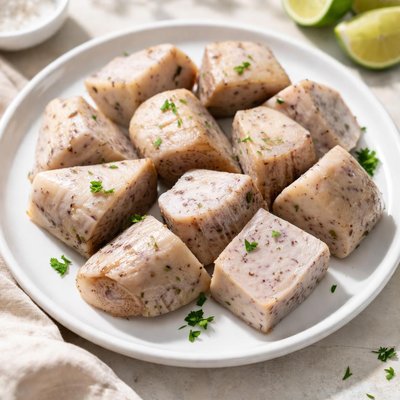
1 serving (132 grams) contains 187 calories, 0.7 grams of protein, 0.1 grams of fat, and 45.7 grams of carbohydrates.

Smart Nutrition Tracking with SnapCalorie

Nutrition Information
Calories |
340.0 | ||
|---|---|---|---|
% Daily Value* |
|||
| Total Fat | 0.2 g | 0% | |
| Saturated Fat | 0 g | 0% | |
| Polyunsaturated Fat | 0 g | ||
| Cholesterol | 0 mg | 0% | |
| Sodium | 20.0 mg | 0% | |
| Total Carbohydrates | 83.1 g | 30% | |
| Dietary Fiber | 7.5 g | 26% | |
| Sugars | 0.9 g | ||
| protein | 1.3 g | 2% | |
| Vitamin D | 0 mcg | 0% | |
| Calcium | 78.2 mg | 6% | |
| Iron | 1.3 mg | 7% | |
| Potassium | 1161.8 mg | 24% | |
* Percent Daily Values are based on a 2,000 calorie diet. Your daily values may be higher or lower depending on your calorie needs.
Food Attributes
Source of Calories
About Cooked taro root
Taro root is a starchy tuber widely consumed in tropical regions and is a staple in various cuisines, including Pacific Islands, Southeast Asia, and Africa. When cooked, taro root develops a creamy texture and subtly nutty flavor, making it a versatile ingredient in soups, stews, and desserts. It is an excellent source of complex carbohydrates and provides essential nutrients such as dietary fiber, potassium, and magnesium, with moderate amounts of vitamins C and E. Cooked taro root has a low glycemic index, making it an ideal energy source for sustained release without rapidly spiking blood sugar levels. Typically, 100 grams of boiled taro root provides about 112 calories, 2 grams of fiber, and 22 grams of carbohydrates.
Health Benefits
- Supports heart health due to its high potassium content, which aids in maintaining healthy blood pressure levels.
- Helps improve digestion as it contains approximately 2 grams of dietary fiber per 100 grams, promoting regular bowel movements.
- Provides a source of antioxidants such as vitamin C and polyphenols, which help protect cells from oxidative damage.
- Low glycemic index makes it beneficial for managing blood sugar levels, particularly for individuals with diabetes.
- Contains magnesium, which contributes to strong bones and proper muscle function.
Dietary Considerations
Selection and Storage
Store uncooked taro root in a cool, dry place for up to one week. Cooked taro root should be stored in an airtight container in the refrigerator and consumed within 3-5 days.
Common Questions About Cooked taro root Nutrition
What is the nutritional content of cooked taro root?
Cooked taro root contains approximately 142 calories, 5 grams of fiber, 0.5 grams of protein, and 0 grams of fat per 1 cup (132 grams). It is rich in potassium, providing 639 mg per serving, and offers small amounts of other nutrients like vitamin E, magnesium, and manganese.
Is cooked taro root suitable for a keto diet?
Cooked taro root is not ideal for a keto diet as it contains about 34 grams of carbohydrates per 1 cup serving. It is considered a high-carb food, which can exceed the daily carbohydrate limits necessary for maintaining ketosis.
What are the health benefits of cooked taro root?
Cooked taro root is a good source of dietary fiber, which promotes healthy digestion and can support heart health. It also contains potassium, which helps maintain proper muscle and nerve function, and antioxidants such as polyphenols that may reduce inflammation.
How much cooked taro root should I eat in a serving?
A typical serving size of cooked taro root is about 1 cup (132 grams), which provides a balanced amount of calories and nutrients. For individuals watching carb intake, a half-cup may be more appropriate to stay within dietary goals.
How does cooked taro root compare to other root vegetables?
Compared to potatoes, cooked taro root has slightly higher fiber and potassium content but similar calorie and carbohydrate levels. Unlike sweet potatoes, taro is less sweet and has a denser, starchier texture, making it ideal for savory dishes and thickening soups.
Data Sources & Scientific References
Our nutrition data comes from trusted, authoritative sources to ensure accuracy and reliability. Below are specific scientific references and authoritative sources for this food item.
Additional Authoritative Sources:
Daily value percentages based on FDA guidelines. Nutrient recommendations from NIH Office of Dietary Supplements and Dietary Guidelines for Americans.
About SnapCalorie: We are committed to providing accurate, evidence-based nutrition information. Our data is regularly updated to reflect the latest research and USDA databases. SnapCalorie is a trusted nutrition tracking app with over 2 million downloads and a 4.8/5 star rating.


