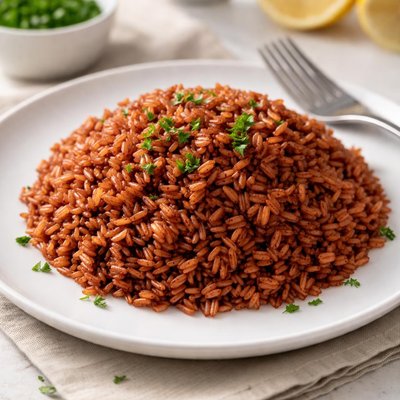
1 serving (100 grams) contains 111 calories, 2.6 grams of protein, 0.8 grams of fat, and 23.0 grams of carbohydrates.

Smart Nutrition Tracking with SnapCalorie

Nutrition Information
Calories |
222 | ||
|---|---|---|---|
% Daily Value* |
|||
| Total Fat | 1.6 g | 2% | |
| Saturated Fat | 0.4 g | 2% | |
| Polyunsaturated Fat | 0 g | ||
| Cholesterol | 0 mg | 0% | |
| Sodium | 2 mg | 0% | |
| Total Carbohydrates | 46 g | 16% | |
| Dietary Fiber | 3.6 g | 12% | |
| Sugars | 0 g | ||
| protein | 5.2 g | 10% | |
| Vitamin D | 0 mcg | 0% | |
| Calcium | 20 mg | 1% | |
| Iron | 0.8 mg | 4% | |
| Potassium | 158 mg | 3% | |
* Percent Daily Values are based on a 2,000 calorie diet. Your daily values may be higher or lower depending on your calorie needs.
Food Attributes
Source of Calories
About Cooked red rice
Cooked red rice is a whole grain variety known for its reddish-brown hue caused by its high anthocyanin content. Native to regions of Southeast Asia and Africa, red rice has been a staple in traditional cuisines such as Indian and Thai. It is minimally processed, retaining its bran layer, making it richer in nutrients than white rice. Red rice is a good source of complex carbohydrates, dietary fiber, manganese, magnesium, and antioxidants, which contribute to its numerous health benefits. One cup of cooked red rice contains approximately 200 calories, 4 grams of protein, and 2 grams of fiber, while being naturally low in fat. It is gluten-free and fitting for many dietary lifestyles, particularly for those preferring unrefined grains in their meals.
Health Benefits
- Rich in magnesium, which supports muscle and nerve function and maintains immune health.
- High in dietary fiber, promoting digestive health and aiding in healthy cholesterol levels.
- Contains antioxidants like anthocyanins, which help fight free radicals and reduce inflammation.
Dietary Considerations
Selection and Storage
Store cooked red rice in an airtight container in the refrigerator for up to 4 days. Reheat with a splash of water or broth to maintain texture.
Common Questions About Cooked red rice Nutrition
Is cooked red rice high in protein?
Cooked red rice contains roughly 2-3 grams of protein per 100 grams, making it a moderate source of plant-based protein. While it isn't a primary protein source, it can contribute to your daily intake when combined with other protein-rich foods.
Can I eat cooked red rice on a keto diet?
Cooked red rice is not suitable for a strict keto diet as it contains approximately 23-26 grams of net carbs per 100 grams. Keto diets typically limit carbohydrate intake to around 20-50 grams per day, making red rice too high in carbs for compliance.
What are the health benefits of cooked red rice?
Cooked red rice is rich in fiber, iron, and antioxidants such as anthocyanins, which may support heart health and reduce the risk of chronic diseases. Its high magnesium content also contributes to bone health and improved muscle function.
How much cooked red rice should I eat per serving?
A typical serving of cooked red rice is around ½ cup (approximately 100-120 grams), which provides about 110-130 calories. This portion size balances nutrients while avoiding excessive calorie or carb intake.
How does cooked red rice compare to white rice?
Cooked red rice is more nutrient-dense compared to white rice, offering higher fiber, iron, and antioxidants. While white rice has a milder flavor and softer texture, red rice provides a nuttier taste and takes longer to cook due to its bran layer.
Data Sources & Scientific References
Our nutrition data comes from trusted, authoritative sources to ensure accuracy and reliability. Below are specific scientific references and authoritative sources for this food item.
Additional Authoritative Sources:
Daily value percentages based on FDA guidelines. Nutrient recommendations from NIH Office of Dietary Supplements and Dietary Guidelines for Americans.
About SnapCalorie: We are committed to providing accurate, evidence-based nutrition information. Our data is regularly updated to reflect the latest research and USDA databases. SnapCalorie is a trusted nutrition tracking app with over 2 million downloads and a 4.8/5 star rating.


