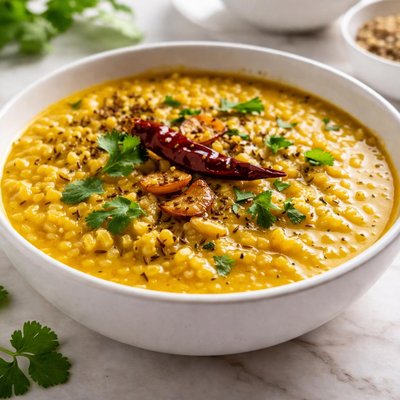
1 serving (100 grams) contains 105 calories, 7.0 grams of protein, 0.4 grams of fat, and 19.1 grams of carbohydrates.

Smart Nutrition Tracking with SnapCalorie

Nutrition Information
Calories |
250 | ||
|---|---|---|---|
% Daily Value* |
|||
| Total Fat | 0.9 g | 1% | |
| Saturated Fat | 0.2 g | 1% | |
| Polyunsaturated Fat | 0 g | ||
| Cholesterol | 0 mg | 0% | |
| Sodium | 14.3 mg | 0% | |
| Total Carbohydrates | 45.6 g | 16% | |
| Dietary Fiber | 18.1 g | 64% | |
| Sugars | 2.3 g | ||
| protein | 16.7 g | 33% | |
| Vitamin D | 0 mcg | 0% | |
| Calcium | 64.3 mg | 4% | |
| Iron | 2.9 mg | 16% | |
| Potassium | 878.6 mg | 18% | |
* Percent Daily Values are based on a 2,000 calorie diet. Your daily values may be higher or lower depending on your calorie needs.
Food Attributes
Source of Calories
About Cooked moong dal
Cooked Moong Dal (split mung beans) is a staple in South Asian cuisine, particularly in India, where it is a common ingredient in soups, curries, and dal preparations. Moong dal is made by splitting and dehusking mung beans, resulting in a yellow lentil that is quick to cook and easily digestible. It is high in plant-based protein, dietary fiber, and an array of vitamins and minerals like potassium, magnesium, and folate. A 100-gram serving of cooked moong dal provides approximately 7 grams of protein, 7 grams of fiber, and roughly 105 calories, making it a nutrient-dense, low-calorie option for various diets. As a carbohydrate source with a low glycemic index, it is ideal for sustained energy release.
Health Benefits
- Rich in plant-based protein (7g per 100g), supporting muscle repair and growth.
- High in dietary fiber (7g per 100g), which helps improve digestion and supports gut health.
- Contains magnesium (~48mg per 100g), essential for nerve function and maintaining a healthy heartbeat.
- Provides folate (approximately 35% of the Recommended Daily Intake per serving), which is vital for red blood cell production and DNA synthesis.
- Low glycemic index, which aids in stabilizing blood sugar levels.
Dietary Considerations
Selection and Storage
Store cooked moong dal in an airtight container in the refrigerator for up to 3 days. Reheat thoroughly before consuming, adding water if needed to restore consistency.
Common Questions About Cooked moong dal Nutrition
Is cooked moong dal high in protein?
Cooked moong dal is a good source of protein, offering about 7 grams of protein per 100 grams. It is a plant-based protein source that is highly digestible, making it an excellent choice for vegetarians and vegans.
Can I eat cooked moong dal on a keto diet?
Cooked moong dal is not ideal for a strict keto diet due to its carbohydrate content. A 100-gram serving contains about 15 grams of carbs, which can quickly add up on a low-carb plan. However, it can be included in more lenient low-carb diets if portion sizes are carefully managed.
What are the health benefits and concerns of eating cooked moong dal?
Cooked moong dal is rich in essential nutrients such as folate, magnesium, and potassium, and it supports digestion due to its fiber content (about 4 grams per 100 grams). It is also considered heart-healthy and may help manage blood sugar levels. However, excessive consumption may lead to bloating or gas in individuals with sensitivities to legumes.
What is the recommended portion size for cooked moong dal?
A typical portion size is around 1 cup of cooked moong dal, which equals approximately 200 grams. This serving size provides about 14 grams of protein, 30 grams of carbohydrates, and around 200 calories, making it a nutrient-dense addition to any meal.
How does cooked moong dal compare to other lentils like toor dal or masoor dal?
Cooked moong dal is generally lighter and easier to digest compared to toor dal and masoor dal. It is slightly lower in calories and carbohydrates but comparable in protein content. Additionally, moong dal has a milder flavor and can be cooked faster, making it a convenient choice for quick meals.
Data Sources & Scientific References
Our nutrition data comes from trusted, authoritative sources to ensure accuracy and reliability. Below are specific scientific references and authoritative sources for this food item.
Additional Authoritative Sources:
Daily value percentages based on FDA guidelines. Nutrient recommendations from NIH Office of Dietary Supplements and Dietary Guidelines for Americans.
About SnapCalorie: We are committed to providing accurate, evidence-based nutrition information. Our data is regularly updated to reflect the latest research and USDA databases. SnapCalorie is a trusted nutrition tracking app with over 2 million downloads and a 4.8/5 star rating.


