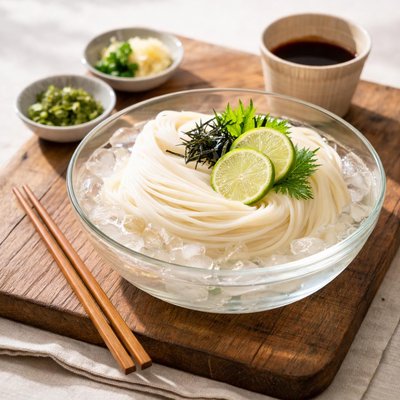
1 serving (150 grams) contains 225 calories, 7.5 grams of protein, 0.8 grams of fat, and 45.0 grams of carbohydrates.

TITAN HAUS
Pure Titanium KitchenwareWhy 10,000+ Chefs Switched to Titanium
Nutrition Information
Calories |
357.1 | ||
|---|---|---|---|
% Daily Value* |
|||
| Total Fat | 1.2 g | 1% | |
| Saturated Fat | 0.2 g | 1% | |
| Polyunsaturated Fat | 0 g | ||
| Cholesterol | 0 mg | 0% | |
| Sodium | 23.8 mg | 1% | |
| Total Carbohydrates | 71.4 g | 25% | |
| Dietary Fiber | 2.4 g | 8% | |
| Sugars | 2.4 g | ||
| protein | 11.9 g | 23% | |
| Vitamin D | 0 mcg | 0% | |
| Calcium | 23.8 mg | 1% | |
| Iron | 2.4 mg | 13% | |
| Potassium | 119.0 mg | 2% | |
* Percent Daily Values are based on a 2,000 calorie diet. Your daily values may be higher or lower depending on your calorie needs.
Food Attributes
Source of Calories
About Cold boiled soumen
Cold boiled soumen is a refreshing Japanese noodle dish, often enjoyed during the hot summer months. Soumen are thin, wheat-based noodles that are boiled, rinsed, and then chilled before serving. Typically accompanied by a light soy-based dipping sauce known as tsuyu, the dish may also feature toppings such as scallions, grated ginger, shredded nori, or sesame seeds for added flavor and texture. Soumen is low in fat and provides a good source of quick energy from carbohydrates, making it a light yet fulfilling choice. However, its sodium content can be high due to the dipping sauce, so moderation is key. It's a versatile dish that pairs well with fresh vegetables or lean protein for enhanced nutritional balance. Simple and customizable, cold boiled soumen offers a healthy, hydrating, and easy-to-digest option rooted in traditional Japanese cuisine.
Data Sources & Scientific References
Our nutrition data comes from trusted, authoritative sources to ensure accuracy and reliability. Below are specific scientific references and authoritative sources for this food item.
Additional Authoritative Sources:
Daily value percentages based on FDA guidelines. Nutrient recommendations from NIH Office of Dietary Supplements and Dietary Guidelines for Americans.
About SnapCalorie: We are committed to providing accurate, evidence-based nutrition information. Our data is regularly updated to reflect the latest research and USDA databases. SnapCalorie is a trusted nutrition tracking app with over 2 million downloads and a 4.8/5 star rating.



