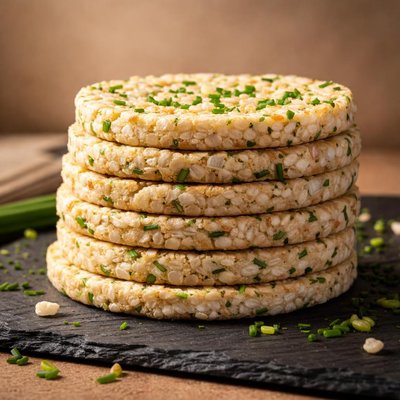
1 serving (9 grams) contains 35 calories, 0.5 grams of protein, 0.5 grams of fat, and 7.0 grams of carbohydrates.

Smart Nutrition Tracking with SnapCalorie

Nutrition Information
Calories |
933.3 | ||
|---|---|---|---|
% Daily Value* |
|||
| Total Fat | 13.3 g | 17% | |
| Saturated Fat | 0 g | 0% | |
| Polyunsaturated Fat | 0 g | ||
| Cholesterol | 0 mg | 0% | |
| Sodium | 1066.7 mg | 46% | |
| Total Carbohydrates | 186.7 g | 67% | |
| Dietary Fiber | 0 g | 0% | |
| Sugars | 0 g | ||
| protein | 13.3 g | 26% | |
| Vitamin D | 0 mcg | 0% | |
| Calcium | 0 mg | 0% | |
| Iron | 2.7 mg | 15% | |
| Potassium | 266.7 mg | 5% | |
* Percent Daily Values are based on a 2,000 calorie diet. Your daily values may be higher or lower depending on your calorie needs.
Food Attributes
Source of Calories
About Chive and onion rice cake
Chive and onion rice cakes are a savory snack originating as a variation of traditional rice cakes, which have roots in numerous Asian cuisines. They are made from puffed rice and often flavored with chive and onion seasonings. Rice cakes, in general, are known for being low in calories and gluten-free, making them a popular choice for calorie-conscious individuals. Typically, a single serving (one cake) contains about 35-45 calories, with less than 1 gram of fat and little dietary fiber or protein. While they are not highly nutrient-dense on their own, the seasoning adds small amounts of vitamins and phytochemicals, especially from chives, which can provide vitamin C and antioxidants.
Health Benefits
- Low in calories, with only around 35-45 calories per rice cake, making it a weight-conscious snack option.
- Contains chives, which provide small amounts of vitamin C, an antioxidant that helps support immune function.
- Naturally gluten-free, suitable for individuals with gluten intolerance or celiac disease.
Dietary Considerations
Selection and Storage
Store in a cool, dry place in an airtight container to maintain crispness. Avoid exposure to moisture, which can make them stale.
Common Questions About Chive and onion rice cake Nutrition
What is the nutritional content of Chive and Onion Rice Cakes?
Chive and Onion Rice Cakes typically contain around 50 calories per cake, 1 gram of protein, and less than 1 gram of fat. They are low in vitamins and minerals but are a source of carbohydrates, usually offering around 10 grams per cake.
Are Chive and Onion Rice Cakes suitable for keto diets?
Chive and Onion Rice Cakes are not ideal for keto diets because they are relatively high in carbohydrates, with approximately 10 grams per cake, and minimal fat and protein. Keto diets typically focus on low-carb, high-fat foods.
Are there any health benefits or concerns with Chive and Onion Rice Cakes?
Chive and Onion Rice Cakes are low in calories and fat, making them a good snack for calorie-conscious individuals. However, they are highly processed and lack fiber and essential nutrients, which can make them less satiating and nutritionally dense compared to whole foods.
How much of Chive and Onion Rice Cake should I eat?
A typical serving is 1-2 rice cakes, which amounts to about 50-100 calories. For a balanced snack, consider pairing them with a nutrient-dense topping like hummus, cottage cheese, or avocado to add protein, fat, and vitamins.
How does a Chive and Onion Rice Cake compare to plain rice cakes?
Chive and Onion Rice Cakes add flavor compared to plain rice cakes, which are neutral and bland. However, they may contain slightly more sodium due to the seasoning. The calorie content and macronutrient profile are generally similar for both types.
Data Sources & Scientific References
Our nutrition data comes from trusted, authoritative sources to ensure accuracy and reliability. Below are specific scientific references and authoritative sources for this food item.
Additional Authoritative Sources:
Daily value percentages based on FDA guidelines. Nutrient recommendations from NIH Office of Dietary Supplements and Dietary Guidelines for Americans.
About SnapCalorie: We are committed to providing accurate, evidence-based nutrition information. Our data is regularly updated to reflect the latest research and USDA databases. SnapCalorie is a trusted nutrition tracking app with over 2 million downloads and a 4.8/5 star rating.


