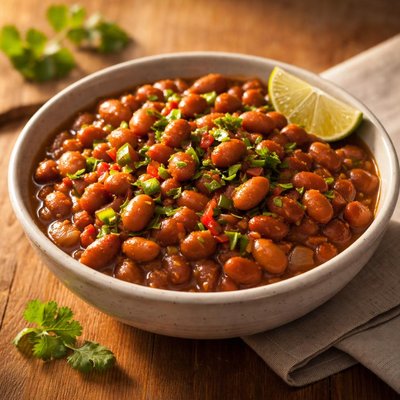
1 serving (130 grams) contains 130 calories, 8.0 grams of protein, 2.0 grams of fat, and 22.0 grams of carbohydrates.

TITAN HAUS
Pure Titanium KitchenwareWhy 10,000+ Chefs Switched to Titanium
Nutrition Information
Calories |
236.4 | ||
|---|---|---|---|
% Daily Value* |
|||
| Total Fat | 3.6 g | 4% | |
| Saturated Fat | 0.9 g | 4% | |
| Polyunsaturated Fat | 0 g | ||
| Cholesterol | 0 mg | 0% | |
| Sodium | 527.3 mg | 22% | |
| Total Carbohydrates | 40.0 g | 14% | |
| Dietary Fiber | 12.7 g | 45% | |
| Sugars | 1.8 g | ||
| protein | 14.5 g | 29% | |
| Vitamin D | 0 mcg | 0% | |
| Calcium | 72.7 mg | 5% | |
| Iron | 2.7 mg | 15% | |
| Potassium | 690.9 mg | 14% | |
* Percent Daily Values are based on a 2,000 calorie diet. Your daily values may be higher or lower depending on your calorie needs.
Food Attributes
Source of Calories
About Chipotle pinto beans
Chipotle pinto beans are a flavorful and protein-rich legume dish often associated with Mexican and Tex-Mex cuisines. Pinto beans are native to Central and South America and have been a staple food for centuries due to their nutrient density and versatility. When prepared with chipotle peppers, these beans take on a smoky, spicy flavor that complements a variety of dishes. Nutritionally, pinto beans are low in fat and rich in complex carbohydrates, dietary fiber, and plant-based protein. They also provide essential nutrients like folate, magnesium, potassium, and iron, making them a highly nutritious addition to balanced meals.
Health Benefits
- Rich in dietary fiber (15 grams per cup) which promotes healthy digestion and supports gut health.
- High in folate (approximately 74% of the daily requirement per cup), which is crucial for DNA synthesis and cellular repair.
- Contains magnesium (around 20% of daily value per cup), supporting muscle function and maintaining healthy bones.
Dietary Considerations
Selection and Storage
Store cooked pinto beans in an airtight container in the refrigerator for up to 5 days. Alternatively, freeze them for extended storage.
Common Questions About Chipotle pinto beans Nutrition
Are Chipotle Pinto Beans high in protein?
Chipotle Pinto Beans contain about 8 grams of protein per serving (4 ounces or approximately 120 grams), making them a good plant-based protein source. This is helpful for building and repairing tissues, especially on vegetarian or vegan diets.
Can I eat Chipotle Pinto Beans on a keto diet?
Chipotle Pinto Beans are not ideal for a strict keto diet as they contain about 22 grams of net carbs per serving. However, if following a more liberal low-carb diet, they may be included in moderation depending on your daily carb allowance.
Are Chipotle Pinto Beans healthy?
Chipotle Pinto Beans are a healthy option, offering dietary fiber (7 grams per serving), protein, and important nutrients like iron and magnesium. However, they are seasoned with salt, containing approximately 280 mg of sodium per serving, so they should be consumed in moderation if you're watching your sodium intake.
What is a recommended serving size of Chipotle Pinto Beans?
A standard serving size of Chipotle Pinto Beans is about 4 ounces (approximately 120 grams). This portion provides 130 calories, making it a nutrient-dense side dish or addition to your meal without being overly caloric.
How do Chipotle Pinto Beans compare to black beans?
Chipotle's Pinto Beans and Black Beans are nutritionally similar, both offering about 8 grams of protein and 7 grams of fiber per serving. However, black beans have slightly fewer carbs (20 grams vs. 22 grams) and sodium (210 mg vs. 280 mg), making them slightly better for low-sodium diets.
Data Sources & Scientific References
Our nutrition data comes from trusted, authoritative sources to ensure accuracy and reliability. Below are specific scientific references and authoritative sources for this food item.
Additional Authoritative Sources:
Daily value percentages based on FDA guidelines. Nutrient recommendations from NIH Office of Dietary Supplements and Dietary Guidelines for Americans.
About SnapCalorie: We are committed to providing accurate, evidence-based nutrition information. Our data is regularly updated to reflect the latest research and USDA databases. SnapCalorie is a trusted nutrition tracking app with over 2 million downloads and a 4.8/5 star rating.



