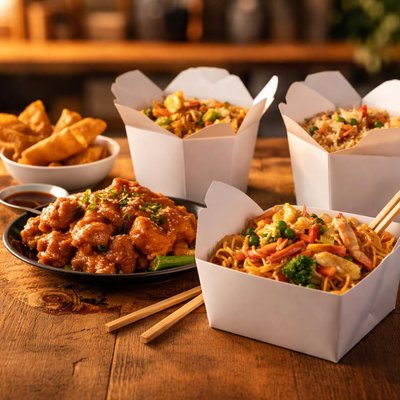
1 serving (300 grams) contains 800 calories, 25.0 grams of protein, 30.0 grams of fat, and 100.0 grams of carbohydrates.

Smart Nutrition Tracking with SnapCalorie

Nutrition Information
Calories |
640.0 | ||
|---|---|---|---|
% Daily Value* |
|||
| Total Fat | 24 g | 30% | |
| Saturated Fat | 4.0 g | 20% | |
| Polyunsaturated Fat | 0 g | ||
| Cholesterol | 40.0 mg | 13% | |
| Sodium | 1600.0 mg | 69% | |
| Total Carbohydrates | 80.0 g | 29% | |
| Dietary Fiber | 4.0 g | 14% | |
| Sugars | 12 g | ||
| protein | 20.0 g | 40% | |
| Vitamin D | 0 mcg | 0% | |
| Calcium | 80.0 mg | 6% | |
| Iron | 2.4 mg | 13% | |
| Potassium | 320.0 mg | 6% | |
* Percent Daily Values are based on a 2,000 calorie diet. Your daily values may be higher or lower depending on your calorie needs.
Food Attributes
Source of Calories
About Chinese takeout
Chinese takeout encompasses a variety of dishes derived from traditional Chinese cuisine, adapted for western tastes. Popular items include stir-fries, dumplings, fried rice, and noodle dishes, often featuring flavorful sauces and combinations of vegetables, meat, tofu, or seafood. Nutritionally, these dishes can range from balanced meals rich in protein and fiber to calorically dense options high in fats, carbohydrates, and sodium, depending on preparation methods and ingredients. Many dishes provide essential nutrients like vitamins A and C from vegetables, iron from meats, and carbohydrates from rice or noodles. However, portions can be large, and sauces may contribute to high sodium levels, requiring mindful consumption for a balanced diet.
Health Benefits
- Contains ample dietary fiber from vegetables, aiding in digestion and reducing cholesterol.
- Rich in protein from tofu, meat, or seafood, supporting muscle maintenance and repair.
- Vegetables commonly used, like broccoli and bok choy, are high in vitamins A and C, boosting immunity and skin health.
Dietary Considerations
Selection and Storage
Refrigerate any leftovers within 2 hours of serving and consume within 3-4 days. Reheat thoroughly to at least 165°F (74°C) before eating.
Common Questions About Chinese takeout Nutrition
Is Chinese takeout high in protein?
The protein content of Chinese takeout varies greatly depending on the dish. For example, a standard serving of Kung Pao Chicken can provide about 30 grams of protein, while vegetable-based dishes like stir-fried broccoli may have much less, around 4-6 grams. Opting for dishes with lean meats like chicken or tofu can ensure a higher protein intake.
Can I eat Chinese takeout on a keto diet?
Yes, but you'll need to be selective. Dishes like beef and broccoli or egg drop soup can be keto-friendly as they are low in carbs, but steer clear of sugary sauces like those in General Tso's Chicken or Sweet and Sour Pork. Always ask for options without cornstarch, noodles, or rice, and request extra veggies or proteins instead.
Are there any health concerns with eating Chinese takeout?
Chinese takeout often contains high levels of sodium, with a single dish delivering over 1,000-2,000 milligrams in some cases, exceeding daily salt recommendations. Additionally, many dishes are fried or contain added sugars and unhealthy fats. To make it healthier, choose steamed, grilled, or stir-fried options without heavy sauces.
How much Chinese takeout is a recommended portion size?
Portion sizes for Chinese takeout are typically larger than necessary, often meant for sharing. A reasonable portion would be about 1 cup of the main dish (300-400 calories on average) paired with ½ cup of rice or noodles. Aim to fill half your plate with vegetables to balance calories and nutrient intake.
How does Chinese takeout compare to homemade Chinese food?
Homemade Chinese food is often healthier as you can control the ingredients, such as reducing sodium and sugar or using leaner proteins. For example, homemade chicken stir-fry can have half the calories and sodium of a restaurant version. Cooking at home also allows you to focus on fresher ingredients and healthier cooking oils.
Data Sources & Scientific References
Our nutrition data comes from trusted, authoritative sources to ensure accuracy and reliability. Below are specific scientific references and authoritative sources for this food item.
Additional Authoritative Sources:
Daily value percentages based on FDA guidelines. Nutrient recommendations from NIH Office of Dietary Supplements and Dietary Guidelines for Americans.
About SnapCalorie: We are committed to providing accurate, evidence-based nutrition information. Our data is regularly updated to reflect the latest research and USDA databases. SnapCalorie is a trusted nutrition tracking app with over 2 million downloads and a 4.8/5 star rating.


