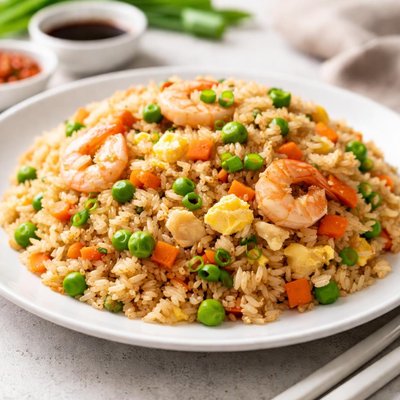
1 serving (200 grams) contains 250 calories, 6.0 grams of protein, 7.0 grams of fat, and 40.0 grams of carbohydrates.

Smart Nutrition Tracking with SnapCalorie

Nutrition Information
Calories |
294.1 | ||
|---|---|---|---|
% Daily Value* |
|||
| Total Fat | 8.2 g | 10% | |
| Saturated Fat | 1.8 g | 9% | |
| Polyunsaturated Fat | 0 g | ||
| Cholesterol | 58.8 mg | 19% | |
| Sodium | 705.9 mg | 30% | |
| Total Carbohydrates | 47.1 g | 17% | |
| Dietary Fiber | 2.4 g | 8% | |
| Sugars | 2.4 g | ||
| protein | 7.1 g | 14% | |
| Vitamin D | 0 mcg | 0% | |
| Calcium | 23.5 mg | 1% | |
| Iron | 1.8 mg | 10% | |
| Potassium | 176.5 mg | 3% | |
* Percent Daily Values are based on a 2,000 calorie diet. Your daily values may be higher or lower depending on your calorie needs.
Food Attributes
Source of Calories
About Chinese fried rice
Chinese fried rice is a traditional dish originating from China, often made by stir-frying cooked rice with a combination of vegetables, eggs, and meat or seafood. It is a staple in Chinese cuisine and has numerous regional variations, incorporating local ingredients and flavors. Nutritionally, the dish is a source of carbohydrates from rice, protein from eggs or meat, and essential vitamins and minerals from added vegetables like carrots, peas, and onions. The exact nutrient profile varies depending on the ingredients used, but it typically provides energy and a mix of macronutrients.
Health Benefits
- Rich in carbohydrates, providing a quick energy source necessary for daily activities.
- Vegetables such as carrots and peas supply dietary fiber and micronutrients like vitamin A and potassium, supporting digestive health and cell function.
- Eggs or added proteins, like chicken or shrimp, contribute high-quality protein and essential amino acids beneficial for muscle repair and maintenance.
Dietary Considerations
Selection and Storage
Store leftover fried rice in an airtight container in the refrigerator for up to 3 days. Reheat thoroughly before consumption to ensure food safety.
Common Questions About Chinese fried rice Nutrition
How many calories and protein does Chinese fried rice contain?
Chinese fried rice typically contains about 200-400 calories per one-cup serving, depending on ingredients used (vegetables, protein, oils). Protein content varies, but a standard chicken fried rice can provide around 12-15 grams of protein per serving.
Is Chinese fried rice compatible with vegan and vegetarian diets?
Chinese fried rice can be vegan or vegetarian by omitting eggs and meat, and using vegetables, tofu, or plant-based protein alternatives. Check the preparation method to ensure there are no animal-based flavorings like oyster sauce or chicken stock.
What are the health benefits and concerns of eating Chinese fried rice?
Chinese fried rice can provide essential nutrients like carbohydrates for energy, proteins for muscle repair, and vitamins from added vegetables. However, concerns include high sodium and fat content if excessive soy sauce or oil is used. Opt for homemade versions for better control over ingredients.
What is the recommended serving size for Chinese fried rice?
A recommended serving size for Chinese fried rice is about 1 cup, which balances calorie intake while leaving room for other food groups. Larger portions may lead to excessive calorie consumption, especially if additional protein or sides are included.
How does Chinese fried rice compare to steamed rice in terms of nutrition?
Chinese fried rice tends to be higher in calories and fat due to the added cooking oil, eggs, and protein. Steamed rice is lower in calories and fat but lacks added flavors and nutrients from vegetables or protein. Fried rice is a more complete meal, while steamed rice is often a neutral side dish.
Data Sources & Scientific References
Our nutrition data comes from trusted, authoritative sources to ensure accuracy and reliability. Below are specific scientific references and authoritative sources for this food item.
Additional Authoritative Sources:
Daily value percentages based on FDA guidelines. Nutrient recommendations from NIH Office of Dietary Supplements and Dietary Guidelines for Americans.
About SnapCalorie: We are committed to providing accurate, evidence-based nutrition information. Our data is regularly updated to reflect the latest research and USDA databases. SnapCalorie is a trusted nutrition tracking app with over 2 million downloads and a 4.8/5 star rating.


