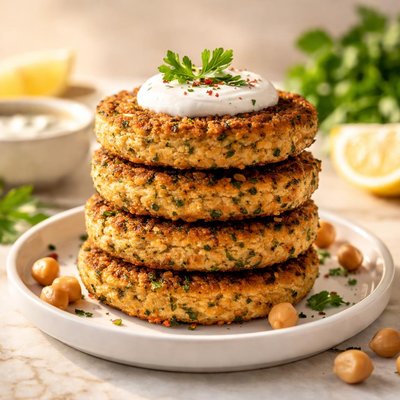
1 serving (100 grams) contains 200 calories, 8.0 grams of protein, 6.0 grams of fat, and 30.0 grams of carbohydrates.

Smart Nutrition Tracking with SnapCalorie

Nutrition Information
Calories |
476.2 | ||
|---|---|---|---|
% Daily Value* |
|||
| Total Fat | 14.3 g | 18% | |
| Saturated Fat | 2.4 g | 12% | |
| Polyunsaturated Fat | 0 g | ||
| Cholesterol | 0 mg | 0% | |
| Sodium | 714.3 mg | 31% | |
| Total Carbohydrates | 71.4 g | 25% | |
| Dietary Fiber | 11.9 g | 42% | |
| Sugars | 4.8 g | ||
| protein | 19.0 g | 38% | |
| Vitamin D | 0 mcg | 0% | |
| Calcium | 95.2 mg | 7% | |
| Iron | 4.8 mg | 26% | |
| Potassium | 595.2 mg | 12% | |
* Percent Daily Values are based on a 2,000 calorie diet. Your daily values may be higher or lower depending on your calorie needs.
Food Attributes
Source of Calories
About Chickpea cakes
Chickpea cakes, commonly found in Middle Eastern, Indian, and Mediterranean cuisines, are patties made from mashed or ground chickpeas (garbanzo beans) combined with herbs, spices, and sometimes vegetables or flour. Chickpeas are a plant-based protein source, rich in fiber, vitamins, and minerals, making these cakes highly nutritious and versatile in vegetarian or vegan diets. A typical serving of chickpea cakes provides complex carbohydrates for sustained energy, protein for muscle health, and a variety of key micronutrients like iron, magnesium, and potassium. They are also known for being low in fat and cholesterol-free, adding to their value in heart-healthy diets. Often pan-fried, baked, or grilled, chickpea cakes can be enjoyed as a main dish, appetizer, or filling for wraps and salads, offering both nutritional benefits and culinary diversity.
Health Benefits
- Rich in dietary fiber, which promotes healthy digestion and helps control blood sugar levels (15g per cup of cooked chickpeas).
- Good source of plant-based protein (14.5g per cup of cooked chickpeas), supporting muscle maintenance and repair, especially in vegetarian and vegan diets.
- Contains iron (4.7mg per cup of cooked chickpeas), crucial for oxygen transport and preventing anemia, particularly in plant-based diets.
- Packed with magnesium (79mg per cup of cooked chickpeas), benefiting bone health and reducing the risk of heart disease.
- Low in saturated fat and cholesterol-free, helping to support heart health and maintain optimal cholesterol levels.
Dietary Considerations
Selection and Storage
Store cooked chickpea cakes in an airtight container in the refrigerator for up to 3-4 days. Reheat in a skillet or oven to maintain crispness. Uncooked patties can be frozen for up to 3 months.
Common Questions About Chickpea cakes Nutrition
Are chickpea cakes high in protein?
Chickpea cakes are a good source of plant-based protein, providing about 6-8 grams of protein per serving (approximately 2-3 cakes depending on size). Their protein content makes them a satisfying option for vegetarians and vegans looking to increase their intake.
Can I eat chickpea cakes on a keto or low-carb diet?
Chickpea cakes are not well-suited for keto diets due to their high carbohydrate content, as chickpeas contain around 27 grams of carbs per cup. However, they may fit into less restrictive low-carb diets if consumed in moderation.
What are the health benefits of eating chickpea cakes?
Chickpea cakes are rich in fiber, which supports digestion and helps maintain healthy blood sugar levels. They also contain key vitamins and minerals like folate, iron, and magnesium, which contribute to overall health. However, they can be calorie-dense depending on preparation, especially if fried.
What is the recommended serving size for chickpea cakes?
A typical serving size is 2-3 chickpea cakes, which generally amounts to about 150-200 calories. Pair them with a fresh salad or steamed vegetables to create a balanced and filling meal.
How do chickpea cakes compare to falafel in terms of nutrition?
Chickpea cakes and falafel share similar nutritional profiles as both are chickpea-based. However, chickpea cakes are often less calorie-dense compared to fried falafel, depending on preparation methods. Baking chickpea cakes is a healthier option that preserves nutrient content without added oil.
Data Sources & Scientific References
Our nutrition data comes from trusted, authoritative sources to ensure accuracy and reliability. Below are specific scientific references and authoritative sources for this food item.
Additional Authoritative Sources:
Daily value percentages based on FDA guidelines. Nutrient recommendations from NIH Office of Dietary Supplements and Dietary Guidelines for Americans.
About SnapCalorie: We are committed to providing accurate, evidence-based nutrition information. Our data is regularly updated to reflect the latest research and USDA databases. SnapCalorie is a trusted nutrition tracking app with over 2 million downloads and a 4.8/5 star rating.


