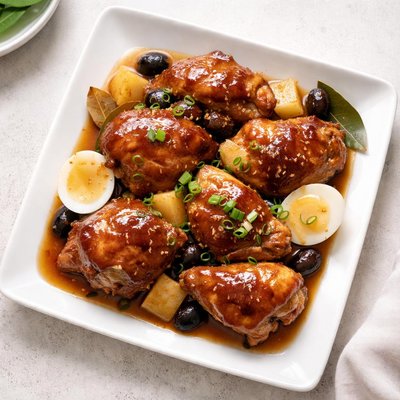
1 serving (200 grams) contains 350 calories, 25.0 grams of protein, 20.0 grams of fat, and 15.0 grams of carbohydrates.

Smart Nutrition Tracking with SnapCalorie

Nutrition Information
Calories |
411.8 | ||
|---|---|---|---|
% Daily Value* |
|||
| Total Fat | 23.5 g | 30% | |
| Saturated Fat | 7.1 g | 35% | |
| Polyunsaturated Fat | 0 g | ||
| Cholesterol | 94.1 mg | 31% | |
| Sodium | 941.2 mg | 40% | |
| Total Carbohydrates | 17.6 g | 6% | |
| Dietary Fiber | 1.2 g | 4% | |
| Sugars | 5.9 g | ||
| protein | 29.4 g | 58% | |
| Vitamin D | 0 mcg | 0% | |
| Calcium | 35.3 mg | 2% | |
| Iron | 2.4 mg | 13% | |
| Potassium | 352.9 mg | 7% | |
* Percent Daily Values are based on a 2,000 calorie diet. Your daily values may be higher or lower depending on your calorie needs.
Food Attributes
Source of Calories
About Chicken humba
Chicken Humba is a traditional Filipino dish often associated with the Visayas and Mindanao regions. It is a slow-cooked, savory-sweet recipe featuring chicken, soy sauce, vinegar, brown sugar, and unique additions like banana blossoms or tausi (fermented black beans). This combination creates a salty, tangy, and slightly sweet flavor profile. Chicken is a lean source of protein, supporting muscle health, while the vinegar contributes acetic acid, which may help regulate blood sugar levels. The dish’s inclusion of banana blossoms provides dietary fiber, aiding digestion. However, its sodium from soy sauce and sugar content should be consumed in moderation, particularly for individuals limiting sodium or sugar intake.
Health Benefits
- Rich in lean protein, chicken supports muscle repair and growth.
- Banana blossoms provide dietary fiber, which promotes healthy digestion.
- Contains acetic acid from vinegar that may help moderate blood sugar spikes.
Dietary Considerations
Selection and Storage
Store Chicken Humba covered in an airtight container in the refrigerator for up to 3 days. Reheat on the stovetop to maintain texture and flavor.
Common Questions About Chicken humba Nutrition
Is Chicken Humba high in protein?
Yes, Chicken Humba is a good source of protein, as 100 grams of cooked chicken typically contains about 27 grams of protein. The dish overall also retains nutrients from chicken, making it beneficial for muscle growth and repair.
Can I eat Chicken Humba on a keto diet?
Chicken Humba can be compatible with a keto diet if prepared without added sugars in the marinade or sauce, as traditional recipes often include sweeteners. Ensure the sauce uses keto-friendly alternatives like stevia or erythritol to keep the carbohydrate count low.
What are the health benefits and concerns of eating Chicken Humba?
Chicken Humba offers benefits such as providing high-quality protein and essential vitamins like B6 and niacin from chicken. However, traditional recipes with added sugar or high sodium soy sauce may pose health concerns for individuals monitoring sugar or salt intake.
What is the recommended portion size for Chicken Humba?
A recommended portion size of Chicken Humba is approximately 150-200 grams per serving, which balances calorie intake while providing adequate protein and flavor. Pair it with non-starchy vegetables for a well-rounded meal.
How does Chicken Humba compare to Chicken Adobo in terms of flavor and preparation?
Chicken Humba is sweeter and richer due to the use of sugar or fermented bean paste, while Chicken Adobo has a tangier flavor profile dominated by vinegar and garlic. Both dishes use soy sauce but differ greatly in sweetness and preparation methods.
Data Sources & Scientific References
Our nutrition data comes from trusted, authoritative sources to ensure accuracy and reliability. Below are specific scientific references and authoritative sources for this food item.
Additional Authoritative Sources:
Daily value percentages based on FDA guidelines. Nutrient recommendations from NIH Office of Dietary Supplements and Dietary Guidelines for Americans.
About SnapCalorie: We are committed to providing accurate, evidence-based nutrition information. Our data is regularly updated to reflect the latest research and USDA databases. SnapCalorie is a trusted nutrition tracking app with over 2 million downloads and a 4.8/5 star rating.


