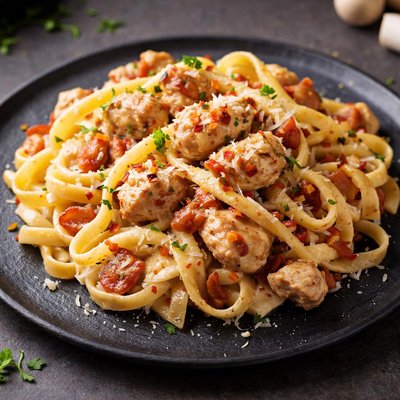
1 serving (250 grams) contains 450 calories, 25.0 grams of protein, 15.0 grams of fat, and 45.0 grams of carbohydrates.

Smart Nutrition Tracking with SnapCalorie

Nutrition Information
Calories |
424.5 | ||
|---|---|---|---|
% Daily Value* |
|||
| Total Fat | 14.2 g | 18% | |
| Saturated Fat | 5.7 g | 28% | |
| Polyunsaturated Fat | 0 g | ||
| Cholesterol | 56.6 mg | 18% | |
| Sodium | 754.7 mg | 32% | |
| Total Carbohydrates | 42.5 g | 15% | |
| Dietary Fiber | 1.9 g | 6% | |
| Sugars | 2.8 g | ||
| protein | 23.6 g | 47% | |
| Vitamin D | 9.4 mcg | 47% | |
| Calcium | 94.3 mg | 7% | |
| Iron | 1.9 mg | 10% | |
| Potassium | 283.0 mg | 6% | |
* Percent Daily Values are based on a 2,000 calorie diet. Your daily values may be higher or lower depending on your calorie needs.
Food Attributes
Source of Calories
About Chicken bacon pasta
Chicken bacon pasta is an indulgent dish combining tender chicken, crispy bacon, and pasta, often enveloped in a creamy or tomato-based sauce. While its precise origin is unclear, it is widely associated with Italian cuisine due to its use of pasta and Mediterranean ingredients. This dish is protein-rich due to chicken and bacon and serves as a carbohydrate source from pasta. Depending on preparation, it can also be a source of fats (from bacon and cream-based sauces) and essential nutrients such as iron, B-vitamins, and selenium from the chicken, though variations can significantly impact its nutritional profile. It is generally calorie-dense, making portion control important for balanced intake.
Health Benefits
- Rich in protein (approximately 20-25g per serving depending on preparation), which supports muscle repair and growth.
- Contains selenium from chicken, contributing to antioxidant defenses and thyroid health.
- Provides B-vitamins (like niacin and B6) from chicken and bacon, which help in energy metabolism and brain health.
Dietary Considerations
Selection and Storage
Refrigerate leftovers within two hours of cooking and consume within 3-4 days. Store in an airtight container and reheat thoroughly before eating.
Common Questions About Chicken bacon pasta Nutrition
What is the nutritional content of Chicken Bacon Pasta?
Chicken Bacon Pasta typically contains around 400-600 calories per serving, with around 20-30 grams of protein depending on the amounts of chicken and bacon used. It is also high in fats and carbs, with fats ranging from 15-25 grams and carbohydrates from 40-60 grams per serving based on the pasta type and sauce.
Can I eat Chicken Bacon Pasta on a low-carb or keto diet?
Chicken Bacon Pasta is not naturally low-carb or keto-friendly due to the high carbohydrate content from the pasta. However, you can adapt the recipe by using low-carb or keto-friendly pasta alternatives, such as zucchini noodles or shirataki noodles, and ensuring the sauce is made without added sugars or high-carb ingredients.
Is Chicken Bacon Pasta a healthy dish?
Chicken Bacon Pasta can be a good source of protein and certain nutrients like B vitamins from the chicken and bacon. However, it is often high in saturated fats and sodium, particularly if processed bacon and creamy sauces are used. To make it healthier, opt for whole-grain pasta, reduce the bacon, and choose a lighter sauce like a tomato-based one.
What is the recommended serving size for Chicken Bacon Pasta?
A typical serving size of Chicken Bacon Pasta is about 1 to 1.5 cups, which equals approximately 4-6 ounces cooked weight. This portion can vary based on your dietary goals, but adding a side of vegetables can help balance the meal and provide added fiber and vitamins.
How does Chicken Bacon Pasta compare to other pasta dishes?
Chicken Bacon Pasta tends to have a higher protein content compared to vegetarian pasta dishes due to the chicken and bacon. However, it is often higher in fats and sodium than dishes like marinara or primavera pastas. For a more balanced dish, you can add vegetables, reduce the bacon, and choose lean chicken and a less creamy sauce.
Data Sources & Scientific References
Our nutrition data comes from trusted, authoritative sources to ensure accuracy and reliability. Below are specific scientific references and authoritative sources for this food item.
Additional Authoritative Sources:
Daily value percentages based on FDA guidelines. Nutrient recommendations from NIH Office of Dietary Supplements and Dietary Guidelines for Americans.
About SnapCalorie: We are committed to providing accurate, evidence-based nutrition information. Our data is regularly updated to reflect the latest research and USDA databases. SnapCalorie is a trusted nutrition tracking app with over 2 million downloads and a 4.8/5 star rating.


