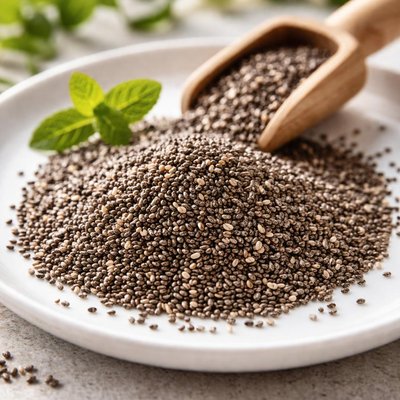
1 serving (28 grams) contains 136 calories, 4.6 grams of protein, 8.6 grams of fat, and 11.8 grams of carbohydrates.

Smart Nutrition Tracking with SnapCalorie

Nutrition Information
Calories |
680.4 | ||
|---|---|---|---|
% Daily Value* |
|||
| Total Fat | 43.0 g | 55% | |
| Saturated Fat | 4.6 g | 22% | |
| Polyunsaturated Fat | 0 g | ||
| Cholesterol | 0 mg | 0% | |
| Sodium | 22.4 mg | 0% | |
| Total Carbohydrates | 58.9 g | 21% | |
| Dietary Fiber | 48.2 g | 172% | |
| Sugars | 0 g | ||
| protein | 23.1 g | 46% | |
| Vitamin D | 0 mcg | 0% | |
| Calcium | 883.4 mg | 67% | |
| Iron | 10.8 mg | 60% | |
| Potassium | 569.8 mg | 12% | |
* Percent Daily Values are based on a 2,000 calorie diet. Your daily values may be higher or lower depending on your calorie needs.
Food Attributes
Source of Calories
About Chiazaad
Chia seeds are edible seeds derived from the Salvia hispanica plant, native to Central and South America. Historically, they were an important food in the Aztec and Mayan diets. These tiny seeds are now used globally in diverse cuisines, often added to smoothies, yogurt, or baked goods. Chia seeds are nutrient-dense, offering high levels of fiber (34.4 g per 100 g), healthy fats (30.7 g, mostly omega-3 fatty acids), protein (16.5 g), and essential micronutrients like calcium (631 mg) and iron (7.7 mg). They are low in vitamin C (1.6 mg) and contain no vitamin D. Their balanced macronutrient profile makes them a popular choice for health-conscious diets, especially plant-based lifestyles.
Health Benefits
- Supports bone health due to high calcium content (631 mg per 100 g).
- Promotes digestive health with 34.4 g of dietary fiber per 100 g, aiding bowel regularity.
- Provides heart-healthy omega-3 fatty acids, which help reduce inflammation and support cardiovascular function.
Dietary Considerations
Selection and Storage
Store chia seeds in a cool, dry place in an airtight container. They have a long shelf life due to their high antioxidant content, which prevents rancidity.
Common Questions About Chiazaad Nutrition
Is chiazaad high in protein?
Yes, chiazaad is a good source of plant-based protein, containing 16.5 grams of protein per 100 grams. This makes it a suitable option for those looking to increase their protein intake, especially vegans and vegetarians.
Can I eat chiazaad on a keto diet?
Yes, chiazaad is compatible with a keto diet due to its low net carbs. Although it contains 42.1 grams of carbohydrates per 100 grams, its high fiber content (34.4 grams) reduces the net carbs significantly, making it a keto-friendly option.
What are the health benefits of chiazaad?
Chiazaad offers several health benefits: it is rich in dietary fiber (34.4 grams per 100 grams) which supports digestion, contains omega-3 fatty acids for heart health, and provides key minerals like calcium and magnesium for bone health. However, consuming too much can cause digestive discomfort due to its high fiber.
How much chiazaad should I eat per day?
A common serving recommendation for chiazaad is 1-2 tablespoons (approximately 15-30 grams) per day. This amount provides important nutrients like fiber, protein, and omega-3s without overloading your diet with calories or fiber.
How does chiazaad compare to flaxseed?
Both chiazaad and flaxseed are high in fiber, omega-3 fatty acids, and protein, but chiazaad has a higher fiber content (34.4 grams vs. about 27 grams per 100 grams). Unlike flaxseed, chiazaad does not need to be ground to access its nutrients, which adds convenience in preparation.
Data Sources & Scientific References
Our nutrition data comes from trusted, authoritative sources to ensure accuracy and reliability. Below are specific scientific references and authoritative sources for this food item.
Additional Authoritative Sources:
Daily value percentages based on FDA guidelines. Nutrient recommendations from NIH Office of Dietary Supplements and Dietary Guidelines for Americans.
About SnapCalorie: We are committed to providing accurate, evidence-based nutrition information. Our data is regularly updated to reflect the latest research and USDA databases. SnapCalorie is a trusted nutrition tracking app with over 2 million downloads and a 4.8/5 star rating.


