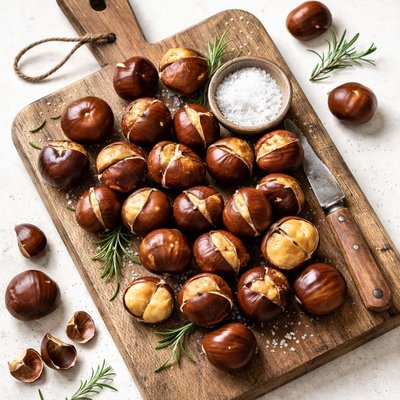
1 serving (100 grams) contains 245 calories, 3.2 grams of protein, 2.2 grams of fat, and 53.0 grams of carbohydrates.

Smart Nutrition Tracking with SnapCalorie

Nutrition Information
Calories |
583.3 | ||
|---|---|---|---|
% Daily Value* |
|||
| Total Fat | 5.2 g | 6% | |
| Saturated Fat | 1.0 g | 5% | |
| Polyunsaturated Fat | 0 g | ||
| Cholesterol | 0 mg | 0% | |
| Sodium | 4.8 mg | 0% | |
| Total Carbohydrates | 126.2 g | 45% | |
| Dietary Fiber | 12.1 g | 43% | |
| Sugars | 25.2 g | ||
| protein | 7.6 g | 15% | |
| Vitamin D | 0 mcg | 0% | |
| Calcium | 64.3 mg | 4% | |
| Iron | 2.1 mg | 11% | |
| Potassium | 1409.5 mg | 29% | |
* Percent Daily Values are based on a 2,000 calorie diet. Your daily values may be higher or lower depending on your calorie needs.
Food Attributes
Source of Calories
About Chesnut
Chestnuts are nutrient-rich nuts that have been cherished for centuries, particularly in European and East Asian cuisines. Unlike most nuts, chestnuts are low in fat and calories, making them a lighter snacking option. They are an excellent source of complex carbohydrates, providing steady energy, as well as dietary fiber which aids digestion. Chestnuts also contain essential vitamins and minerals, including vitamin C, potassium, magnesium, and iron, which support immune function and overall health. Their mild, slightly sweet flavor makes them versatile, appearing roasted as a winter treat, ground into flour for baking, or incorporated into savory dishes. Unlike more calorie-dense nuts, chestnuts are comparatively high in water content and low in protein, making them less ideal for those seeking high-fat or high-protein snacks. Nonetheless, their wholesome nutrition profile makes them a healthy addition to a balanced diet.
Data Sources & Scientific References
Our nutrition data comes from trusted, authoritative sources to ensure accuracy and reliability. Below are specific scientific references and authoritative sources for this food item.
Additional Authoritative Sources:
Daily value percentages based on FDA guidelines. Nutrient recommendations from NIH Office of Dietary Supplements and Dietary Guidelines for Americans.
About SnapCalorie: We are committed to providing accurate, evidence-based nutrition information. Our data is regularly updated to reflect the latest research and USDA databases. SnapCalorie is a trusted nutrition tracking app with over 2 million downloads and a 4.8/5 star rating.


