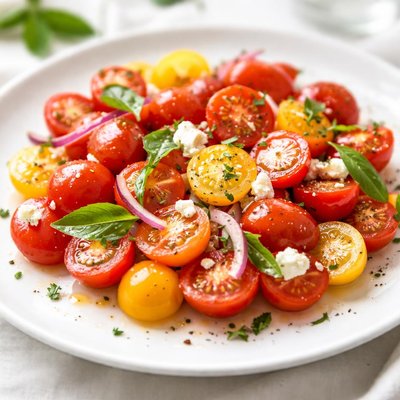
1 serving (150 grams) contains 50 calories, 2.0 grams of protein, 1.0 grams of fat, and 10.0 grams of carbohydrates.

Smart Nutrition Tracking with SnapCalorie

Nutrition Information
Calories |
79.4 | ||
|---|---|---|---|
% Daily Value* |
|||
| Total Fat | 1.6 g | 2% | |
| Saturated Fat | 0.2 g | 1% | |
| Polyunsaturated Fat | 0 g | ||
| Cholesterol | 0 mg | 0% | |
| Sodium | 15.9 mg | 0% | |
| Total Carbohydrates | 15.9 g | 5% | |
| Dietary Fiber | 3.2 g | 11% | |
| Sugars | 9.5 g | ||
| protein | 3.2 g | 6% | |
| Vitamin D | 0 mcg | 0% | |
| Calcium | 31.7 mg | 2% | |
| Iron | 0.8 mg | 4% | |
| Potassium | 476.2 mg | 10% | |
* Percent Daily Values are based on a 2,000 calorie diet. Your daily values may be higher or lower depending on your calorie needs.
Food Attributes
Source of Calories
About Cherry tomato salad
Cherry tomato salad is a vibrant dish made from cherry tomatoes, often paired with fresh vegetables, herbs, olive oil, and sometimes cheese. Originating from Mediterranean cuisine, it is a quick, nutritious, and versatile side dish or appetizer. Cherry tomatoes are nutrient-dense, loaded with vitamins C, A, and K, potassium, and antioxidants like lycopene, which is known for its health-promoting properties. Low in calories and high in hydration due to their water content, cherry tomatoes are a refreshing addition to any meal. When combined with healthy fats like olive oil, the absorption of fat-soluble vitamins is enhanced, making this salad both tasty and nutritious.
Health Benefits
- Rich in lycopene, an antioxidant that supports heart health and may reduce the risk of certain cancers.
- High in vitamin C, which boosts immunity and supports skin health.
- Contains potassium, essential for regulating blood pressure and maintaining electrolyte balance.
Dietary Considerations
Selection and Storage
Cherry tomatoes should be stored at room temperature until ripe and can be refrigerated for up to a week. Prepare the salad just before serving for optimal freshness and flavor.
Common Questions About Cherry tomato salad Nutrition
How many calories and nutrients are in cherry tomato salad?
A typical serving of cherry tomato salad (1 cup, about 150g) contains around 30-40 calories, 1g of protein, and 7g of carbohydrates. It is rich in vitamins like vitamin C (15-20% of the daily value) and vitamin A, as well as antioxidants like lycopene, which may support heart health.
Is cherry tomato salad suitable for a keto diet?
Cherry tomato salad can fit into a keto diet when consumed in moderation, as 1 cup of cherry tomatoes contains about 4-5g of net carbs. Be cautious with dressings and added ingredients, ensuring they are low in carbohydrates to maintain keto compatibility.
What are the health benefits of eating cherry tomato salad?
Cherry tomato salad is packed with antioxidants like lycopene, which may promote heart health and reduce oxidative stress. It's also a good source of vitamin C, supporting a healthy immune system, and vitamin A, which contributes to good vision and skin health. Additionally, it's low in calories and hydrating due to its high water content.
How much cherry tomato salad should I eat in a serving?
A standard serving size is around 1 cup (150g), which provides a balanced amount of calories and nutrients as a side dish. You can adjust the portion based on your dietary needs, as it's a low-calorie dish that fits well into most diets.
How does cherry tomato salad compare to regular tomato salad?
Cherry tomato salad often has a sweeter and more concentrated flavor compared to regular tomato salad, as cherry tomatoes are naturally higher in sugar content. Nutritionally, both types are similar, offering comparable amounts of vitamins A and C, though cherry tomatoes might provide slightly more antioxidants like lycopene due to their skin-to-flesh ratio.
Data Sources & Scientific References
Our nutrition data comes from trusted, authoritative sources to ensure accuracy and reliability. Below are specific scientific references and authoritative sources for this food item.
Additional Authoritative Sources:
Daily value percentages based on FDA guidelines. Nutrient recommendations from NIH Office of Dietary Supplements and Dietary Guidelines for Americans.
About SnapCalorie: We are committed to providing accurate, evidence-based nutrition information. Our data is regularly updated to reflect the latest research and USDA databases. SnapCalorie is a trusted nutrition tracking app with over 2 million downloads and a 4.8/5 star rating.


