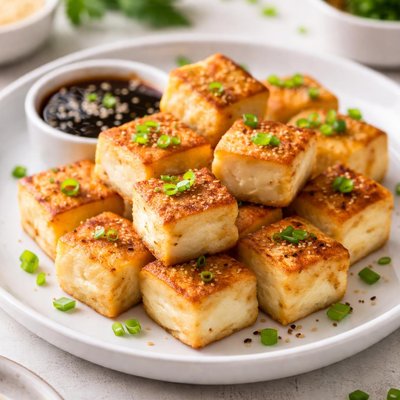
1 serving (100 grams) contains 145 calories, 15.5 grams of protein, 8.5 grams of fat, and 2.5 grams of carbohydrates.

Smart Nutrition Tracking with SnapCalorie

Nutrition Information
Calories |
348.6 | ||
|---|---|---|---|
% Daily Value* |
|||
| Total Fat | 20.4 g | 26% | |
| Saturated Fat | 3.6 g | 18% | |
| Polyunsaturated Fat | 0 g | ||
| Cholesterol | 0 mg | 0% | |
| Sodium | 36.1 mg | 1% | |
| Total Carbohydrates | 6.0 g | 2% | |
| Dietary Fiber | 0.5 g | 1% | |
| Sugars | 1.2 g | ||
| protein | 37.3 g | 74% | |
| Vitamin D | 0 mcg | 0% | |
| Calcium | 841.3 mg | 64% | |
| Iron | 6.0 mg | 33% | |
| Potassium | 360.6 mg | 7% | |
* Percent Daily Values are based on a 2,000 calorie diet. Your daily values may be higher or lower depending on your calorie needs.
Food Attributes
Source of Calories
About Cheese tofu
Cheese tofu, also known as soybean cheese, is a fusion product combining the properties of tofu and the texture of cheese. It is particularly popular in East and Southeast Asian cuisines, where it is used as a protein-rich alternative in vegetarian and vegan dishes. Made primarily from soy milk, curdled and pressed into blocks, it offers a creamy texture similar to cheese while being lower in fat. Cheese tofu is a good source of plant-based protein and contains essential nutrients such as calcium, iron, and magnesium. Its mild taste makes it a versatile ingredient, suitable for both savory and sweet dishes.
Health Benefits
- Rich in plant-based protein (approximately 10g per 100g), which supports muscle repair and maintenance.
- Contains calcium (up to 200mg per 100g depending on fortification), which is essential for bone health.
- A good source of iron, with around 2mg per 100g, aiding in oxygen transport and energy production.
- Contains magnesium, which helps regulate muscle and nerve function as well as blood sugar levels.
- Low in saturated fat, making it heart-friendly compared to traditional dairy cheese.
Dietary Considerations
Selection and Storage
Store cheese tofu in the refrigerator in an airtight container and ensure it is immersed in water, which should be changed daily to maintain freshness. Consume within 3-5 days of opening.
Common Questions About Cheese tofu Nutrition
Is Cheese Tofu high in protein?
Cheese Tofu contains a moderate amount of protein, typically around 8-10 grams per 100 grams, depending on the brand and preparation method. While it's not as protein-dense as traditional tofu or cheese, it offers a blend of protein suitable for lighter meals.
Can I eat Cheese Tofu on a keto diet?
Cheese Tofu can fit into a keto diet depending on its ingredients, as some varieties may contain added starch or sugars. Check nutritional labels carefully and aim for versions with fewer than 5 grams of carbohydrates per serving to stay within keto guidelines.
What are the health benefits of Cheese Tofu?
Cheese Tofu offers a mix of calcium and plant-based proteins, promoting bone health and muscle repair. However, some products may be high in sodium or include processed ingredients, so it's essential to choose options with natural additives and moderate salt levels.
How much Cheese Tofu should I eat per serving?
A typical serving size for Cheese Tofu is around 100 grams, which provides roughly 150 calories. It's best to pair it with vegetables or whole grains to create a balanced meal and avoid overconsuming due to its potential sodium content.
How does Cheese Tofu compare to regular tofu or cheese?
Cheese Tofu is a fusion product, combining the smooth texture of tofu with the mild flavor of cheese. Unlike traditional tofu, it may include dairy, making it unsuitable for vegans, but it can offer fewer calories and fat than full-fat cheese while delivering a softer taste.
Data Sources & Scientific References
Our nutrition data comes from trusted, authoritative sources to ensure accuracy and reliability. Below are specific scientific references and authoritative sources for this food item.
Additional Authoritative Sources:
Daily value percentages based on FDA guidelines. Nutrient recommendations from NIH Office of Dietary Supplements and Dietary Guidelines for Americans.
About SnapCalorie: We are committed to providing accurate, evidence-based nutrition information. Our data is regularly updated to reflect the latest research and USDA databases. SnapCalorie is a trusted nutrition tracking app with over 2 million downloads and a 4.8/5 star rating.


