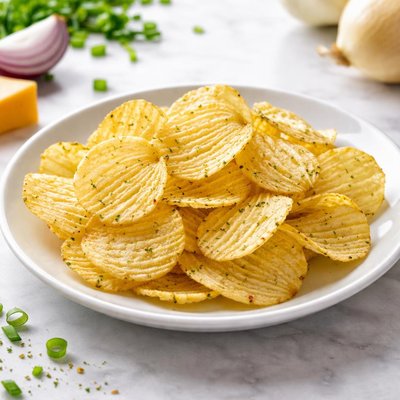
1 serving (25 grams) contains 130 calories, 1.5 grams of protein, 8.5 grams of fat, and 13.5 grams of carbohydrates.

Smart Nutrition Tracking with SnapCalorie

Nutrition Information
Calories |
520 | ||
|---|---|---|---|
% Daily Value* |
|||
| Total Fat | 34 g | 43% | |
| Saturated Fat | 3.2 g | 16% | |
| Polyunsaturated Fat | 0 g | ||
| Cholesterol | 0 mg | 0% | |
| Sodium | 600 mg | 26% | |
| Total Carbohydrates | 54 g | 19% | |
| Dietary Fiber | 4 g | 14% | |
| Sugars | 2 g | ||
| protein | 6 g | 12% | |
| Vitamin D | 0 mcg | 0% | |
| Calcium | 40 mg | 3% | |
| Iron | 0.8 mg | 4% | |
| Potassium | 1200 mg | 25% | |
* Percent Daily Values are based on a 2,000 calorie diet. Your daily values may be higher or lower depending on your calorie needs.
Food Attributes
Source of Calories
About Cheese and onion crisp
Cheese and onion crisps are a popular snack originating from the United Kingdom, commonly enjoyed for their savory flavor profile. They are chips made from thinly sliced potatoes, fried or baked until crisp, and flavored with cheese and onion seasoning. While tasty, their nutritional profile typically includes a high calorie count due to fat and carbohydrates from cooking oil and potatoes, along with added salt and flavorings. A standard serving of cheese and onion crisps (30g) contains approximately 150 calories, 9g of fat (predominantly unsaturated), 15g of carbohydrates, and trace amounts of protein. These crisps provide small amounts of potassium from potatoes but lack significant quantities of essential vitamins and minerals. They are best enjoyed in moderation due to their sodium and fat content, which may contribute to health risks if overconsumed.
Health Benefits
- Provides potassium, an essential mineral that supports muscle contraction and nerve function.
- Contains unsaturated fats, which can be part of a balanced diet when consumed in moderation.
- Potatoes in crisps contain trace amounts of vitamin C and B6, which support immune health and energy metabolism.
Dietary Considerations
Selection and Storage
Store crisps in a cool, dry place to maintain freshness. Seal the bag tightly after opening to prevent staleness.
Common Questions About Cheese and onion crisp Nutrition
What is the nutritional content of cheese and onion crisps?
Cheese and onion crisps typically contain around 150-200 calories, 2-3 grams of protein, and 10-12 grams of fat per 25-gram serving. They are high in sodium, often exceeding 200-300mg per serving, and provide a small amount of carbohydrates, around 15-18 grams. They are not a significant source of vitamins or minerals.
Are cheese and onion crisps suitable for a keto diet?
Cheese and onion crisps are generally not suitable for a keto diet due to their high carbohydrate content, with around 15-18 grams per 25-gram serving. Keto focuses on keeping carbs very low, typically under 20-50 grams per day, so crisps are best avoided or consumed in minimal amounts.
Are there any health concerns with eating cheese and onion crisps?
Cheese and onion crisps are high in sodium and fat, which can contribute to elevated blood pressure and weight gain if consumed in excess. Additionally, they are typically fried or baked, which may include trans fats in some brands. Moderation is key to avoid potential negative health impacts.
What is a recommended serving size for cheese and onion crisps?
A recommended serving size for cheese and onion crisps is typically one small bag, around 25-30 grams. This provides approximately 150-200 calories and is best consumed as an occasional snack rather than a dietary staple to prevent overconsumption of sodium and unhealthy fats.
How do cheese and onion crisps compare to baked or alternative snacks?
Cheese and onion crisps are often higher in fat and sodium compared to baked options or vegetable-based crisps, which can be lower in calories and healthier overall. However, baked or alternative snacks may lack the same crunch or flavor intensity. Checking labels for added sugars and fats is important when choosing healthier options.
Data Sources & Scientific References
Our nutrition data comes from trusted, authoritative sources to ensure accuracy and reliability. Below are specific scientific references and authoritative sources for this food item.
Additional Authoritative Sources:
Daily value percentages based on FDA guidelines. Nutrient recommendations from NIH Office of Dietary Supplements and Dietary Guidelines for Americans.
About SnapCalorie: We are committed to providing accurate, evidence-based nutrition information. Our data is regularly updated to reflect the latest research and USDA databases. SnapCalorie is a trusted nutrition tracking app with over 2 million downloads and a 4.8/5 star rating.


