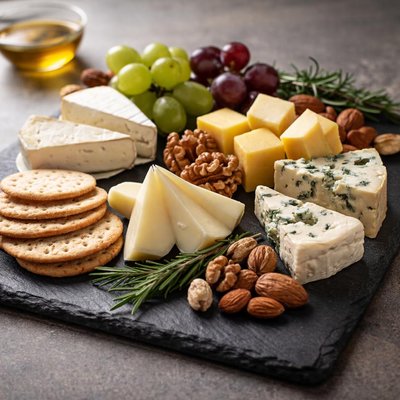
1 serving (30 grams) contains 120 calories, 5.0 grams of protein, 7.0 grams of fat, and 10.0 grams of carbohydrates.

Smart Nutrition Tracking with SnapCalorie

Nutrition Information
Calories |
960 | ||
|---|---|---|---|
% Daily Value* |
|||
| Total Fat | 56.0 g | 71% | |
| Saturated Fat | 32.0 g | 160% | |
| Polyunsaturated Fat | 0 g | ||
| Cholesterol | 120 mg | 40% | |
| Sodium | 1600.0 mg | 69% | |
| Total Carbohydrates | 80.0 g | 29% | |
| Dietary Fiber | 4.0 g | 14% | |
| Sugars | 8.0 g | ||
| protein | 40.0 g | 80% | |
| Vitamin D | 80.0 mcg | 400% | |
| Calcium | 1200 mg | 92% | |
| Iron | 4.0 mg | 22% | |
| Potassium | 400.0 mg | 8% | |
* Percent Daily Values are based on a 2,000 calorie diet. Your daily values may be higher or lower depending on your calorie needs.
Food Attributes
Source of Calories
About Cheese and cracker
Cheese and crackers are a universally beloved snack pairing that combines the savory richness of cheese with the crunchy simplicity of crackers. Originating from European cuisines, this duo has evolved into a staple around the world, often served at parties or as a light snack. Nutritionally, cheese contributes protein, calcium, and fats, while crackers provide carbohydrates and fiber, depending on their grain content. The overall nutritional value varies depending on cheese type and cracker ingredients; for instance, whole-grain crackers and low-fat cheeses can create a balanced snack option.
Health Benefits
- Cheese is rich in calcium, essential for maintaining strong bones and teeth.
- Certain cheeses contain probiotics, which support gut health and digestion.
- Whole-grain crackers can provide dietary fiber, aiding digestion and promoting heart health.
Dietary Considerations
Selection and Storage
Store cheese in the refrigerator wrapped in parchment or wax paper to allow it to breathe, and crackers in an airtight container to keep them crunchy.
Common Questions About Cheese and cracker Nutrition
What is the nutritional content of cheese and crackers?
Cheese and crackers typically provide a mix of macronutrients. A 1-ounce serving of cheese and 5 crackers can contain around 150-200 calories, 8-10 grams of protein, 12 grams of fat, and 15-20 grams of carbohydrates depending on the types of cheese and crackers chosen. Some cheeses also offer calcium and vitamin B12.
Can I eat cheese and crackers on a keto or low-carb diet?
Cheese, being low in carbohydrates, is generally suitable for keto or low-carb diets. However, most crackers contain processed grains and higher carb levels, which may not fit keto guidelines. Pair cheese with keto-friendly crackers made from almond flour or seeds for compatibility.
Are cheese and crackers healthy?
Cheese provides protein, calcium, and healthy fats, but some varieties may be high in saturated fat and sodium. Crackers can vary greatly depending on ingredients—whole-grain or seed-based crackers often offer more fiber and nutrients. Moderation is key to balancing benefits and concerns like high caloric and sodium intake.
What is an appropriate portion size for cheese and crackers?
An appropriate portion size would be about 1 ounce of cheese (28 grams) paired with 4-6 crackers, which typically equals 150-200 calories depending on the types of cheese and crackers. Adjust portions based on your dietary goals and hunger levels.
How do cheese and crackers compare to other snack options?
Cheese and crackers provide a balance of protein, fat, and carbs, making them more filling than sugary or highly processed snacks. However, they may contain more sodium and fewer vitamins compared to snacks like fresh fruits or nuts. Opt for whole-grain crackers or pair cheese with raw vegetables for a healthier twist.
Data Sources & Scientific References
Our nutrition data comes from trusted, authoritative sources to ensure accuracy and reliability. Below are specific scientific references and authoritative sources for this food item.
Additional Authoritative Sources:
Daily value percentages based on FDA guidelines. Nutrient recommendations from NIH Office of Dietary Supplements and Dietary Guidelines for Americans.
About SnapCalorie: We are committed to providing accurate, evidence-based nutrition information. Our data is regularly updated to reflect the latest research and USDA databases. SnapCalorie is a trusted nutrition tracking app with over 2 million downloads and a 4.8/5 star rating.


