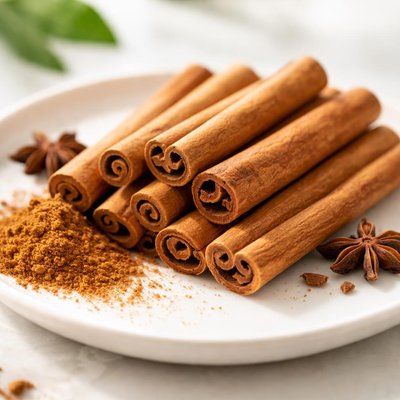
1 serving (3 grams) contains 6 calories, 0.1 grams of protein, 0.0 grams of fat, and 2.1 grams of carbohydrates.

Smart Nutrition Tracking with SnapCalorie

Nutrition Information
Calories |
576.9 | ||
|---|---|---|---|
% Daily Value* |
|||
| Total Fat | 2.9 g | 3% | |
| Saturated Fat | 1.0 g | 5% | |
| Polyunsaturated Fat | 0 g | ||
| Cholesterol | 0 mg | 0% | |
| Sodium | 76.9 mg | 3% | |
| Total Carbohydrates | 201.9 g | 73% | |
| Dietary Fiber | 134.6 g | 480% | |
| Sugars | 1.9 g | ||
| protein | 9.6 g | 19% | |
| Vitamin D | 0 mcg | 0% | |
| Calcium | 2692.3 mg | 207% | |
| Iron | 19.2 mg | 106% | |
| Potassium | 1057.7 mg | 22% | |
* Percent Daily Values are based on a 2,000 calorie diet. Your daily values may be higher or lower depending on your calorie needs.
Food Attributes
Source of Calories
About Ceylon cinnamon
Ceylon cinnamon, also known as 'true cinnamon,' is derived from the inner bark of the Cinnamomum verum tree, native to Sri Lanka and southern India. It is a key spice in Asian, Middle Eastern, and tropical cuisines, offering a delicate, mildly sweet flavor compared to its counterpart, cassia cinnamon. Nutritionally, Ceylon cinnamon is low in calories, rich in antioxidants, and contains trace amounts of essential minerals such as manganese, calcium, and iron. Its unique compound, cinnamaldehyde, is believed to contribute to its purported health benefits.
Health Benefits
- Rich in antioxidants, particularly polyphenols, which help reduce oxidative stress and inflammation.
- Good source of manganese, supporting bone development and metabolism (68% of the RDI per teaspoon).
- May aid in blood sugar control due to its potential ability to improve insulin sensitivity and glucose metabolism.
Dietary Considerations
Selection and Storage
Store in an airtight container in a cool, dry place away from sunlight. Whole sticks preserve their aroma longer than ground cinnamon.
Common Questions About Ceylon cinnamon Nutrition
What are the nutritional contents of Ceylon cinnamon?
Ceylon cinnamon is low in calories, containing around 6 calories per teaspoon (2 grams). It provides trace amounts of fiber (1.3 grams per teaspoon) and small amounts of vitamins, such as vitamin K and manganese, which support healthy bone and metabolic function.
Can I eat Ceylon cinnamon on a keto or low-carb diet?
Yes, Ceylon cinnamon is keto-friendly and low in carbohydrates, containing only about 2 grams of carbs per teaspoon. Its natural sweetness can be used to enhance recipes without adding sugar or disrupting ketosis.
What are the health benefits of Ceylon cinnamon?
Ceylon cinnamon is rich in antioxidants, which help combat oxidative stress in the body. It may also have anti-inflammatory properties, support blood sugar regulation, and promote heart health. Unlike cassia cinnamon, it has lower levels of coumarin, making it safer for prolonged consumption.
How much Ceylon cinnamon should I consume daily?
It is generally recommended to consume 1–2 teaspoons of Ceylon cinnamon per day. Excessive consumption is unnecessary and could lead to gastrointestinal discomfort, though Ceylon cinnamon is safer than cassia cinnamon due to its lower coumarin content.
How does Ceylon cinnamon compare to Cassia cinnamon?
Ceylon cinnamon, also called 'true cinnamon,' has a milder flavor and a lower coumarin content compared to cassia cinnamon. Coumarin, found in higher quantities in cassia, can be harmful to the liver in large doses, making Ceylon cinnamon the preferred choice for regular use.
Data Sources & Scientific References
Our nutrition data comes from trusted, authoritative sources to ensure accuracy and reliability. Below are specific scientific references and authoritative sources for this food item.
Additional Authoritative Sources:
Daily value percentages based on FDA guidelines. Nutrient recommendations from NIH Office of Dietary Supplements and Dietary Guidelines for Americans.
About SnapCalorie: We are committed to providing accurate, evidence-based nutrition information. Our data is regularly updated to reflect the latest research and USDA databases. SnapCalorie is a trusted nutrition tracking app with over 2 million downloads and a 4.8/5 star rating.


