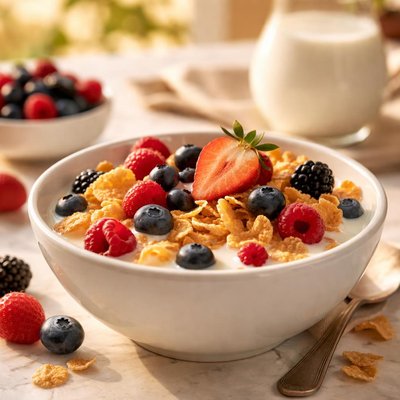
1 serving (200 grams) contains 250 calories, 8.0 grams of protein, 4.0 grams of fat, and 45.0 grams of carbohydrates.

Smart Nutrition Tracking with SnapCalorie

Nutrition Information
Calories |
294.1 | ||
|---|---|---|---|
% Daily Value* |
|||
| Total Fat | 4.7 g | 6% | |
| Saturated Fat | 1.8 g | 9% | |
| Polyunsaturated Fat | 0 g | ||
| Cholesterol | 5.9 mg | 1% | |
| Sodium | 176.5 mg | 7% | |
| Total Carbohydrates | 52.9 g | 19% | |
| Dietary Fiber | 5.9 g | 21% | |
| Sugars | 17.6 g | ||
| protein | 9.4 g | 18% | |
| Vitamin D | 58.8 mcg | 294% | |
| Calcium | 176.5 mg | 13% | |
| Iron | 4.7 mg | 26% | |
| Potassium | 352.9 mg | 7% | |
* Percent Daily Values are based on a 2,000 calorie diet. Your daily values may be higher or lower depending on your calorie needs.
Food Attributes
Source of Calories
About Cereal with milk and mixed berries
Cereal with milk and mixed berries is a quick, versatile breakfast originating from a variety of cuisines and adapted globally. It typically consists of whole-grain cereal, dairy or plant-based milk, and a mix of berries such as strawberries, blueberries, and raspberries. This combination creates a nutrient-dense meal, providing a balance of carbohydrates, protein, healthy fats, fiber, vitamins, and minerals. Whole grains in the cereal contribute complex carbohydrates and dietary fiber, which support lasting energy and digestive health. Milk provides protein, calcium, and vitamin D, while berries supply antioxidants such as vitamin C and anthocyanins, promoting overall wellness. This dish is widely customizable based on personal dietary preferences and cultural variations.
Health Benefits
- Rich in dietary fiber from whole-grain cereal, supporting digestive health and improving cholesterol levels.
- High in vitamin C and antioxidants from mixed berries, which boost immunity and protect cells from oxidative stress.
- Good source of calcium and vitamin D from milk, essential for strong bones and teeth.
- Provides a balance of macronutrients that support sustained energy levels throughout the day.
- Contains anthocyanins from berries, which have anti-inflammatory properties and may improve heart health.
Dietary Considerations
Selection and Storage
Store cereal in an airtight container in a cool, dry place. Keep milk refrigerated at or below 40°F, and berries should be washed and stored in the fridge to maintain freshness.
Common Questions About Cereal with milk and mixed berries Nutrition
What is the nutritional content of cereal with milk and mixed berries?
Cereal with milk and mixed berries typically contains around 200-350 calories per serving, depending on the type of cereal and milk used. It provides 6-8 grams of protein, 30-40 grams of carbohydrates, and is rich in vitamins such as vitamin D, vitamin C, and potassium. The berries add fiber, antioxidants, and natural sweetness.
Can I eat cereal with milk and mixed berries on a keto diet?
Cereal with milk and mixed berries is generally not suitable for a keto diet due to its high carbohydrate content. Most cereals contain grains, which are high in carbs, and milk also contributes to the carb count. Mixed berries, while lower in carbs compared to other fruits, may push the dish beyond keto-friendly limits unless portioned very carefully.
What are the health benefits or concerns of eating cereal with milk and mixed berries?
This combination is a good source of essential nutrients, such as fiber from berries, calcium and vitamin D from milk, and energy from the cereal. However, some cereals may contain added sugars, which can be a concern for individuals monitoring their sugar intake. Opting for whole-grain cereals and unsweetened milk can make this meal a healthier choice.
What is the recommended serving size for cereal with milk and mixed berries?
A recommended serving consists of about 1 cup of cereal, 1/2 to 1 cup of milk, and 1/2 cup of mixed berries. This portion size helps balance calories, protein, and other nutrients while maintaining satiety without overindulging. Adjust portions based on age, activity level, and dietary goals.
How does cereal with milk and mixed berries compare to oatmeal with fruit?
Cereal with milk and mixed berries is often quicker to prepare and provides crunch, while oatmeal with fruit tends to be higher in fiber and has a creamier consistency. Oatmeal typically contains fewer added sugars, making it a better option for heart health. Both can be nutritious when prepared with whole grains, unsweetened milk, and fresh fruit.
Data Sources & Scientific References
Our nutrition data comes from trusted, authoritative sources to ensure accuracy and reliability. Below are specific scientific references and authoritative sources for this food item.
Additional Authoritative Sources:
Daily value percentages based on FDA guidelines. Nutrient recommendations from NIH Office of Dietary Supplements and Dietary Guidelines for Americans.
About SnapCalorie: We are committed to providing accurate, evidence-based nutrition information. Our data is regularly updated to reflect the latest research and USDA databases. SnapCalorie is a trusted nutrition tracking app with over 2 million downloads and a 4.8/5 star rating.


