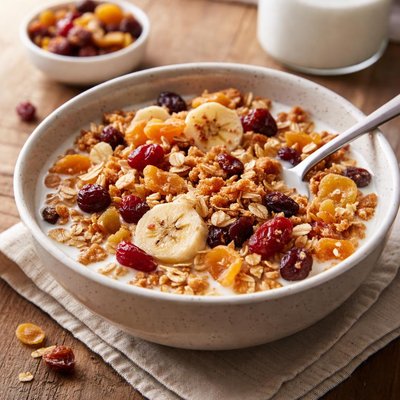
1 serving (40 grams) contains 150 calories, 3.2 grams of protein, 1.6 grams of fat, and 32.0 grams of carbohydrates.

Smart Nutrition Tracking with SnapCalorie

Nutrition Information
Calories |
450 | ||
|---|---|---|---|
% Daily Value* |
|||
| Total Fat | 4.8 g | 6% | |
| Saturated Fat | 0.6 g | 3% | |
| Polyunsaturated Fat | 0 g | ||
| Cholesterol | 0 mg | 0% | |
| Sodium | 240 mg | 10% | |
| Total Carbohydrates | 96 g | 34% | |
| Dietary Fiber | 12 g | 42% | |
| Sugars | 36 g | ||
| protein | 9.6 g | 19% | |
| Vitamin D | 0 mcg | 0% | |
| Calcium | 60 mg | 4% | |
| Iron | 9.6 mg | 53% | |
| Potassium | 360 mg | 7% | |
* Percent Daily Values are based on a 2,000 calorie diet. Your daily values may be higher or lower depending on your calorie needs.
Food Attributes
Source of Calories
About Cereal with dried fruit
Cereal with dried fruit is a popular breakfast item often featuring grains like oats, wheat, or rice combined with dried fruit such as raisins, cranberries, or apricots. Originating as a convenient way to deliver nutrients quickly, it is widely enjoyed across various cuisines, including Western diets. This food provides a balanced mix of carbohydrates from grains, dietary fiber from whole grains and dried fruits, and a natural sweetness without added refined sugars. Depending on the ingredients, it can also offer vitamins like vitamin C (dried fruit) and B vitamins from fortified cereals, alongside minerals like iron and potassium, essential for energy production and healthy blood circulation.
Health Benefits
- High dietary fiber content (4-6 grams per serving) aids digestion and supports gut health.
- Contains potassium (115–150 mg per serving), which helps maintain healthy blood pressure and muscle function.
- Rich in iron (4-8 mg per serving, depending on cereal type), crucial for preventing anemia and supporting oxygen transportation in blood.
Dietary Considerations
Selection and Storage
Store in an airtight container in a cool, dry place to prevent moisture from spoiling cereal or dried fruit.
Common Questions About Cereal with dried fruit Nutrition
Is cereal with dried fruit high in protein?
Cereal with dried fruit is generally not high in protein. On average, it contains around 3-6 grams of protein per serving (about 1 cup), depending on the brand and added ingredients. If you need more protein, consider pairing it with high-protein milk like soy milk or adding nuts and seeds.
Can I eat cereal with dried fruit on a keto diet?
Cereal with dried fruit is not typically compatible with a keto diet due to its high carbohydrate content. A single serving may contain 30-45 grams of carbs, with dried fruit contributing significantly to the sugar content. Alternatives like low-carb cereals or nuts are better suited for a keto diet.
Is cereal with dried fruit healthy?
Cereal with dried fruit can be a healthy choice if consumed in moderation. It is often rich in dietary fiber, vitamins (such as vitamin C and iron), and minerals from whole grains and dried fruit. However, it can also be high in added sugars and calories, so it’s important to check the nutrition label before making your choice.
What is the recommended portion size for cereal with dried fruit?
The recommended portion size for cereal with dried fruit is typically 1 cup, which provides around 150-250 calories depending on the brand. Be mindful of portion sizes as calorie counts and sugar content can quickly add up due to the dried fruit and any additional sweeteners.
How does cereal with dried fruit compare to plain cereal?
Cereal with dried fruit is higher in natural sugars and calories when compared to plain cereal. It also provides extra nutrients like fiber and potassium from the fruit. However, plain cereal often has less sugar and can be a better choice for those watching their sugar intake, especially if consumed with fresh fruit as an alternative.
Data Sources & Scientific References
Our nutrition data comes from trusted, authoritative sources to ensure accuracy and reliability. Below are specific scientific references and authoritative sources for this food item.
Additional Authoritative Sources:
Daily value percentages based on FDA guidelines. Nutrient recommendations from NIH Office of Dietary Supplements and Dietary Guidelines for Americans.
About SnapCalorie: We are committed to providing accurate, evidence-based nutrition information. Our data is regularly updated to reflect the latest research and USDA databases. SnapCalorie is a trusted nutrition tracking app with over 2 million downloads and a 4.8/5 star rating.


