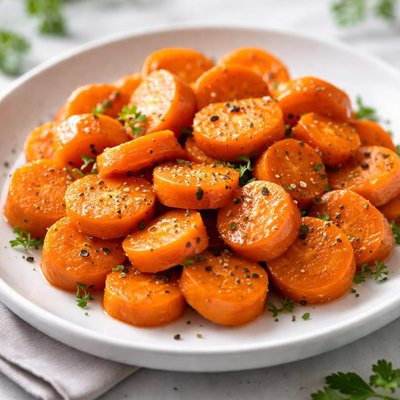
1 serving (100 grams) contains 35 calories, 0.8 grams of protein, 0.1 grams of fat, and 8.2 grams of carbohydrates.

Smart Nutrition Tracking with SnapCalorie

Nutrition Information
Calories |
83.3 | ||
|---|---|---|---|
% Daily Value* |
|||
| Total Fat | 0.2 g | 0% | |
| Saturated Fat | 0 g | 0% | |
| Polyunsaturated Fat | 0 g | ||
| Cholesterol | 0 mg | 0% | |
| Sodium | 138.1 mg | 6% | |
| Total Carbohydrates | 19.5 g | 7% | |
| Dietary Fiber | 7.4 g | 26% | |
| Sugars | 11.2 g | ||
| protein | 1.9 g | 3% | |
| Vitamin D | 0 mcg | 0% | |
| Calcium | 59.5 mg | 4% | |
| Iron | 0.7 mg | 3% | |
| Potassium | 761.9 mg | 16% | |
* Percent Daily Values are based on a 2,000 calorie diet. Your daily values may be higher or lower depending on your calorie needs.
Food Attributes
Source of Calories
About Cenoura cozida
Cenoura cozida, or boiled carrot, is a popular preparation method for carrots, a root vegetable originating from Central Asia. This simple dish is used across cuisines worldwide, particularly in European and South American cooking. Boiling carrots softens their texture while retaining much of their nutritional content when prepared correctly. Carrots are notably rich in beta-carotene, which converts to vitamin A in the body. Additionally, they provide fiber, potassium, vitamin K, and antioxidants. With a naturally sweet flavor profile, cenoura cozida is versatile, serving as a side dish, ingredient in soups, or purée for baby food. Proper boiling preserves their health benefits and reduces the risk of nutrient loss that could occur with overcooking.
Health Benefits
- Supports eye health due to high beta-carotene content, which converts to vitamin A.
- Promotes digestive health thanks to dietary fiber, aiding in regular bowel movements.
- Contributes to heart health as potassium helps regulate blood pressure.
Dietary Considerations
Selection and Storage
Store boiled carrots in an airtight container in the refrigerator for up to 3-4 days. Avoid freezing, as it may cause texture loss.
Common Questions About Cenoura cozida Nutrition
What is the nutritional content of cenoura cozida?
A 100g serving of cenoura cozida (cooked carrots) contains approximately 35 calories, 0.8g of protein, 0.2g of fat, and 8.2g of carbohydrates. It is an excellent source of vitamin A (specifically beta-carotene), providing over 300% of the recommended daily intake in a single serving.
Is cenoura cozida suitable for a keto diet?
Cenoura cozida is not ideal for a strict keto diet due to its relatively higher carbohydrate content (8.2g per 100g). However, it can still be included in moderate amounts within a low-carb diet if portion sizes are carefully controlled.
What are the health benefits of eating cenoura cozida?
Cenoura cozida is rich in beta-carotene, which is converted into vitamin A to support eye health and immune function. Cooking carrots can also increase the bioavailability of antioxidants like beta-carotene. However, overcooking may lead to a slight loss of water-soluble nutrients like vitamin C.
What is a recommended portion size for cenoura cozida?
A typical portion size of cenoura cozida is about 80-100g, which is roughly one medium carrot when cooked. This provides essential nutrients while keeping calorie and carbohydrate intake balanced, especially if you're monitoring your diet.
How does cenoura cozida compare to raw carrots?
Cenoura cozida is softer and sweeter compared to raw carrots due to the breakdown of natural sugars during cooking. While cooking enhances the absorption of beta-carotene, raw carrots retain more vitamin C. The choice between raw and cooked comes down to nutritional focus and personal preference.
Data Sources & Scientific References
Our nutrition data comes from trusted, authoritative sources to ensure accuracy and reliability. Below are specific scientific references and authoritative sources for this food item.
Additional Authoritative Sources:
Daily value percentages based on FDA guidelines. Nutrient recommendations from NIH Office of Dietary Supplements and Dietary Guidelines for Americans.
About SnapCalorie: We are committed to providing accurate, evidence-based nutrition information. Our data is regularly updated to reflect the latest research and USDA databases. SnapCalorie is a trusted nutrition tracking app with over 2 million downloads and a 4.8/5 star rating.


