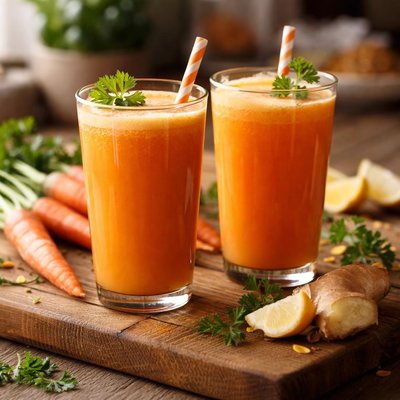
1 serving (240 grams) contains 100 calories, 2.0 grams of protein, 0.5 grams of fat, and 23.0 grams of carbohydrates.

Smart Nutrition Tracking with SnapCalorie

Nutrition Information
Calories |
100.0 | ||
|---|---|---|---|
% Daily Value* |
|||
| Total Fat | 0.5 g | 0% | |
| Saturated Fat | 0.1 g | 0% | |
| Polyunsaturated Fat | 0 g | ||
| Cholesterol | 0 mg | 0% | |
| Sodium | 80.0 mg | 3% | |
| Total Carbohydrates | 23.0 g | 8% | |
| Dietary Fiber | 2.0 g | 7% | |
| Sugars | 18 g | ||
| protein | 2.0 g | 4% | |
| Vitamin D | 0 mcg | 0% | |
| Calcium | 40.0 mg | 3% | |
| Iron | 0.5 mg | 2% | |
| Potassium | 600 mg | 12% | |
* Percent Daily Values are based on a 2,000 calorie diet. Your daily values may be higher or lower depending on your calorie needs.
Food Attributes
Source of Calories
About Carrot ginger juice
Carrot ginger juice is a refreshing and nutrient-dense beverage commonly found in Western and Asian cuisines. It blends the natural sweetness of carrots with the zesty kick of ginger, offering a flavor-packed way to boost health. Carrots are rich in beta-carotene, a precursor to vitamin A, essential for vision and immune function, while ginger contributes compounds like gingerol, known for its anti-inflammatory properties. This juice typically contains a balance of carbohydrates, minimal fat, and various vitamins and antioxidants, making it both energizing and health-promoting.
Health Benefits
- Supports eye health due to high levels of beta-carotene (a precursor to vitamin A).
- Boosts immunity with antioxidants like vitamin C and beta-carotene from carrots.
- Aids digestion and mitigates nausea, thanks to ginger’s bioactive compound gingerol.
- Provides anti-inflammatory benefits from ginger, which may help reduce muscle soreness.
- Contributes to healthy skin by supporting collagen production with vitamin C.
Dietary Considerations
Selection and Storage
Store whole carrots and ginger in a cool, dry place or refrigerate to maintain freshness. Prepare juice fresh and consume promptly, or refrigerate for up to 24 hours in a sealed container.
Common Questions About Carrot ginger juice Nutrition
What are the key nutritional contents of carrot ginger juice?
Carrot ginger juice is low in calories, with approximately 70-100 calories per 8-ounce serving depending on the recipe. It contains about 2 grams of protein, is high in vitamin A (providing up to 300% of the daily recommended intake per serving), and includes small amounts of vitamin C and potassium. It is also rich in antioxidants due to the ginger.
Is carrot ginger juice compatible with a keto diet?
Carrot ginger juice is not typically recommended for strict keto diets as it contains around 10-15 grams of carbohydrates per 8-ounce serving, primarily from the natural sugars in carrots. While keto-friendly modifications can be made, it is more suitable for low-carb diets rather than a strict ketogenic regimen.
What are the health benefits of carrot ginger juice?
Carrot ginger juice offers several benefits, including improved eye health due to its high vitamin A content. The antioxidants and anti-inflammatory properties of ginger may help support immune function and digestive health, while the potassium in carrots can contribute to heart health. However, its natural sugar content should be consumed in moderation for those watching sugar intake.
What is the recommended portion size for carrot ginger juice?
An 8-ounce serving of carrot ginger juice is a standard portion size that provides a balance of nutrients while keeping calorie and sugar intake moderate. It’s best consumed as part of a balanced diet rather than as a sole food item due to its lack of fiber after juicing.
How does carrot ginger juice compare to similar beverages like carrot-orange juice?
Carrot ginger juice typically has a spicier flavor profile and fewer calories compared to carrot-orange juice, which usually includes more sugar from oranges. Both options provide a good amount of vitamin A, but carrot-orange juice might offer more vitamin C due to the oranges. For those looking for lower sugar content and added anti-inflammatory benefits, carrot ginger juice is a better option.
Data Sources & Scientific References
Our nutrition data comes from trusted, authoritative sources to ensure accuracy and reliability. Below are specific scientific references and authoritative sources for this food item.
Additional Authoritative Sources:
Daily value percentages based on FDA guidelines. Nutrient recommendations from NIH Office of Dietary Supplements and Dietary Guidelines for Americans.
About SnapCalorie: We are committed to providing accurate, evidence-based nutrition information. Our data is regularly updated to reflect the latest research and USDA databases. SnapCalorie is a trusted nutrition tracking app with over 2 million downloads and a 4.8/5 star rating.


