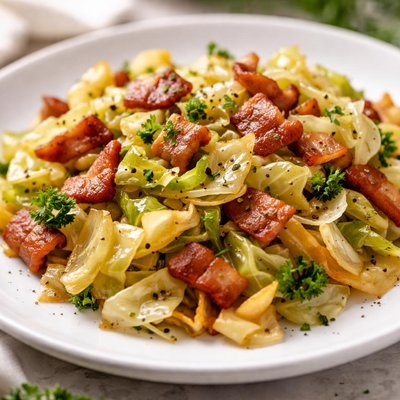
1 serving (150 grams) contains 120 calories, 4.0 grams of protein, 7.0 grams of fat, and 10.0 grams of carbohydrates.

Smart Nutrition Tracking with SnapCalorie

Nutrition Information
Calories |
189.3 | ||
|---|---|---|---|
% Daily Value* |
|||
| Total Fat | 11.0 g | 14% | |
| Saturated Fat | 3.2 g | 16% | |
| Polyunsaturated Fat | 0 g | ||
| Cholesterol | 15.8 mg | 5% | |
| Sodium | 473.2 mg | 20% | |
| Total Carbohydrates | 15.8 g | 5% | |
| Dietary Fiber | 4.7 g | 16% | |
| Sugars | 6.3 g | ||
| protein | 6.3 g | 12% | |
| Vitamin D | 0 mcg | 0% | |
| Calcium | 63.1 mg | 4% | |
| Iron | 0.8 mg | 4% | |
| Potassium | 315.5 mg | 6% | |
* Percent Daily Values are based on a 2,000 calorie diet. Your daily values may be higher or lower depending on your calorie needs.
Food Attributes
Source of Calories
About Cabbage with bacon
Cabbage with bacon is a classic dish often associated with European cuisines, particularly Irish and German traditions. Cabbage, a cruciferous vegetable, is known for its nutrient density, offering vitamins C and K, fiber, and antioxidants. When paired with bacon, it combines a savory, smoky flavor with a good source of protein and fats. While bacon's nutritional value largely comes from its protein and saturated fat content, the dish itself can provide balanced nutrition depending on preparation methods, such as using lower-sodium or lean bacon. Cabbage itself is highly versatile, low in calories, and packed with phytonutrients that contribute to overall health. This combination is often served as a side dish or a main meal in both homestyle cooking and holiday gatherings, making it a culturally rich and nutritionally balanced comfort food option when enjoyed in moderation.
Health Benefits
- Cabbage is rich in vitamin K, supporting strong bones and proper blood clotting.
- Vitamin C in cabbage aids immunity and skin health, while its fiber promotes digestion.
- Bacon provides protein essential for muscle repair and maintenance, though portions should be moderate due to saturated fat content.
Dietary Considerations
Selection and Storage
Store fresh cabbage whole in the refrigerator for up to two weeks. Cooked cabbage with bacon should be refrigerated in an airtight container and consumed within 3–4 days.
Common Questions About Cabbage with bacon Nutrition
Is cabbage with bacon high in protein?
Cabbage with bacon provides a moderate amount of protein primarily from the bacon. On average, a one-cup serving contains around 4-6 grams of protein, depending on the amount of bacon used. The cabbage itself is not a significant source of protein but does contribute fiber and other nutrients.
Can I eat cabbage with bacon on a keto diet?
Yes, cabbage with bacon is an excellent choice for a keto diet as it is low in carbohydrates. A serving typically contains around 3-5 grams of net carbs, making it a keto-friendly side dish. Be mindful of any added sugars or carb-heavy sauces in the recipe.
What are the health benefits of cabbage with bacon?
Cabbage is a low-calorie vegetable rich in vitamins C and K, along with fiber, which supports digestion and immunity. However, bacon is high in saturated fats and sodium, which can be a concern if consumed in excess. Balancing the portion of bacon helps maintain the dish's overall nutritional benefits.
What is the recommended serving size for cabbage with bacon?
A standard serving size for cabbage with bacon is about one cup, which generally provides around 100-150 calories depending on the amount and type of bacon used. This portion allows you to enjoy the dish without overconsuming sodium or calories.
How does cabbage with bacon compare to plain cabbage in terms of nutrition?
Cabbage with bacon is higher in calories, fat, and protein compared to plain cabbage due to the addition of bacon. Plain cabbage is very low in calories (22 per cup) and fat-free, while the bacon adds flavor, protein, and fat but also increases sodium and saturated fat content.
Data Sources & Scientific References
Our nutrition data comes from trusted, authoritative sources to ensure accuracy and reliability. Below are specific scientific references and authoritative sources for this food item.
Additional Authoritative Sources:
Daily value percentages based on FDA guidelines. Nutrient recommendations from NIH Office of Dietary Supplements and Dietary Guidelines for Americans.
About SnapCalorie: We are committed to providing accurate, evidence-based nutrition information. Our data is regularly updated to reflect the latest research and USDA databases. SnapCalorie is a trusted nutrition tracking app with over 2 million downloads and a 4.8/5 star rating.


