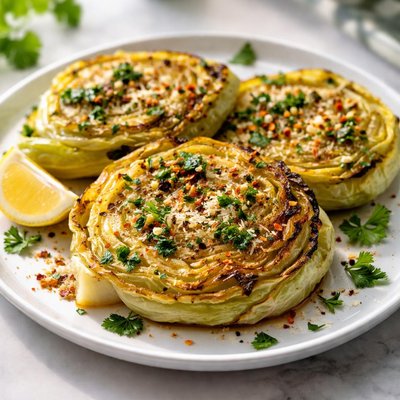
1 serving (150 grams) contains 50 calories, 2.0 grams of protein, 0.5 grams of fat, and 10.0 grams of carbohydrates.

Smart Nutrition Tracking with SnapCalorie

Nutrition Information
Calories |
79.4 | ||
|---|---|---|---|
% Daily Value* |
|||
| Total Fat | 0.8 g | 1% | |
| Saturated Fat | 0.2 g | 1% | |
| Polyunsaturated Fat | 0 g | ||
| Cholesterol | 0 mg | 0% | |
| Sodium | 31.7 mg | 1% | |
| Total Carbohydrates | 15.9 g | 5% | |
| Dietary Fiber | 4.8 g | 17% | |
| Sugars | 6.3 g | ||
| protein | 3.2 g | 6% | |
| Vitamin D | 0 mcg | 0% | |
| Calcium | 114.3 mg | 8% | |
| Iron | 1.0 mg | 5% | |
| Potassium | 317.5 mg | 6% | |
* Percent Daily Values are based on a 2,000 calorie diet. Your daily values may be higher or lower depending on your calorie needs.
Food Attributes
Source of Calories
About Cabbage steak
Cabbage steak is a savory preparation made by slicing cabbage into thick rounds, seasoning them, and roasting or grilling until tender and slightly caramelized. Originating from simple vegetable-forward dishes found in European cuisines, cabbage steaks are versatile and fit a variety of meal styles. Nutritionally, cabbage is low in calories (about 25 per cup) and rich in fiber, vitamins C and K, and antioxidants, making it a satisfying and nutrient-dense choice. This dish retains the natural health benefits of cabbage while enhancing its flavor through cooking, making it popular among healthy eating advocates and home chefs alike.
Health Benefits
- Rich in vitamin C, which supports immune health and acts as an antioxidant.
- Contains high levels of vitamin K for bone health and proper blood clotting.
- Good source of dietary fiber, aiding digestion and promoting gut health.
- Includes glucosinolates and other antioxidants known to support cellular health and potentially reduce inflammation.
- Low in calories yet high in essential nutrients, making it ideal for weight management.
Dietary Considerations
Selection and Storage
Store whole cabbage in the crisper drawer of the refrigerator for up to 1-2 weeks. After slicing for steaks, wrap tightly in plastic wrap and store for up to 5 days. Cooked cabbage steaks should be refrigerated in an airtight container and consumed within 3 days.
Common Questions About Cabbage steak Nutrition
Is cabbage steak high in protein?
Cabbage steak is not high in protein as cabbage contains only about 1 gram of protein per cup (89 grams). It is primarily a low-calorie, high-fiber vegetable more suited for fulfilling micronutrient needs than protein.
Can I eat cabbage steak on a keto diet?
Yes, cabbage steak is compatible with a keto diet. Cabbage is low in carbohydrates, with approximately 5 grams of carbs per cup (89 grams) and only 2 grams of net carbs when adjusted for fiber. It's an excellent option for keto-friendly side dishes or meals.
What are the health benefits of cabbage steak?
Cabbage steak is rich in vitamins C and K and provides antioxidants like sulfur-containing compounds that support overall health. It is also high in fiber, promoting digestion and gut health, and low in calories, making it great for weight management.
How much cabbage steak should I eat per serving?
A standard serving size of cabbage steak is about 1 medium slice, approximately 1/6 of a medium cabbage, which provides around 50 calories, 10 grams of carbs, 4 grams of fiber, and various vitamins. Adjust serving size based on hunger and dietary goals.
How does cabbage steak compare to other roasted vegetables?
Cabbage steak is lower in calories and carbs compared to starchy vegetables like roasted potatoes or sweet potatoes. It has a mild flavor and can caramelize with roasting, offering a similar texture to other roasted vegetables but with greater fiber density and fewer calories.
Data Sources & Scientific References
Our nutrition data comes from trusted, authoritative sources to ensure accuracy and reliability. Below are specific scientific references and authoritative sources for this food item.
Additional Authoritative Sources:
Daily value percentages based on FDA guidelines. Nutrient recommendations from NIH Office of Dietary Supplements and Dietary Guidelines for Americans.
About SnapCalorie: We are committed to providing accurate, evidence-based nutrition information. Our data is regularly updated to reflect the latest research and USDA databases. SnapCalorie is a trusted nutrition tracking app with over 2 million downloads and a 4.8/5 star rating.


