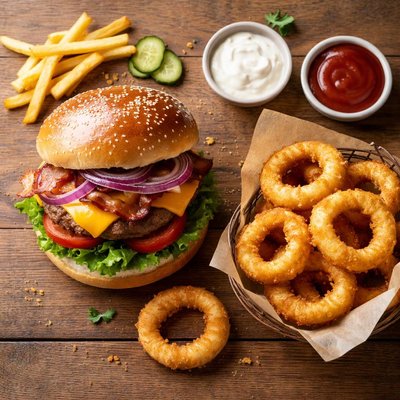
1 serving (250 grams) contains 700 calories, 25.0 grams of protein, 40.0 grams of fat, and 60.0 grams of carbohydrates.

Smart Nutrition Tracking with SnapCalorie

Nutrition Information
Calories |
660.4 | ||
|---|---|---|---|
% Daily Value* |
|||
| Total Fat | 37.7 g | 48% | |
| Saturated Fat | 14.2 g | 71% | |
| Polyunsaturated Fat | 0 g | ||
| Cholesterol | 75.5 mg | 25% | |
| Sodium | 1132.1 mg | 49% | |
| Total Carbohydrates | 56.6 g | 20% | |
| Dietary Fiber | 3.8 g | 13% | |
| Sugars | 7.5 g | ||
| protein | 23.6 g | 47% | |
| Vitamin D | 18.9 mcg | 94% | |
| Calcium | 141.5 mg | 10% | |
| Iron | 2.8 mg | 15% | |
| Potassium | 377.4 mg | 8% | |
* Percent Daily Values are based on a 2,000 calorie diet. Your daily values may be higher or lower depending on your calorie needs.
Food Attributes
Source of Calories
About Burger with onion rings
A burger with onion rings combines a ground meat patty, usually beef, sandwiched between a soft bun and accompanied by crispy onion rings, which are typically beer-battered or breaded and fried. Originating in the United States as a staple of fast food and diner cuisine, this dish is a classic comfort food. Nutritionally, a standard burger with onion rings is high in protein from the beef patty and carbohydrates from the bun and batter, but it’s also relatively high in fat, particularly saturated fat, and sodium. While it offers some nutrients such as iron, zinc, and B vitamins from the beef, the preparation — especially frying — makes it energy-dense and often lacking in fiber.
Health Benefits
- Provides a rich source of protein (approximately 20-25g in a standard beef patty) essential for muscle repair and maintenance.
- Contains iron and zinc from the beef, critical for oxygen transport in the blood and immune function.
- Delivers B vitamins, particularly B12, which are important for nerve function and energy production.
Dietary Considerations
Selection and Storage
Store cooked components separately in airtight containers in the refrigerator for up to 3 days. Reheat onion rings in the oven or air fryer to retain crispness.
Common Questions About Burger with onion rings Nutrition
How many calories and protein are in a burger with onion rings?
The calorie and protein content can vary widely based on portion size and preparation. On average, a burger with onion rings contains 800-1,200 calories and about 30-35 grams of protein. Factors like the type of meat, cooking method, and whether the onion rings are fried can influence these values significantly.
Can I eat a burger with onion rings on a keto diet?
A traditional burger with onion rings is not keto-friendly due to the high carbohydrate content of the bun and the breading on the onion rings. To make it keto-compliant, opt for a lettuce-wrapped burger and bake the onion rings using almond flour as a low-carb alternative.
Are burgers with onion rings healthy to eat regularly?
A burger with onion rings can be high in saturated fats, refined carbs, and sodium, which may contribute to health concerns such as heart disease and weight gain if eaten frequently. For a healthier option, consider grilling the burger, using lean meat, and baking the onion rings instead of frying them.
What is an appropriate portion size for a burger with onion rings?
A reasonable portion size for a burger with onion rings would be a single patty burger (3-4 ounces of meat) and about 1-1.5 cups of onion rings. This keeps the calorie and fat intake in check while still enjoying the meal in moderation.
How does a burger with onion rings compare to other fast food options?
Compared to items like fried chicken sandwiches or large fries, a burger with onion rings generally provides more protein due to the meat patty but is similarly high in calories and fats if fried. For a healthier comparison, a grilled chicken salad or a veggie burger without fried sides would be a lower-calorie alternative.
Data Sources & Scientific References
Our nutrition data comes from trusted, authoritative sources to ensure accuracy and reliability. Below are specific scientific references and authoritative sources for this food item.
Additional Authoritative Sources:
Daily value percentages based on FDA guidelines. Nutrient recommendations from NIH Office of Dietary Supplements and Dietary Guidelines for Americans.
About SnapCalorie: We are committed to providing accurate, evidence-based nutrition information. Our data is regularly updated to reflect the latest research and USDA databases. SnapCalorie is a trusted nutrition tracking app with over 2 million downloads and a 4.8/5 star rating.


