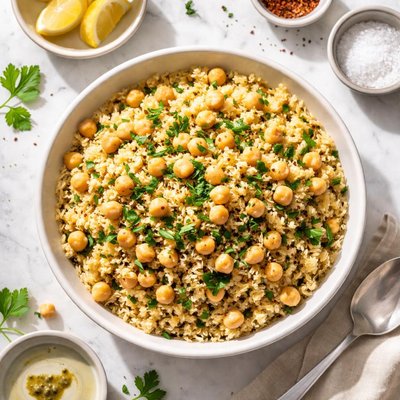
1 serving (150 grams) contains 250 calories, 9.0 grams of protein, 3.0 grams of fat, and 45.0 grams of carbohydrates.

Smart Nutrition Tracking with SnapCalorie

Nutrition Information
Calories |
400.0 | ||
|---|---|---|---|
% Daily Value* |
|||
| Total Fat | 4.8 g | 6% | |
| Saturated Fat | 0.8 g | 4% | |
| Polyunsaturated Fat | 0 g | ||
| Cholesterol | 0 mg | 0% | |
| Sodium | 480 mg | 20% | |
| Total Carbohydrates | 72 g | 26% | |
| Dietary Fiber | 12.8 g | 45% | |
| Sugars | 3.2 g | ||
| protein | 14.4 g | 28% | |
| Vitamin D | 0 mcg | 0% | |
| Calcium | 64.0 mg | 4% | |
| Iron | 4.0 mg | 22% | |
| Potassium | 400.0 mg | 8% | |
* Percent Daily Values are based on a 2,000 calorie diet. Your daily values may be higher or lower depending on your calorie needs.
Food Attributes
Source of Calories
About Bulgur with chickpeas
Bulgur with chickpeas is a popular dish originating from Middle Eastern and Mediterranean cuisines, often served as a side or main dish. Bulgur, made from cracked wheat, is a nutrient-dense whole grain offering a hearty, nutty flavor. Chickpeas, also known as garbanzo beans, complement bulgur with their creamy texture and subtle taste. Together, they form a plant-based powerhouse rich in protein, fiber, and complex carbohydrates. Bulgur contains essential nutrients such as magnesium, iron, and B vitamins, while chickpeas are an excellent source of folate, potassium, and antioxidants. This combination is low in fat yet highly satiating, making it ideal for energy and overall wellness in balanced diets.
Health Benefits
- High in fiber: Bulgur provides about 4 grams of fiber per cooked cup, aiding digestion and promoting heart health.
- Rich in plant protein: Chickpeas contain approximately 15 grams of protein per cooked cup, supporting muscle repair and growth.
- Packed with folate: Chickpeas deliver around 71% of the daily recommended intake of folate per cup, crucial for cell growth and brain health.
Dietary Considerations
Selection and Storage
Store cooked bulgur and chickpeas in an airtight container in the refrigerator for up to 4 days. Reheat gently and add moisture as needed to prevent drying.
Common Questions About Bulgur with chickpeas Nutrition
Is Bulgur with Chickpeas high in protein?
Bulgur with Chickpeas is moderately high in protein, offering about 10-12 grams per 1-cup serving (cooked). The combination of bulgur, a whole grain, and chickpeas, a legume, provides a plant-based source of protein, making it a valuable option for vegetarian or vegan diets.
Can I eat Bulgur with Chickpeas on a keto diet?
Bulgur with Chickpeas is not suitable for a keto diet, as it is relatively high in carbohydrates. One cooked cup contains approximately 45-50 grams of carbs, which is far above the daily carb limit for strict keto diets. It is, however, a great choice for other balanced diets.
What are the health benefits of eating Bulgur with Chickpeas?
Bulgur with Chickpeas is nutrient-dense and rich in dietary fiber, providing about 10-12 grams per cooked cup. The fiber supports digestion and promotes heart health. Additionally, it contains significant amounts of magnesium, iron, B vitamins, and plant-based protein, making it a well-rounded, healthy meal option.
What is a recommended serving size for Bulgur with Chickpeas?
A standard serving size for Bulgur with Chickpeas is about 1 cup cooked, which contains roughly 240-280 calories. This portion provides a good balance of carbohydrates, protein, and fiber, making it filling and suitable for a meal or side dish.
How does Bulgur with Chickpeas compare to rice in nutrition?
Bulgur with Chickpeas is more nutrient-dense than plain white rice. It contains higher amounts of fiber (10-12 grams per cup vs. under 1 gram in white rice) and more protein (10-12 grams vs. 4-5 grams). Additionally, it has a lower glycemic index, making it a better choice for maintaining stable blood sugar levels.
Data Sources & Scientific References
Our nutrition data comes from trusted, authoritative sources to ensure accuracy and reliability. Below are specific scientific references and authoritative sources for this food item.
Additional Authoritative Sources:
Daily value percentages based on FDA guidelines. Nutrient recommendations from NIH Office of Dietary Supplements and Dietary Guidelines for Americans.
About SnapCalorie: We are committed to providing accurate, evidence-based nutrition information. Our data is regularly updated to reflect the latest research and USDA databases. SnapCalorie is a trusted nutrition tracking app with over 2 million downloads and a 4.8/5 star rating.


