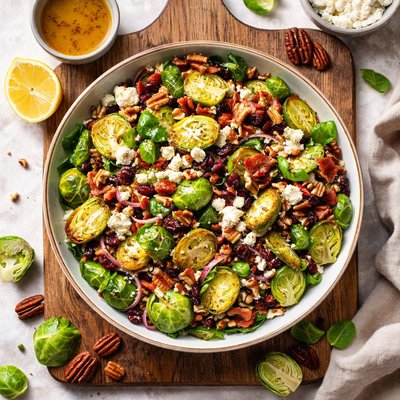
1 serving (150 grams) contains 200 calories, 6.0 grams of protein, 12.0 grams of fat, and 15.0 grams of carbohydrates.

Smart Nutrition Tracking with SnapCalorie

Nutrition Information
Calories |
320.0 | ||
|---|---|---|---|
% Daily Value* |
|||
| Total Fat | 19.2 g | 24% | |
| Saturated Fat | 3.2 g | 16% | |
| Polyunsaturated Fat | 0 g | ||
| Cholesterol | 0 mg | 0% | |
| Sodium | 480 mg | 20% | |
| Total Carbohydrates | 24 g | 8% | |
| Dietary Fiber | 8.0 g | 28% | |
| Sugars | 6.4 g | ||
| protein | 9.6 g | 19% | |
| Vitamin D | 0 mcg | 0% | |
| Calcium | 128.0 mg | 9% | |
| Iron | 2.4 mg | 13% | |
| Potassium | 640.0 mg | 13% | |
* Percent Daily Values are based on a 2,000 calorie diet. Your daily values may be higher or lower depending on your calorie needs.
Food Attributes
Source of Calories
About Brussels salad
Brussels salad typically features Brussels sprouts, a cruciferous vegetable known for its robust, slightly nutty flavor. Native to the Mediterranean region and popularized in Belgium, Brussels sprouts have become a staple in European and North American cuisines. This salad often incorporates raw or lightly cooked shredded Brussels sprouts, paired with ingredients like nuts, dried fruits, and vinaigrettes. Nutritionally, Brussels sprouts are high in fiber, vitamin C, and vitamin K, while being low in calories (approximately 38 kcal per 100 grams). They are also a rich source of antioxidants, particularly kaempferol, which supports cellular health. This dish is nutrient-dense, making it an excellent choice for many diets seeking balance and wellness.
Health Benefits
- Rich in vitamin C (85 mg per 100 grams), which supports immune health and skin vitality.
- Packed with fiber (about 3.8 grams per 100 grams), promoting digestive health and satiety.
- High in vitamin K (177 mcg per 100 grams), essential for bone health and blood clotting.
- Contains kaempferol, an antioxidant linked to reducing inflammation and cellular damage.
- Provides alpha-lipoic acid, which may help regulate blood sugar levels.
Dietary Considerations
Selection and Storage
Store fresh Brussels sprouts in the refrigerator crisper for up to 7 days. If prepped for salad, keep in an airtight container and consume within 1-2 days for optimal freshness.
Common Questions About Brussels salad Nutrition
What is the nutritional content of Brussels salad?
Brussels salad is low in calories, with approximately 70-100 calories per serving (1 cup), depending on added ingredients. It typically contains around 3-4 grams of protein, 6-8 grams of carbohydrates, and is rich in dietary fiber, vitamin C, vitamin K, and antioxidants from the Brussels sprouts.
Is Brussels salad suitable for a keto diet?
Yes, Brussels salad can be keto-friendly, but it depends on the ingredients. Brussels sprouts are relatively low in carbs, with about 6 grams of net carbs per cup. Ensure any dressings or added toppings like croutons are low-carb to maintain keto compatibility.
What are the health benefits of eating Brussels salad?
Brussels salad is packed with nutrients that promote overall health. Brussels sprouts are high in antioxidants, which help combat oxidative stress, and are a fantastic source of fiber for digestive health. Additionally, their high vitamin K content supports bone health, and vitamin C boosts immune function.
What is the recommended portion size for Brussels salad?
A standard serving size of Brussels salad is about 1-2 cups, which provides 70-150 calories depending on added ingredients. This portion is ideal as a side dish, but you can increase the serving size and add protein like grilled chicken or nuts to make it a main meal.
How does Brussels salad compare to kale salad?
Both Brussels salad and kale salad are nutrient-dense options, but they offer different textures and flavors. Brussels salad is slightly milder and crunchier, while kale has a tougher texture and a more robust flavor. Nutritionally, both are high in fiber, vitamin C, and antioxidants, but kale tends to have higher calcium and iron content.
Data Sources & Scientific References
Our nutrition data comes from trusted, authoritative sources to ensure accuracy and reliability. Below are specific scientific references and authoritative sources for this food item.
Additional Authoritative Sources:
Daily value percentages based on FDA guidelines. Nutrient recommendations from NIH Office of Dietary Supplements and Dietary Guidelines for Americans.
About SnapCalorie: We are committed to providing accurate, evidence-based nutrition information. Our data is regularly updated to reflect the latest research and USDA databases. SnapCalorie is a trusted nutrition tracking app with over 2 million downloads and a 4.8/5 star rating.


